
Livraison le jour même ou le lendemain

Qualité garantie

Débloquez vos offres de bienvenue: Livraison GRATUITE | Jusqu'à -80 % | 30 jours d'essai gratuits à JoyPlus
Téléchargez l'application
A 220 × 240 cm duvet is generally suitable for a wide double bed, particularly one measuring 160 or 180 cm. It offers a comfortable overhang at the sides, but the choice is not limited to size. The cover material, filling weight, type of filling and ease of care all have a direct impact on your comfort night after night.
Before buying, three common pitfalls are worth avoiding:
A warm 220 × 240 duvet is suitable for cold nights, rooms that are not well heated or people who feel the cold. Winter models are often thicker and more insulating, but their comfort depends above all on the filling and filling weight.
For summer, a lightweight 220 × 240 duvet encourages air circulation. Models designed for rooms from around 20°C can be suitable for mild nights without feeling heavy. An all-seasons duvet can also be a good option if it combines several warmth levels or can be used for much of the year.
The “15 Tog” rating found on some models comes from a system for measuring thermal insulation that is mainly used in English-speaking countries. When comparing products available in France, also check the information provided by the manufacturer: filling weight in g/m², season of use, thickness and recommended temperature.
A duck-down duvet can offer a soft, breathable feel while retaining heat effectively. However, the proportion of feathers and down plays a major role: 90% feathers and 10% down will not provide the same comfort as a filling made mainly from down.
Synthetic duvets generally use hollow fibres, sometimes silicone-treated. An anti-allergy synthetic duvet is often easier to wash regularly and is a practical choice for people who prefer to care for their bedding at home. However, this description should be considered alongside the relevant certifications and washing instructions: it does not constitute a medical guarantee.
Cotton percale and cotton sateen are valued for their feel and breathability. The thread count, expressed as threads/cm² on some product sheets, gives an indication of the density of the weave, but cannot by itself predict comfort.
Stitching in squares or compartments helps keep the filling evenly distributed. It limits areas with less filling, which can create a cold sensation. For an OEKO-TEX duvet, the STANDARD 100 by OEKO-TEX label indicates that certified articles have undergone checks covering certain undesirable substances in particular. This is an element of traceability and compliance, not a promise of medical benefits.
Remember to choose a suitable 220 × 240 duvet cover too. If it is too small, it will compress the filling; if it is too large, the duvet may slip around inside. A 220 × 240 bedding set often includes a cover and two pillowcases, making it easier to coordinate your bed linen.
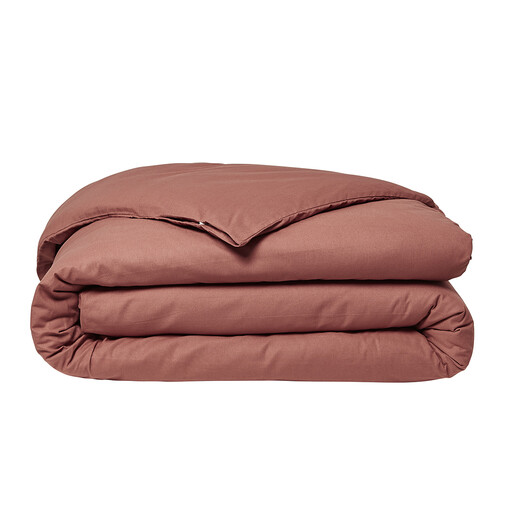
Why this choice suits this profile : This cover lets you refresh your bed linen without immediately buying a new duvet. Made from 100% cotton, it is suitable for everyday use.
The composition, 220 × 240 cm dimensions and machine washability at 60°C are clearly stated on the product page.
100% cotton, OEKO-TEX certification, concealed button fastening and slits for easier fitting.
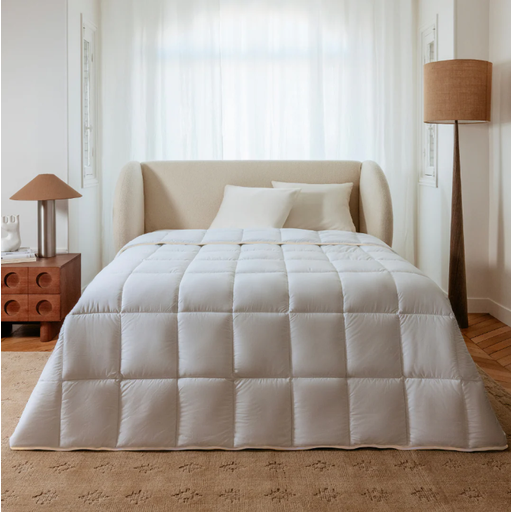
Why this choice suits this profile : This model is designed for people looking for a natural filling and a lightweight duvet that can be used for much of the year.
The stated proportion clearly distinguishes 90% duck feathers and 10% down, rather than simply using the term “natural”.
Organic cotton sateen cover with 129 threads/cm², square stitching and washing recommended at a maximum of 40°C.
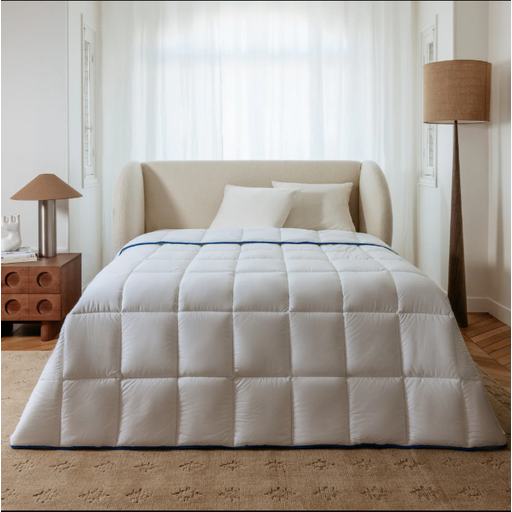
Why this choice suits this profile : Its size and synthetic filling make it suitable for households looking for a structured winter duvet that can be washed at home.
The product page details the cotton percale cover, silicone-treated hollow fibre, 5 cm thickness and 40°C wash.
Polyester hollow-fibre filling, 100% cotton percale cover, STANDARD 100 by OEKO-TEX certification and European manufacture according to the product page.
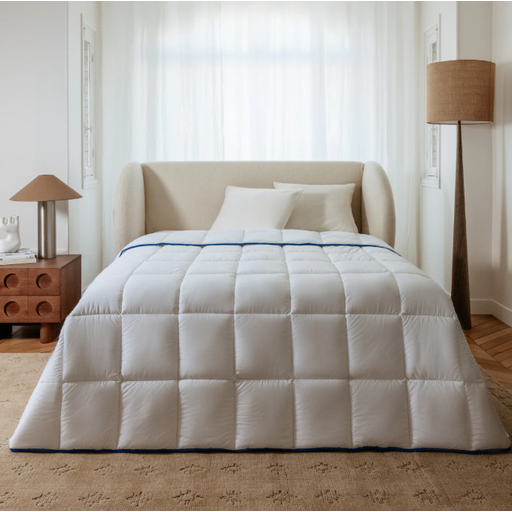
Why this choice suits this profile : This summer duvet is designed for rooms at 20°C or above and for sleepers looking for a lightweight filling.
The recommended temperature, 3 cm thickness and 250 g/m² filling weight are specified in the description.
100% cotton percale, polyester hollow fibres, 40°C washing and STANDARD 100 by OEKO-TEX, CertiPUR, Sanitized and ISO 9001 certifications stated by the manufacturer.
We have put together a complete, real-time updated list of products that fully meet these strict selection criteria and European safety regulations.
Air your duvet regularly and shake it gently to redistribute the filling. Use a suitable cover to reduce the need to wash the duvet itself. Before putting it in the washing machine, check the label: some models can be washed at 40°C, while large duvets require a drum with a capacity of at least 12 kg.
Drying plays a crucial role in preventing residual moisture. For compatible models, use a tumble dryer on a low-temperature setting. A duck-feather duvet may require more care than a synthetic model. Its lifespan depends in particular on how often it is washed, the drying method, the stitching and the quality of the cover.
It is generally suitable for 160 cm beds and can also be chosen for a 180 cm bed, depending on the desired overhang. Measure the mattress, its thickness and the height of the bed base before placing your order.
For a cool bedroom, compare a winter duvet made from hollow fibres with a feather-and-down duvet. Pay particular attention to the filling weight, distribution of the filling, thickness and washing requirements, rather than relying solely on the product name.
Yes, some models are machine washable, but their volume requires a sufficiently large drum. If your washing machine is too small, professional cleaning can help preserve the filling and reduce the risk of incomplete drying.