
Livraison le jour même ou le lendemain

Qualité garantie

Débloquez vos offres de bienvenue: Livraison GRATUITE | Jusqu'à -80 % | 30 jours d'essai gratuits à JoyPlus
Téléchargez l'application
Switching to an electric car is a fantastic step forward, but choosing a home charging station often turns into a headache. A 22?kW charging station promises lightning-fast charging, but the market is flooded with often misleading marketing claims. As the Head of the Equipment section at Joybuy, my mission is to help you navigate this complex landscape. Let's break down the common mistakes to avoid so you can make a truly informed decision.
Before you commit, be wary of these two common mistakes, which often lead to disappointment and unnecessary expenses.
To choose a home charging station that is both suitable and future-proof, three technical parameters must be scrutinised.
The full 22?kW of power (32 Amps) is only achievable with a three-phase (400?V) electrical supply. If your home has a single-phase supply, the power will be capped at 7.4?kW. Before any purchase, it is crucial to check your electricity contract and ensure your electrical panel is compatible. A three-phase electric car charger is the only way to unlock the full power.
Good connectivity (Wi-Fi or Bluetooth) is the foundation of a great user experience. It allows you to control the charger remotely via an app. Here are the features you should demand:
The Type 2 charging station connector has become the standard in Europe for AC charging. Ensure the provided cable is long enough for your daily needs (a 5-metre length is often a good compromise). More importantly, the station must include a full suite of electrical protections: overvoltage, undervoltage, overheating, and, crucially, protection against current leakage (Type A differential + 6?mA DC fault detection, or a Type B differential). The installation must be carried out by a qualified electrician (with the appropriate certifications) to guarantee the safety and compliance of the setup.
To help you take the next step, here are some models that cater to specific user profiles while meeting our strict performance and safety criteria.
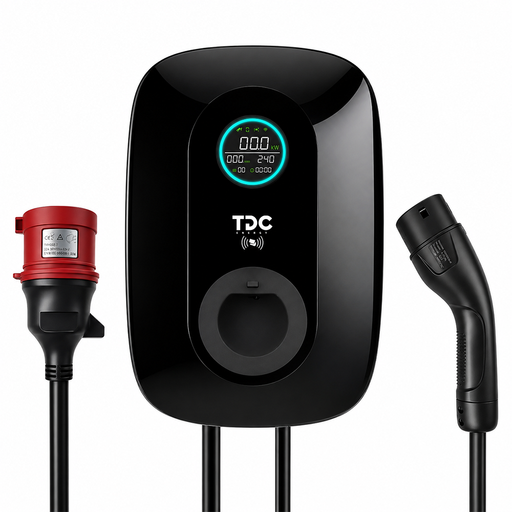
Why we recommend it: Ideal for those seeking a reliable and complete solution without the hassle. It combines 22 kW of power, simple access control, and clear information displayed directly on its screen.
This station delivers a true 22 kW of power on a compatible installation. Its dual control system (app and RFID cards) ensures it works even when offline, thus avoiding the unreliable app trap.
Its 3-inch LCD screen displays the charging status in real time. It includes a full set of electrical protections (Type A + 6 mA DC).
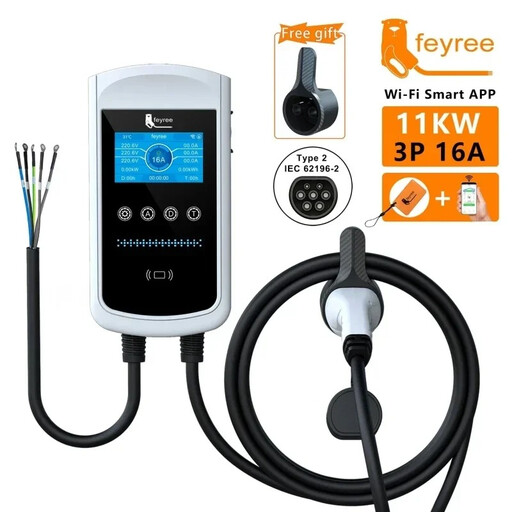
Why we recommend it: Perfect for the user who loves to analyse and optimise their consumption. Its integration with the Tuya ecosystem provides advanced control and a detailed history of charging sessions.
This station goes beyond basic "smart" functions by offering a history of the last 500 charges and an error log. Its adjustable power (from 8 A to 32 A) provides maximum flexibility.
Advanced control via the Tuya Smart ecosystem, calendar-based scheduling, and precise current management to adapt to any constraint.
We have selected a full range of products that meet these strict selection criteria and current safety standards.
Yes, and this is non-negotiable. The installation of a 22?kW Wallbox must be performed by a certified professional (e.g., one with credentials for EV charging infrastructure installation). In many regions, such as France, this is a legal requirement for any power level above 3.7?kW. This certification ensures the safety of your installation and vehicle and is required by insurance companies in the event of a claim.
On paper, a 22?kW station charges twice as fast as an 11?kW model. For example, with a 50?kWh battery, a full charge (0-100%) would take about 2.5 hours at 22?kW, compared to nearly 5 hours at 11?kW. Be aware, this time saving is only realised if your vehicle's onboard charger can also accept 22?kW of AC power, which is far from the case for all models.
Yes, the "right to charge" allows for this in many jurisdictions. If you have a private parking space, you can have a charging station installed at your own expense. You typically just need to notify your condominium board or homeowners' association of your project in writing. They can only object for serious and legitimate reasons (e.g., proven technical impossibility). It is highly recommended to choose a station with access control (like an RFID card) to secure its use.