
Livraison le jour même ou le lendemain

Qualité garantie

Débloquez vos offres de bienvenue: Livraison GRATUITE | Jusqu'à -80 % | 30 jours d'essai gratuits à JoyPlus
Téléchargez l'application
As the new year approaches, choosing your 2027 planner is an essential ritual to prepare for the months ahead. But be warned: behind this seemingly simple choice lie numerous pitfalls. An ill-suited planner can quickly become a source of frustration, abandoned in a drawer after just a few weeks. To help you avoid making the wrong choice, let's review the most common mistakes.
Identifying these friction points is the first step toward choosing a planner that will effectively support you all year long.
To avoid being swayed by marketing, focus on a few technical and objective criteria. Here are the three essential points to check before you buy.
Paper weight, expressed in grams per square metre (g/m?), determines the paper's thickness and opacity. It's the number one indicator of its resistance to ink.
The way the pages are bound has a direct impact on your planner's usability.
The page layout should align with your habits and workload.
To put theory into practice, here are a few models that perfectly illustrate these criteria, each suited to a different profile.
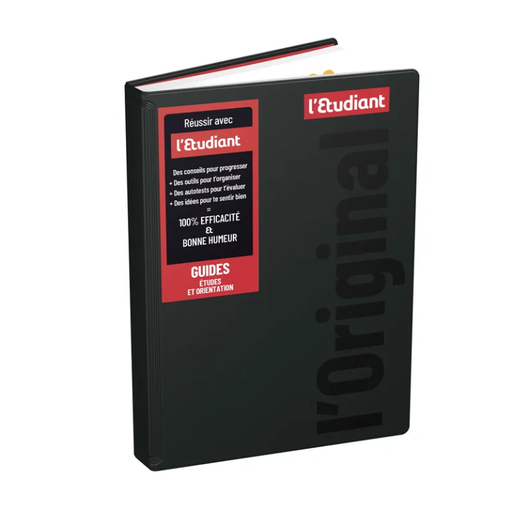
Why this choice? Specifically designed as a 2026-2027 academic planner, it offers a simple and effective structure: one page per day for noting homework, classes, and appointments. Its padded cover is built to withstand rough handling in a backpack.
Its spiral binding guarantees a perfect lay-flat opening—goodbye to the frustration of a planner that snaps shut! The layout is straightforward and no-frills, keeping the focus on what's essential.
A full page per day ensures you have enough space for everything. Its 15x21 cm size (similar to an A5 planner) strikes an excellent balance between a comfortable writing area and a manageable footprint.
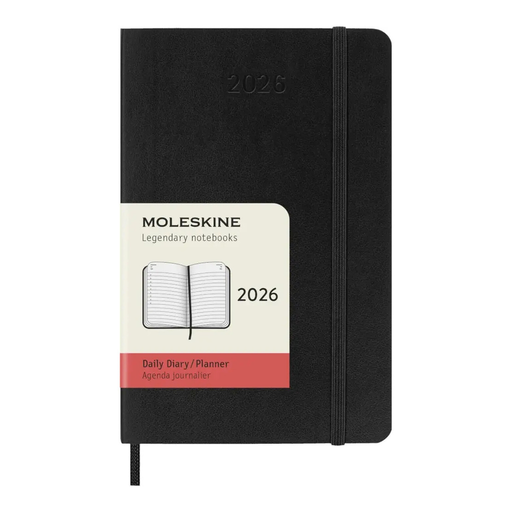
Why this choice? The Moleskine planner is a timeless classic, renowned for its minimalist design and efficiency. This daily model provides ample space for detailed day planning, meeting notes, and project tracking, all within a sleek, professional format.
Its signature stitched binding is designed for a perfect 180° opening. The acid-free, ivory-coloured 70 g/m? paper is optimised for ballpoint pens and resists smudging well.
It goes beyond a simple planner by integrating practical tools: calendars, time zones, travel planning, and detachable note pages. A true logbook for your life.
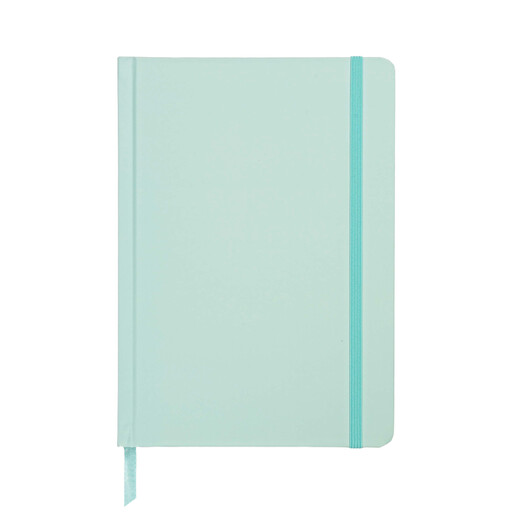
Why this choice? This undated planner is the perfect ally for freelancers, creatives, and anyone juggling projects with variable deadlines. Its monthly and weekly structure is designed to be filled in by you, offering complete freedom.
It makes flexibility its greatest strength, thus avoiding the trap of a rigid layout. Its thick 100 g/m? paper is a real bonus: it handles markers and highlighters without bleeding, perfect for fans of *color-coding*.
Designed to last 18 months, it offers excellent value for money. Its hardcover provides effective protection, while the choice of colours lets you match it to your personal style.
Explore our full selection of planners and diaries that meet our quality criteria.
The daily planner gives you an entire page per day, which is ideal for those who need a lot of space to detail their tasks and appointments. The weekly planner, on the other hand, displays the whole week across a two-page spread. It's the perfect format for getting a high-level overview of your schedule.
It all depends on your mobility. A pocket size (like 9x14 cm) fits anywhere, but writing space is limited. The A5 format (around 15x21 cm) is the sweet spot, popular for its balance of writing comfort and portability. Large formats (like A4) should be reserved for stationary use on a desk.
An undated planner is an excellent option if: