
Livraison le jour même ou le lendemain

Qualité garantie

Débloquez vos offres de bienvenue: Livraison GRATUITE | Jusqu'à -80 % | 30 jours d'essai gratuits à JoyPlus
Téléchargez l'application
A 2026 planner should be chosen for more than its colour or appearance. From academic planners and professional schedules to daily planners and undated notebooks, the format can completely transform your everyday experience.
A planner that is too small can quickly run out of space. An overly bulky model often ends up staying at home. An undated planner offers genuine flexibility, but requires a little more discipline when entering dates and deadlines. Here are the key points to check before ordering, along with a selection of models suited to different needs.
A 2026 weekly planner generally displays several days across a two-page spread. It is well suited to appointments, classes and recurring tasks while remaining relatively compact.
By contrast, a 2026 daily planner allocates more space to each date. It is better suited to people who record detailed meetings, task lists, journeys or notes. The trade-off is a thicker format that can be less convenient to carry.
Before placing your order, check how much writing space is actually available rather than relying solely on the number of months covered.
A hard or semi-rigid cover offers better protection for the pages inside a bag, but it can also make the planner heavier. A soft cover is lighter, while providing a different level of resistance to everyday handling.
The binding also deserves attention. A spiral binding generally allows the planner to lie completely flat, while a sewn or glued binding creates a more compact finish. For a school planner used on public transport or at university, these details can quickly make a real difference.
A dated planner running from January to December 2026 is suitable for a consistent routine. However, if you are starting a new job, personal project or course partway through the year, an A5 undated planner will help you avoid leaving numerous pages blank.
Models marketed as 18-month undated planners allow you to begin whenever you choose. You simply need to enter the dates and weeks yourself.
Dimensions given in centimetres provide a useful first indication of how much space a planner will take up. A format close to A5, measuring approximately 14.8 × 21 cm, offers an excellent balance between portability and writing space. A 21 × 27 cm format provides more room for classes, meetings and projects, but is less likely to fit comfortably in a small bag.
Also consider the weight, elastic closure and presence of a bookmark. These features will not revolutionise your organisation, but they can make everyday use noticeably more enjoyable.
Paper weight is a useful indicator, but it does not by itself guarantee an optimal writing experience with every pen. The models featured here use paper ranging from 70 to 100 g/m², depending on the reference.
A hard cover will generally withstand scuffs and friction more effectively. A PVC cover can also be practical for regular school or professional use. However, be sure to check the care instructions: paper should be protected from moisture and excessive heat.
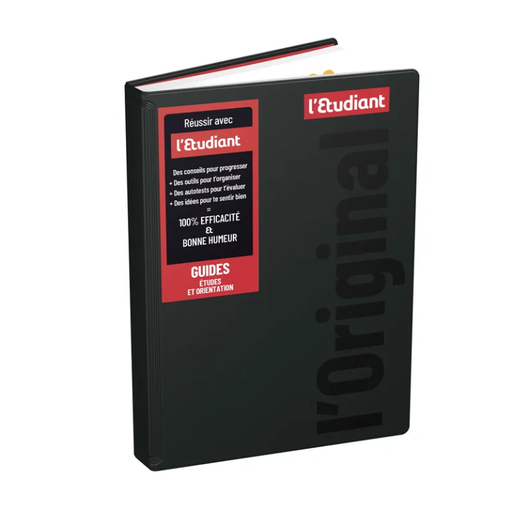
Why this model suits this profile: its approximately 15 × 21 cm format slips easily into a school bag and covers the 2026–2027 academic year.
The academic period is clearly stated, helping you distinguish a school planner from a calendar-year planner running from January to December.
352 pages, one page per day according to the description, a black semi-rigid cover and spiral binding.
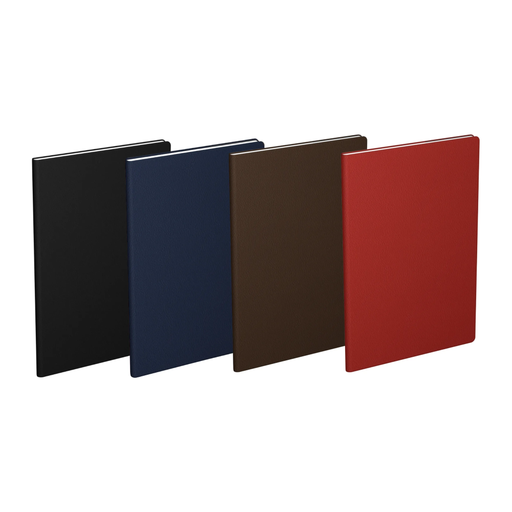
Why this model suits this profile: its weekly layout lets you keep track of classes, appointments and tasks without spreading them across multiple pages.
The covered period, spanning 26 to 27 weeks, is specified on the product page. Compare it with your needs before buying.
21 × 27 cm format, weekly layout, PVC cover and a choice of four coordinated colours.
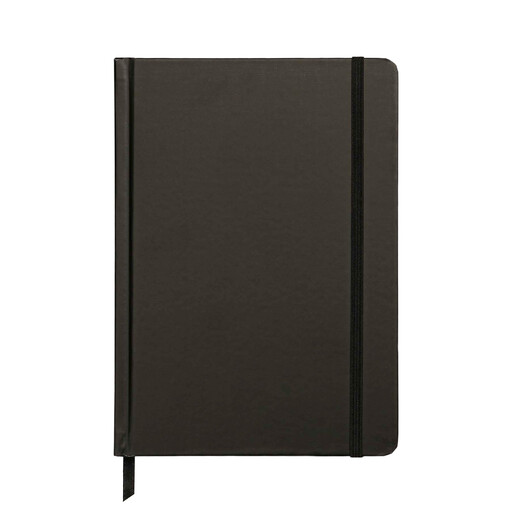
Why this model suits this profile: its A5 format and undated design allow you to start a project at any time.
The monthly and weekly pages are undated, so if your routine changes, you will not be left with unused weeks.
224 pages, 112 sheets of 100 g/m² offset paper, hard cover, bookmark and elastic closure.
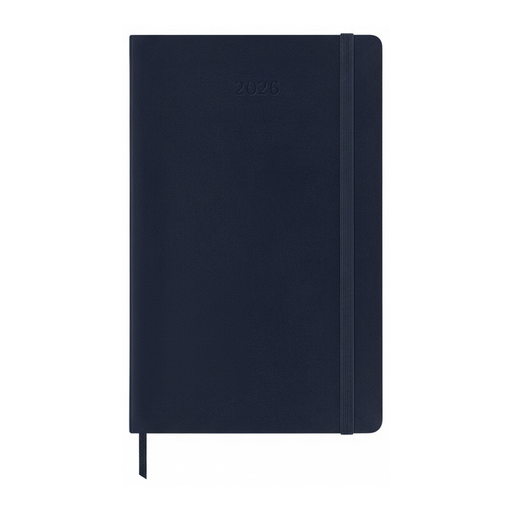
Why this model suits this profile: one page per day is ideal for professional schedules, travel and detailed lists.
The product page specifies that the planner covers January to December 2026 and includes one page per day. The available writing space is therefore clearly defined.
70 g/m² acid-free ivory paper, elastic closure, bookmark, expandable inner pocket and pages dedicated to travel, goals and ideas.
If your schedule is packed with appointments, choose a daily or weekly professional planner with a dedicated notes section. For study, prioritise a clearly stated academic period, an easy-to-read layout and a format that is convenient to carry. For travel and creative projects, note pages, monthly calendars and an inner pocket may prove more useful than an attractive cover alone.
The Moleskine references featured here are available in daily and weekly formats, with soft or hard covers, 70 g/m² ivory paper and various personalisation accessories depending on the model. If you are looking for a black planner, you can also compare the Moleskine, L’Etudiant and Jubiluu versions.
Browse our updated selection of academic planners and organisers to compare the available formats, periods, covers and colours.
Yes. A 2026–2027 school planner generally covers a period structured around the academic year, while a standard 2026 planner follows the months from January to December 2026. Check the start and end dates before ordering.
An undated planner does not contain a pre-printed calendar. Its lifespan therefore depends on how you use it. The featured Jubiluu model is designed for 18 months of organisation and includes undated monthly and weekly pages.
A hard cover can be a good choice for a planner carried in a bag every day, as it provides a firmer structure. If you prioritise lightness and flexibility, a soft or semi-rigid cover will probably be more practical. The right choice depends mainly on your means of transport, how often you use the planner and how much room you have in your bag.