
Livraison le jour même ou le lendemain

Qualité garantie

Débloquez vos offres de bienvenue: Livraison GRATUITE | Jusqu'à -80 % | 30 jours d'essai gratuits à JoyPlus
Téléchargez l'application
As the new year approaches, the hunt for the perfect 2026 planner is on. Far from a simple notebook, this is your future ally for structuring your projects, appointments, and goals for the next twelve months. But be warned, the choice is more complex than it seems. Between marketing promises and a multitude of formats, the risk of ending up with a planner that gets tossed in a drawer by March is very real.
As a Section Editor at Joybuy, I'm here to help you make sense of it all. Let's skip the jargon and focus on what truly matters. To save you from disappointment, here are the three most common mistakes to avoid and the essential criteria for making an informed choice.
The 3 pitfalls to avoid before buying your planner:
To avoid these setbacks, a few technical points need to be examined closely. They make all the difference between a gadget and a true partner in your organisation.
The choice of internal structure is the number one criterion. Your decision must align with your organisational style.
These two points guarantee the longevity and enjoyment of your planner.
Because every use case is different, here are our recommendations, chosen for their smart design and relevance.
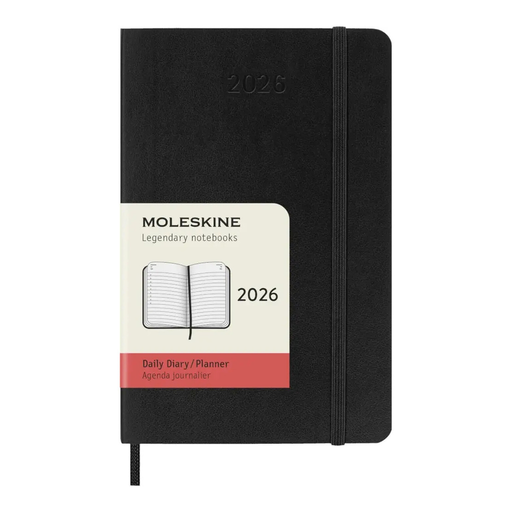
Why we chose it: For those who need space, this large-format Moleskine dedicates an entire page to each day. It's the ideal tool for detailing appointments, listing tasks, and taking meeting notes without ever feeling cramped.
Its daily layout precisely meets the need for detailed planning, avoiding the trap of an unsuitable format. The sewn binding and FSC-certified 70 g/m? ivory paper ensure durability and impeccable writing comfort.
The 180° lay-flat opening and expandable inner pocket make it a work tool that's as practical in the office as it is on the go.
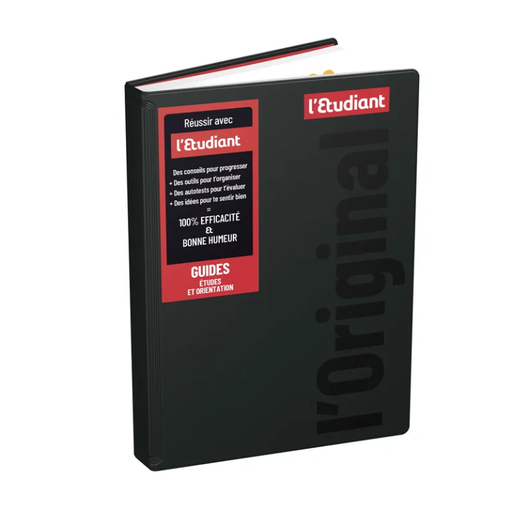
Why we chose it: Designed for the academic rhythm, this planner is a true classic. Its daily format is perfect for noting homework, exam dates, and timetables. Its sturdy cover is built to survive a year in a backpack.
The PVC cover and spiral binding are backpack-proof, avoiding the fragile binding pitfall. The format is specifically designed for the needs of students, making it indispensable throughout the year.
Unbeatable value for intensive daily use. The 15x21 cm format offers a great compromise between writing space and portability.
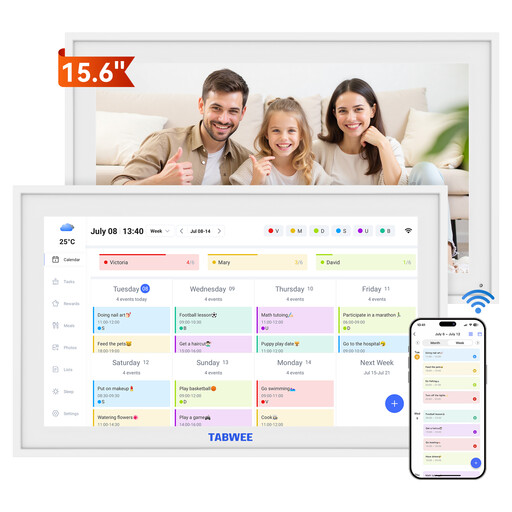
Why we chose it: For families juggling multiple schedules, a paper planner is no longer enough. This wall-mounted digital calendar becomes the true hub of family organisation, syncing everyone's appointments via a mobile app.
It completely bypasses the pitfalls of paper planners (wear and tear, paper quality, format). Its digital, shareable nature perfectly meets a family's coordination needs, where a solo planner would fail.
Syncing with family members' smartphones ensures everyone has the same information in real time. Its large touchscreen makes it intuitive and enjoyable for daily use.
We've compiled a complete, up-to-date list of products that meet our strict selection criteria.
The answer depends entirely on your use case and personality.
The main difference is the time period covered. An academic planner 2026-2027 typically starts in August or September and ends in June or July of the following year to align with the academic year. A standard planner covers the calendar year, from January to December 2026.
The best indicator is the paper weight, noted in g/m?. Standard paper is around 70-80 g/m?. For more liquid inks (fountain pens, fine-tip markers), opt for paper that is 90 g/m? or higher. Mentions like "optimised for writing" or reviews from other users can also be good clues. When in doubt, testing on an inconspicuous page (like the notes pages at the back) is always a good idea.