
Livraison le jour même ou le lendemain

Qualité garantie

Débloquez vos offres de bienvenue: Livraison GRATUITE | Jusqu'à -80 % | 30 jours d'essai gratuits à JoyPlus
Téléchargez l'application
As the new year approaches, the quest for the perfect 2026 planner is in full swing. Far more than a simple notebook, it's the companion that will set the pace for your projects, appointments, and goals. But faced with a jungle of formats and marketing promises, making a choice often turns into a headache. The result: all too often, we end up with a planner that gets tossed in a drawer. To prevent your wise investment from turning into a disappointment, let's review the three most common pitfalls.
To make an informed choice, it's essential to focus on objective criteria rather than aesthetics alone.
A good professional or personal planner is recognisable by its tell-tale technical details. By keeping these few points in mind, you can be sure you're investing in a tool that is reliable and enjoyable to use all year long.
Paper weight, expressed in grams per square meter (gsm), is the primary indicator of its quality and durability.
Also, check if the paper is certified "acid-free," a guarantee of longevity that prevents the pages from yellowing over time.
The sturdiness of your planner depends directly on its construction.
The choice of layout should match your organisational style.
To help you see how these criteria apply in practice, here are a few options tailored to specific needs.
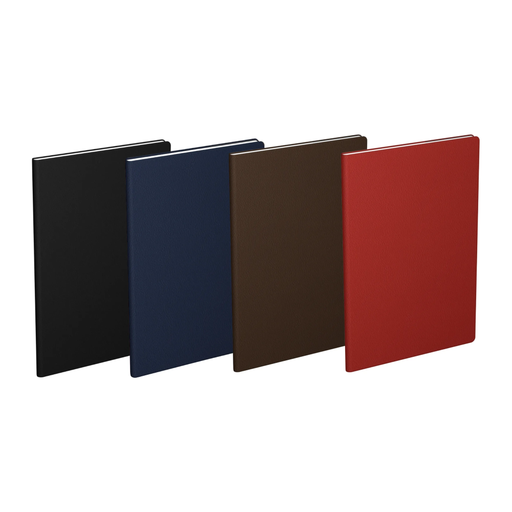
Why it's a great choice: Ideal for the 2026-2027 school year, this planner offers a spacious weekly format (21x27cm) to jot down homework, track schedules, and never miss an exam date. Its clean, functional design gets straight to the point.
Its sturdy PVC cover is designed to withstand the rough-and-tumble of a year in a backpack, thus avoiding the fragile binding trap. The weekly layout is perfectly suited to the academic rhythm.
Ultra-durable and protective PVC cover. Its large format provides comfortable writing space for crystal-clear organisation.
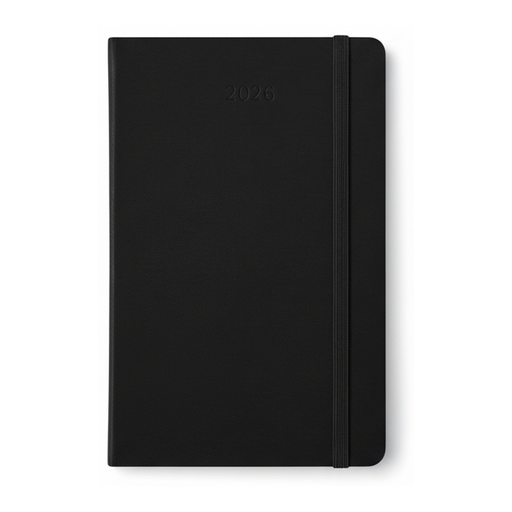
Why it's a great choice: A time-tested classic that has proven its worth. Its horizontal layout (the week across two pages) provides an at-a-glance view of appointments and deadlines. Its clean, discreet, and elegant design is perfect for meetings.
Its 70 gsm acid-free ivory paper and sewn binding are a guarantee of quality and durability. Say goodbye to bleeding ink and bindings that give up! The 180° lay-flat opening ensures maximum writing comfort.
Horizontal layout for a complete overview of the week. The renowned Moleskine build quality (paper, binding, finishing touches) is second to none.
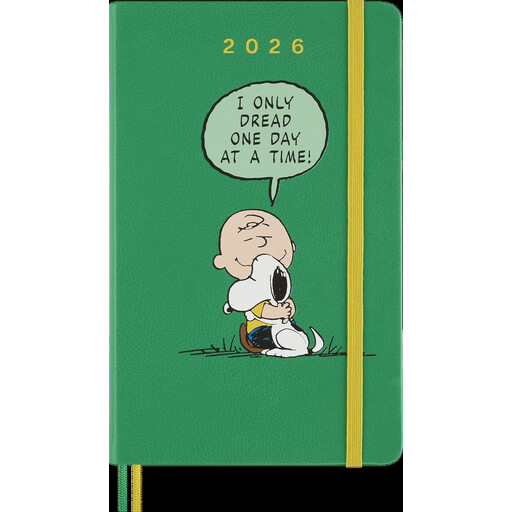
Why it's a great choice: For those who see a planner as both a collector's item and a space for expression, this limited edition Peanuts planner is the perfect marriage of organisation and creativity. The daily format (one page per day) leaves all the space you need for notes, sketches, and journaling.
By offering maximum space, it avoids the frustration of a cramped layout. The Moleskine quality (hard cover, 70 gsm paper, sewn binding) is a safeguard against issues with durability or poor-quality paper.
A unique, limited-edition design. One page per day for total freedom in planning and creating.
Discover our complete selection of planners that meet our criteria for quality and durability.
The difference lies in the time period covered. A 2026-2027 academic planner typically starts in August or September 2026 and ends in July or August 2027, to align with the academic calendar. A standard planner, on the other hand, covers the calendar year, from January to December 2026.
It all depends on how much space you need and what kind of view you prefer.
Quality 70 gsm paper, like that used by Moleskine, is treated to limit ink bleed. For most fountain pens and standard inks, the writing experience is very satisfactory, with little to no feathering. However, with very broad nibs or particularly wet inks, some slight "ghosting" (where the writing is visible through the back of the page) may occur. If you plan on heavy fountain pen use, a quick test on one of the last pages is always the best precaution.