
Livraison le jour même ou le lendemain

Qualité garantie

Débloquez vos offres de bienvenue: Livraison GRATUITE | Jusqu'à -80 % | 30 jours d'essai gratuits à JoyPlus
Téléchargez l'application
The new season is approaching, and with it, the quest for the perfect organisational companion?: the 2026-2027 planner. Whether you're a student, a professional, or a parent juggling multiple schedules, choosing a planner shouldn't be left to chance. The wrong choice can quickly become an unused tool that just gathers dust. Before you decide, let's review the common mistakes and essential criteria to find the planner that's truly right for you.
The market is flooded with attractive designs, but looks aren't everything. Here are three common flaws that can render a planner useless after just a few months.
To avoid these pitfalls, focus on a few technical features that define a planner's quality and utility.
This is the most personal criterion. Your choice will depend on your level of planning.
The size of your planner should match your lifestyle.
Regarding the binding, sewn binding (like that of many Moleskine planners) and sturdy metal spiral binding are generally the most durable for daily use.
The paper weight, expressed in grams per square meter (gsm), is a reliable indicator.
To help you see these criteria in action, here are a few options tailored to specific needs.
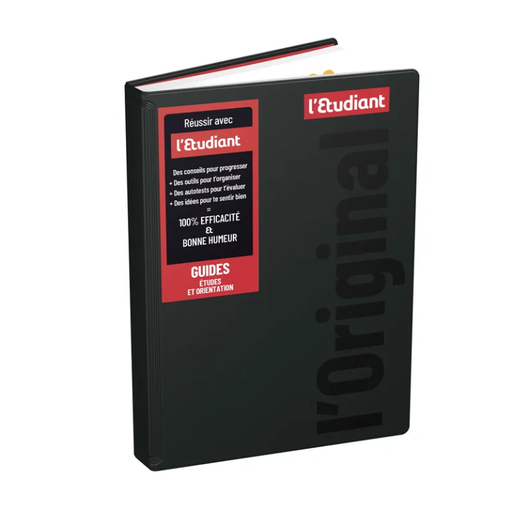
Why it's the perfect match : Designed for the academic year, its daily format (1 day per page) provides all the space needed to note down homework, classes, and memos. Its padded cover and spiral binding are built to withstand the hectic life inside a school bag.
It directly addresses the pitfall of an unsuitable layout for intensive academic use. The sturdy spiral binding is more flexible and durable than a simple glued binding when faced with daily handling.
Maximum writing space thanks to the 1-day-per-page layout. Convenient 15x21 cm size, not too big, not too small.
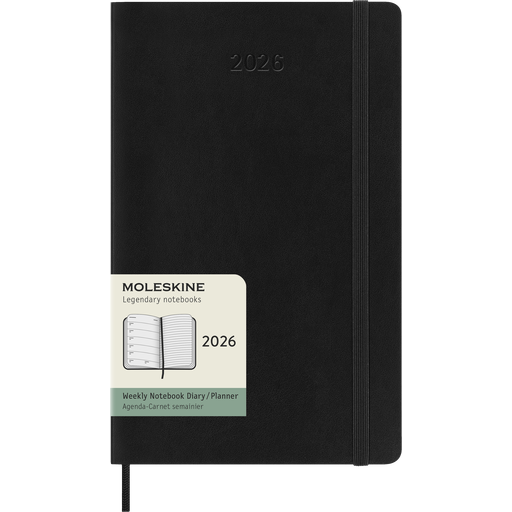
Why it's the perfect match : Its weekly layout, with one page for appointments and a facing page for notes, is perfect for project planning. The soft cover and clean Moleskine design make it a functional yet elegant object for meetings.
The sewn binding and acid-free 70 gsm ivory paper are quality guarantees that avoid the pitfalls of poor durability and ink bleed-through. The weekly layout is optimised for professional use, with no wasted space.
Lays flat at 180° for optimal writing comfort. Includes practical tools like travel planning pages and goal tracking.
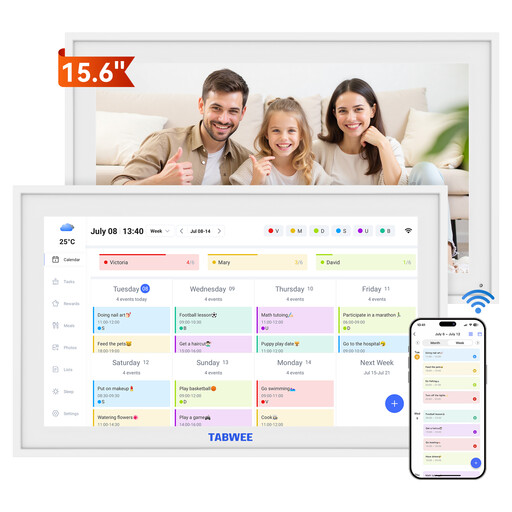
Why it's the perfect match : For families looking for a true command centre, this digital family calendar is a modern solution. Wall-mounted, its large 15.6-inch touchscreen lets you sync everyone's appointments, plan meals, and share notes.
It completely bypasses the physical pitfalls of paper planners (wear and tear, paper, size). Its digital and connected nature ensures that information is always up-to-date and accessible to all family members via Wi-Fi.
Centralises family information (appointments, menus, lists). Can also serve as a memory aid for seniors or as a digital photo frame.
Explore our complete selection of products that meet our strictest criteria for quality and durability.
The choice depends on how much detail you need. Opt for a daily planner if you need a lot of space each day for notes, detailed tasks, or multiple appointments (e.g., students, certain professionals). Choose a weekly planner if you need an overview of your week to plan projects and quickly see your availability (e.g., managers, consultants, parents).
The main difference is the time period covered. A 2026-2027 academic planner typically starts in August or September 2026 and ends in July or August 2027, following the academic year. A standard planner covers the calendar year, from January to December 2027.
A few simple steps can extend your planner's life. Always use the elastic closure to protect the pages in your bag. Store loose papers in the dedicated interior pocket rather than tucking them between pages, which can strain the binding. Finally, avoid leaving it near liquids.