
Livraison le jour même ou le lendemain

Qualité garantie

Débloquez vos offres de bienvenue: Livraison GRATUITE | Jusqu'à -80 % | 30 jours d'essai gratuits à JoyPlus
Téléchargez l'application
A paper planner can make it much easier to manage appointments, tasks and projects — as long as you choose a layout that suits your routine. With attractive formats, covers described as hard-wearing and all kinds of features to choose from, a few details can turn a good idea into a disappointing purchase.
Here are the points to consider before choosing a 2026 planner, along with a selection of models to suit different needs and planning habits.
A dated planner suits anyone who likes to plan the year ahead and see the dates at a glance. But if you start getting organised partway through the year, you may end up with lots of unused pages.
An undated A5 planner or an undated planning notebook, on the other hand, can be started at any time. It’s particularly well suited to one-off projects, studying, a new routine or planning over several months.
A weekly layout may seem practical, but the space allocated to each day varies considerably from one model to another. If you need to note several appointments, to-do lists and work-related information, a layout that’s too compact can quickly become hard to read.
A daily planner, by contrast, gives you more space, but is usually thicker and heavier. The right choice mainly depends on how much you write each day.
A hard cover offers better protection for your pages when you’re out and about, while a soft cover can help save a few grams in your bag. However, the overall durability also depends on the binding, fastening and paper quality.
A planner with an elastic closure and bookmark stays shut and makes it easy to find your place. These features are useful, but you should still check the size, page count and binding quality.
A5, at around 14.8 × 21 cm, offers a good balance between writing space and portability. It works just as well as a professional planner as it does for student life or everyday organisation at home.
Remember to check the weight and thickness, too. A planner with plenty of pages will be more comfortable to write in, but much less convenient to carry in a small bag or briefcase.
Also check where the notes pages are. Are they included in each week or grouped at the back of the planner? The first option makes it easier to add notes linked to an appointment or a particular period, while the second often gives you more free space.
The paper weight gives you an idea of how thick the paper is, but it doesn’t guarantee that ink won’t show through with every type of pen. 100 g/m² ivory offset paper, for example, feels more substantial than 70 g/m² paper while still being pleasant to write on every day.
A hard cover offers better protection on a shared desk or at the bottom of a bag. An elastic closure keeps the pages in place and can hold a few loose sheets, although it won’t turn your planner into a fully fledged binder. An inside pocket is particularly handy for carrying tickets, receipts or small notes.
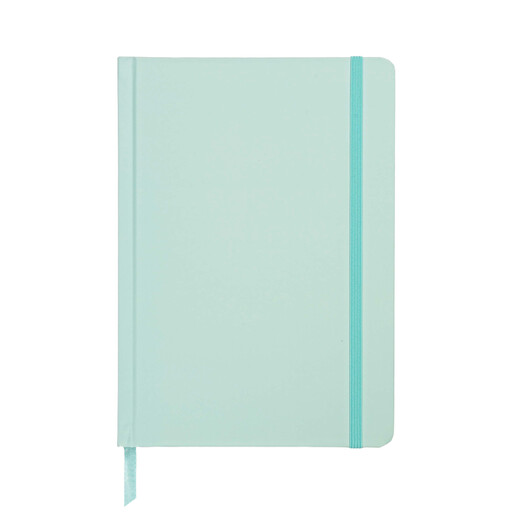
Why it suits this need: Its undated A5 format means you can start whenever you like, without leaving pages unused if your routine changes along the way.
The monthly and weekly views are undated, so you won’t lose any time, even if you start using the planner partway through the year.
224 pages, 100 g/m² ivory offset paper, hard cover, elastic closure and bookmark.
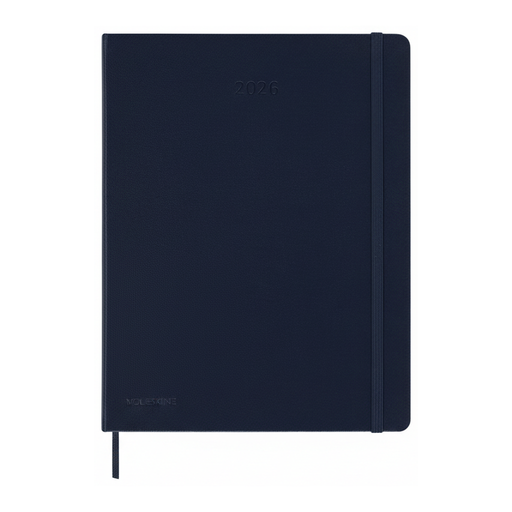
Why it suits this need: Its weekly view, complete with space for notes, is ideal for keeping projects, appointments and ideas organised.
The lay-flat binding, hard cover and elastic closure stand up to frequent use with ease.
Dedicated pages for travel, goals and ideas, an expandable inner pocket, stickers and a bookmark.
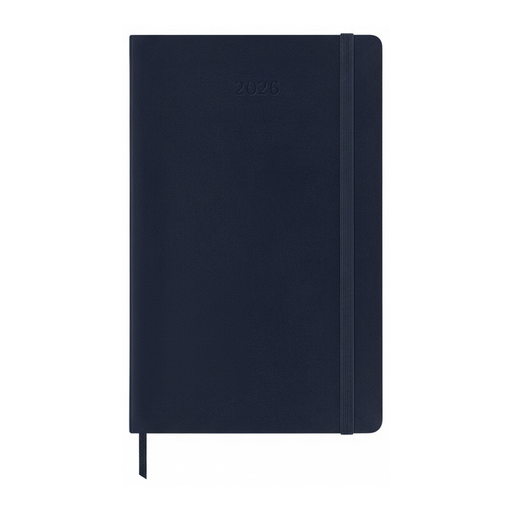
Why it suits this need: A full page for each day gives you room for schedules, to-do lists, detailed notes and journalling.
The daily layout means you don’t have to squeeze several appointments and tasks into the limited space of a weekly planner.
Soft cover, 70 g/m² ivory paper, elastic closure, bookmark, inner pocket and dedicated pages for travel and goals.
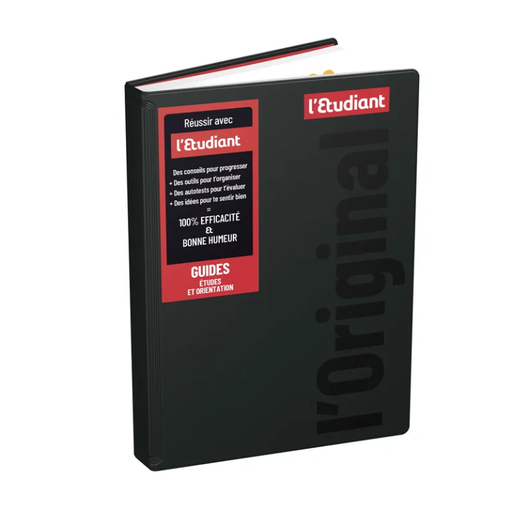
Why it suits this need: Its 15 × 21 cm format and one-page-per-day layout are ideal for keeping track of classes, homework, exams and activities.
The daily layout means you won’t have to cram several school deadlines onto a single line in a weekly planner.
352 pages, spiral binding, semi-rigid cover and simple ruling.
We’ve put together a comprehensive, regularly updated selection of products that meet these exacting criteria, as well as European safety standards.
A weekly planner usually shows several days across a double-page spread. It’s suited to recurring appointments and anyone who wants an overview of the week. A daily planner gives you more space for each date, making it a better choice for busy days and detailed note-taking.
You can use an undated planner at your own pace. An 18-month planner lets you plan over a longer period, but how long it lasts in practice depends on how many pages you fill in each day and how often you use it.
Yes, a hard cover generally offers better protection against bent pages. Before putting it in a briefcase or backpack, though, check its weight and thickness, and whether it has an elastic closure or an inner pocket.