
Livraison le jour même ou le lendemain

Qualité garantie

Débloquez vos offres de bienvenue: Livraison GRATUITE | Jusqu'à -80 % | 30 jours d'essai gratuits à JoyPlus
Téléchargez l'application
A 2,000 W digital heat gun can be used to strip paint, soften adhesive, shape vinyl, shrink tubing or work with certain materials. But the stated wattage alone isn’t enough to make the right choice. Poorly controlled temperature, excessive airflow or impractical accessories can make the job harder, and may even damage the surface.
Here are the criteria to consider before buying a hot air gun with LCD screen, along with a selection suited to different types of DIY enthusiasts.
A power rating of 2,000 W indicates the electrical capabilities of the motor and heating element. It tells you nothing, however, about the precision of the controls. For stripping a door, laying vinyl flooring or shrinking tubing, the key is being able to finely adjust the temperature and airflow.
A powerful tool without progressive control risks overheating a painted surface, deforming plastic or burning adhesive. So make sure the heat and airflow have separate controls.
A maximum temperature of 600 °C can be useful for removing certain paints or softening tough materials. Delicate work, however, requires much more moderate heat. A range of 50 to 600 °C offers greater versatility, provided the selected temperature is clearly displayed and adjustable with enough precision.
The LCD screen isn’t just a design feature: it lets you check the current setting and reduces guesswork from one step to the next.
Holding a heat gun at arm’s length soon tires your wrist, especially during a long job. Being able to stand it vertically on a workbench frees up your hands to hold a workpiece or guide a scraper.
Nozzles also have a very practical purpose. A wide nozzle spreads heat over a larger area, while a concentrator directs the flow to a precise spot. A reflector nozzle can be handy for shrinking tubing, as long as you follow the manufacturer’s recommendations.
For versatile use, choose an adjustable heat gun with two separate controls:
The Cecotec model shown here claims an adjustable airflow of 200 to 500 l/min and a range of 50 to 600 °C. These values are based on the manufacturer’s specifications: they don’t replace the need to test gradually on an inconspicuous area.
A power output of 2,000 W is suitable for regular household tasks and many renovation jobs. Before ordering, however, check the cable length, plug type, weight and overall balance. A heavy or poorly balanced tool quickly becomes uncomfortable when you’re stripping a large surface.
The heating element and motor also need to cool properly. Never block the air intakes and always follow the cooling time stated in the manual.
A heat gun with nozzles can be far more practical than a bare model. The most useful accessories are generally:
A carrying case makes storing the nozzles easy and protects the tool between uses. For compliance, check for regulatory information, instructions in English, contact details for the responsible party established in the European Union, and safety instructions. The CE marking is mandatory for product compliance, but on its own it is not a guarantee of performance or durability.
The product shown below can cover several uses. The three cards link it to different profiles: these are not three separate products, but three ways to make use of its settings and accessories.
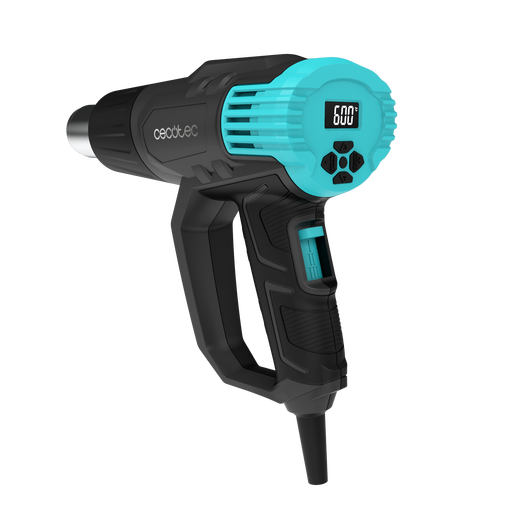
Why this choice suits this profile: the digital screen, 50 to 600 °C range and four nozzles let you tackle several jobs without needing multiple tools.
The digital control avoids working with just a “low” or “high” setting, which is often imprecise on simpler tools.
2,000 W power, control screen, claimed airflow of 200 to 500 l/min and case included.
Why this choice suits this profile: users who want clearer control get temperature and airflow displayed directly on the tool.
The digital display reduces setting errors and makes it easy to return to a previously used configuration.
LCD display, claimed fast heating, independent airflow control and ability to stand the tool vertically.
Why this choice suits this profile: renovation work, vinyl installation and heat-shrink tubing benefit from accessories designed to distribute heat in different ways.
The four nozzles prevent you from always concentrating the flow on a small area and let you adapt the heat to the surface.
Reflector nozzle, wide nozzle, concentrator, heat deflector and storage case.
A heat gun can ignite certain materials or release irritating fumes. To work safely:
For removing paint, a suitable scraper usually completes the job. With heat-shrink tubing, keep enough distance to avoid piercing it or overheating the cable.
There is no universal temperature that works for all paints and surfaces. Start with a moderate setting, observe the softening, then increase gradually. Avoid burning the paint: it can release harmful fumes and damage the surface underneath.
At full power, a 2,000 W tool consumes around 2 kWh per hour of continuous use. In practice, it’s usually used intermittently. Consumption therefore depends on the setting, how long you use it and the heating cycles. Check the manual and your electricity supplier’s rates to estimate the actual cost.
The lifespan depends on how often you use it, cooling, maintenance and following the instructions. Avoid blocking the air intakes, don’t place the hot tool on a flammable surface and unplug it after each use. A model used occasionally at home obviously doesn’t face the same demands as a tool used every day on a worksite.