
Livraison le jour même ou le lendemain

Qualité garantie

Débloquez vos offres de bienvenue: Livraison GRATUITE | Jusqu'à -80 % | 30 jours d'essai gratuits à JoyPlus
Téléchargez l'application
Choosing your child's first "real" bike is a major milestone. Once the training wheels are a thing of the past, the 20-inch kids' mountain bike becomes the gateway to new adventures, whether on country lanes, forest trails, or family rides. But with an overwhelming number of options, making a choice can quickly become a headache. Between different brake types, the presence (or absence) of gears and suspension, how do you make sense of it all?
This guide is here to help. Our mission: to break down the essential criteria for you and present a selection of the best current models. The goal is to help you make an informed decision that's right for your young cyclist's age, height, and, most importantly, their riding style.
Before diving into our top picks, let's review the key points that will make all the difference in terms of safety, comfort, and, of course, riding enjoyment.
A 20-inch kids' bike is generally recommended for children between 120 and 135 cm tall, which corresponds to the 6 to 10-year-old age range. More than age, it's the child's height that truly matters. The golden rule: they should be able to touch the ground with the balls of their feet while seated on the saddle and straddle the frame easily.
The bike's weight is another criterion that should not be overlooked. A lighter model will be infinitely easier to manoeuvre, accelerate, and control, especially for a young rider. An aluminium frame is a great indicator of a lightweight build compared to a heavier steel frame.
As soon as you leave the pavement, the spec sheet really starts to matter.
Be aware that the "20-inch bike" label covers several different worlds. The MTB is built for trails, with its knobby tyres and often a suspension fork. The BMX is the king of the skateparks, designed for tricks with its compact and ultra-durable frame. In between, the all-purpose bike (sometimes called a kids' hybrid) is perfect for everyday mixed-use.
And now for our top picks! We've selected a variety of 20-inch models capable of satisfying everyone from an 8-year-old rider to a 10-year-old adventurer.
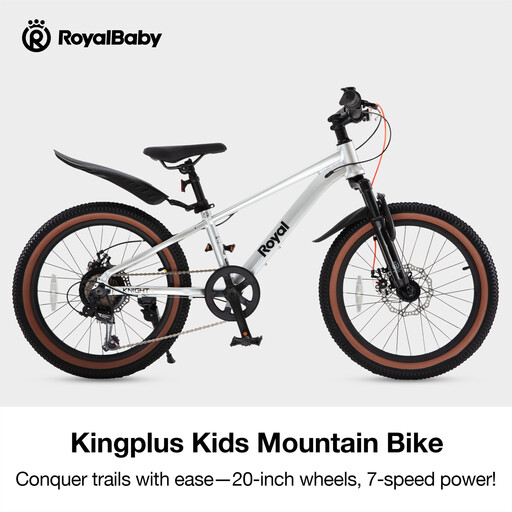
Why we love it: The Kingplus is a true little mountain bike at heart, built for adventure. Its aluminium alloy frame combines lightness and durability, and its components are designed for going off the beaten path.
Key features:
Who is it for? For young explorers who dream of hitting the forest trails and are looking for a bike that is both high-performing and confidence-inspiring.
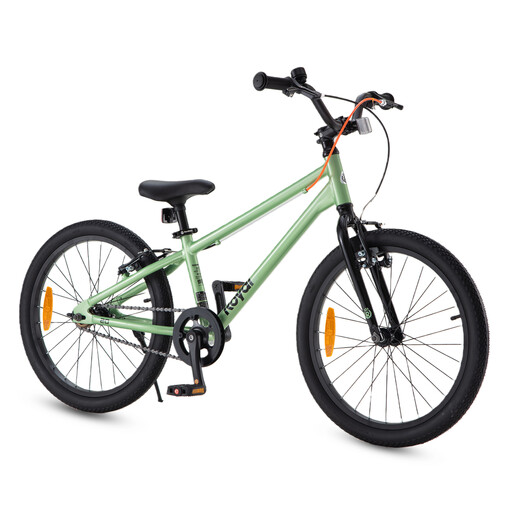
Why we love it: Here, lightness is the name of the game. With its aerospace-grade aluminium frame, this bike tips the scales at a feather-light 7.4 kg. The result: stunning manoeuvrability and ease of handling for a child.
Key features:
Who is it for? Ideal for daily commutes, park rides, and first forays onto easy trails. An excellent choice for those who prioritise manoeuvrability above all.
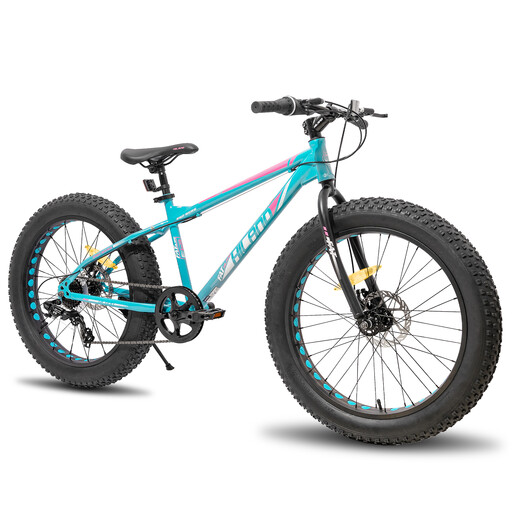
Why we love it: You can't miss this one! With its XXL 4-inch tyres, this "fat bike" is a fun machine, designed to ride where others stop. Sand, snow, mud... nothing scares it. It offers impressive stability and a unique riding feel.
Key features:
Who is it for? For young riders who want to stand out from the crowd and have fun on any terrain, even the most unlikely. A bike with killer looks and exceptional all-terrain capabilities.
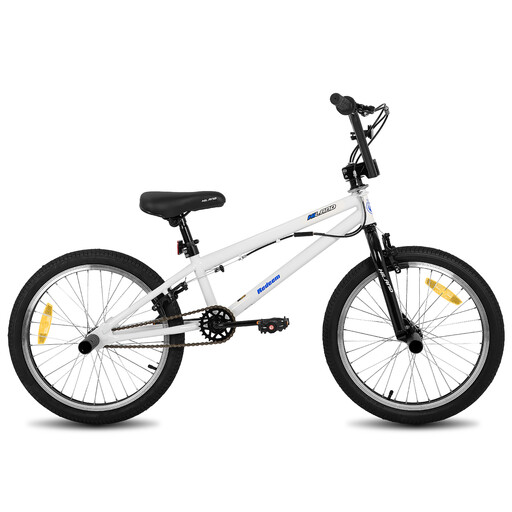
Why we love it: It's freestyle time! The Redeem is a purebred BMX, designed for learning tricks and progressing in an urban environment. Its specialised equipment makes it the king of skateparks and playgrounds.
Key features:
Who is it for? For future freestyle champions who are addicted to tricks and thrills, and who are looking for a bike 100% dedicated to their passion.
Is your perfect match not in our selection? Every child is different, and so are their preferences. To discover other models, feel free to explore the full range.
? Explore the entire collection of kids' bikes
A 20-inch bike is often recommended for the 6-10 age range. But the real criterion is height: between 1.20 m and 1.35 m. The golden rule: the child must be able to touch the ground with the balls of their feet while seated on the saddle, and straddle the frame without difficulty.
Not necessarily, if the bike stays on pavement or well-maintained paths. However, as soon as you venture onto real MTB trails, in the forest, or on rough terrain, a suspension fork becomes a real plus. It smooths out bumps in the terrain, providing comfort and control.
For all-purpose use, V-brakes do the job perfectly: they are lightweight and easy to maintain. For more serious MTB riding, disc brakes are a step above. Their superior and consistent stopping power, even in the rain or mud, is a real safety asset on demanding routes.