
Livraison le jour même ou le lendemain

Qualité garantie

Débloquez vos offres de bienvenue: Livraison GRATUITE | Jusqu'à -80 % | 30 jours d'essai gratuits à JoyPlus
Téléchargez l'application
The transition to a 20-inch bike is a rite of passage. Your child is no longer a toddler, and their desire for both adventure and independence is growing. Faced with an overwhelming array of models, technical terms, and styles, it's often difficult to make sense of it all. MTB, BMX, or an all-purpose bike?? With or without gears?? This guide is here to break down the key criteria and help you choose a 20-inch kids' bike that is perfectly suited to their size, ambitions, and safety.
Before we dive into specific models, let's review some fundamental criteria to ensure comfort, safety, and the joy of riding.
The "for ages 6-10" label is a good starting point, but the child's height—and more specifically, their inseam measurement—remains the most reliable criterion. For a 20-inch bike, the child should be able to sit on the saddle and touch the ground with the tips of their toes. Clearing the frame should also be effortless.
The bike's weight is just as crucial. A lightweight kids' bike is easier to manoeuvre, accelerate, and control, especially on climbs or during their first rides without training wheels. An aluminium frame is often an excellent indicator of a lighter bike compared to a steel frame, although the latter is known for its rock-solid durability.
The choice will mainly depend on how your child will use their bike.
Two main types of brakes are common:
Here are a few models that caught our attention for their features and suitability for different uses.
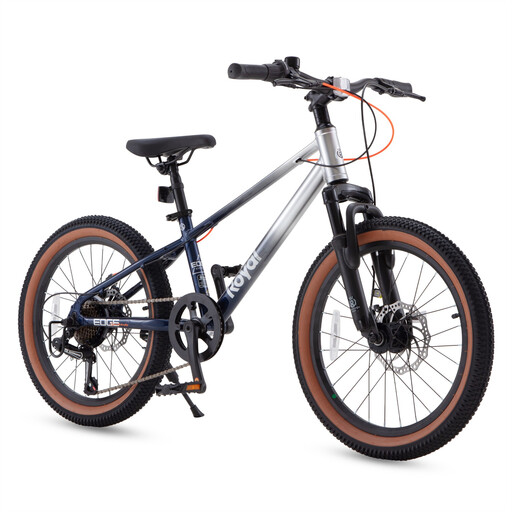
Why it stands out?? The RoyalBaby EDGE is a true, scaled-down kids' all-terrain bike. With its aluminium frame, suspension fork, and disc brakes, it's ready for kids to venture off the beaten path in complete safety.
Key features:
Who is it for? For young adventurers aged 6 to 10 who are ready to explore dirt paths, forest trails, and routes with a bit of elevation. An excellent choice for getting started with a 20-inch kids' MTB.
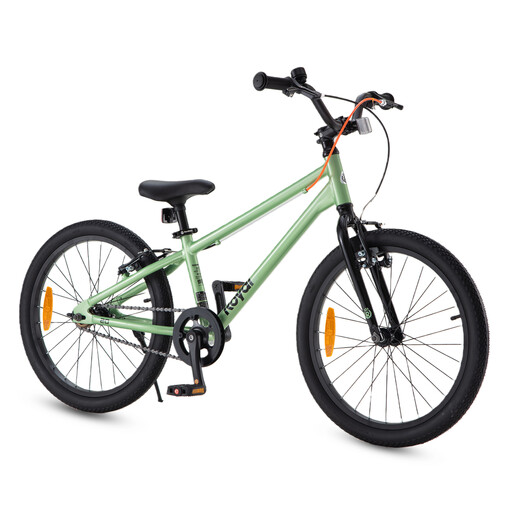
Why it stands out?? This model is all about being lightweight. Its aerospace-grade aluminium frame makes it exceptionally easy to handle. This is a major advantage for building confidence, learning to balance, and enjoying long rides without getting tired.
Key features:
Who is it for? Ideal as a first “?big-kid bike?” for daily use, family rides, and trips on bike paths. Its feather-light weight makes it an excellent lightweight kids' bike, whether as a 20-inch boys' bike or a 20-inch girls' bike.
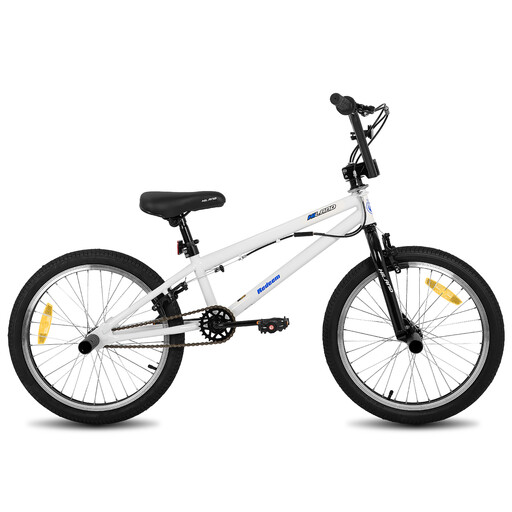
Why it stands out?? The Hiland Redeem is a purebred 20-inch BMX, built for an introduction to freestyle. Its specific equipment, like the rotor and pegs, allows kids and teens to start learning tricks in complete safety.
Key features:
Who is it for? For kids and teens drawn to BMX and freestyle culture, who are looking for a bike specifically designed to learn their first tricks at the skatepark or on the street.
Our selection is just a glimpse of the different possibilities the 20-inch size offers. If you want to explore other models, colours, or types of bikes to accompany your child's growth, feel free to browse our full range.
Generally, a 20-inch bike is recommended for children aged 6 to 10, measuring between 120 cm and 135 cm. However, the most reliable criterion is the inseam measurement: the child should be able to touch the ground with the tips of their toes while seated on the saddle.
It all depends on the intended use. For flat routes, city rides, or BMX, a single-speed bike is simpler, lighter, and requires less maintenance. For hilly routes or kids' MTB riding, gears become almost essential to help the child climb hills more easily and manage their effort.
Historically, girls' bikes had a “?step-through?” frame (a very low top tube) to be ridden while wearing a skirt. Today, for kids' bikes, the distinction is now mostly aesthetic (colours, graphics). Most 20-inch frames have a “?sloping?” top tube, which makes them effectively unisex and easy to get on and off. The most important thing is to choose a bike that your child loves and feels perfectly comfortable on.