
Livraison le jour même ou le lendemain

Qualité garantie

Débloquez vos offres de bienvenue: Livraison GRATUITE | Jusqu'à -80 % | 30 jours d'essai gratuits à JoyPlus
Téléchargez l'application
Constantly wet countertops, dishes piling up… it's a familiar scene in many kitchens. The 2-tier dish rack seems like the perfect solution: it uses vertical space to free up your counter and organise drying. But be warned, not all models are created equal. A poor choice can quickly turn into a nightmare of rust, instability, and impractical design, leaving you with nothing but disappointment.
To help you avoid these common traps, let's review the most frequent pitfalls.
To find the countertop dish drying rack that will change your life, there are a few technical points to keep a close eye on.
The choice of material directly impacts your dish rack's lifespan.
A good dish drying rack must drain water flawlessly. Its drainboard is the cornerstone of this system. The most effective systems include:
The effectiveness of a space-saving dish rack isn't just about its footprint, but its smart organisation. A two-tier model doubles the drying area without taking up more counter space. Be sure to check the following points:
Because there's no one-size-fits-all solution, the right choice depends on your kitchen and your habits. Here are a few profiles to guide you.
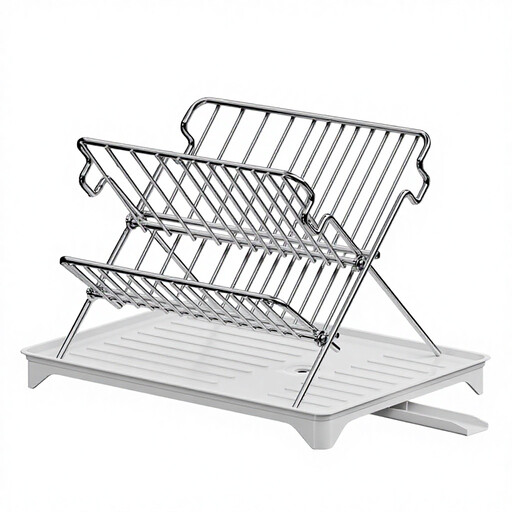
Why it stands out: Perfect for small kitchens where every square inch counts. It's fully foldable, freeing up your countertop in a flash for maximum flexibility.
Its structure combines stainless steel and PP (polypropylene) plastic, a duo of materials that isn't afraid of moisture and prevents rust. The integrated drainage pipe continuously drains water, preventing any stagnation.
Foldable for ultra-compact storage. Anti-corrosion materials. Direct water drainage.
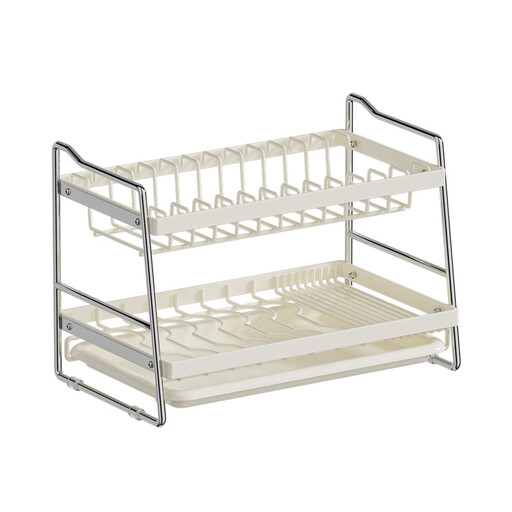
Why it stands out: Designed for families and their daily mountain of dishes. Its fixed two-tier structure offers generous storage volume and clear organisation for plates, glasses, and cutlery.
Its durable composite plastic design completely eliminates the risk of rust. The integrated drainboard is designed to channel water and keep the countertop dry, solving the problem of stagnation.
Very large two-tier capacity. 100% rust-proof composite material. Integrated drainage system for a spotless countertop.
Even with the best dish rack in the world, some utensils or fragile dishes require hand-drying. Keeping the sink area clean and dry is also an essential hygiene practice. Having absorbent and durable kitchen cloths on hand is the ideal complement to your drying station. They're perfect for wiping up the last drop, cleaning the countertop, or polishing glasses.
To complete your setup, discover our selection of products that combine practicality and durability.
1. What is the lifespan of a stainless steel dish rack? It all depends on the quality of the steel and your maintenance routine. A 304 steel model, cleaned regularly to remove limescale and soap deposits, can last for years without a single spot of rust. Most importantly, do not use abrasive sponges: they will scratch the surface and make it vulnerable to corrosion.
2. How do you properly clean a 2-tier dish rack? For easy maintenance, empty it completely once a week. Wash all components (racks, drainboard, cutlery holder) with hot, soapy water. For stubborn limescale, a diluted white vinegar solution works wonders. Rinse well and dry completely before reassembling.
3. Is a foldable dish rack really stable? Yes, if the model is well-designed. Look for models with locking mechanisms to secure the structure and non-slip feet for a good grip on the countertop. Once properly set up, a quality foldable dish rack is just as reliable as a fixed model for daily use.