
Livraison le jour même ou le lendemain

Qualité garantie

Débloquez vos offres de bienvenue: Livraison GRATUITE | Jusqu'à -80 % | 30 jours d'essai gratuits à JoyPlus
Téléchargez l'application
Finding the right 2-person ultralight hiking tent can make all the difference on a backcountry trip. The equation is simple: a lighter shelter means a lighter pack, more miles covered with less fatigue, and ultimately, more enjoyment. However, in a market saturated with marketing promises, it's easy to be misled. Before you make a decision, it's essential to know the common pitfalls to avoid.
As a Product Expert at Joybuy, my role is to help you see things more clearly. Let's review the three most common mistakes to help you make a truly informed choice.
To avoid these nasty surprises, focus on a few key technical specs that don't lie. They are the true identifiers of your future compact hiking shelter.
A tent's waterproofness is measured by its hydrostatic head (HH) in millimetres (mm) and is indicated by a PU value. You need to distinguish between two areas?:
The choice of structure directly impacts the weight and ease of setup of your 2-person trekking tent.
The fabric is the heart of your tent. The choice often comes down to a trade-off between polyester and nylon.
Don't forget that a double-wall tent (an inner tent made of mesh and a waterproof rainfly) remains the most versatile setup for effectively managing condensation.
The perfect tent doesn't exist. However, the perfect tent for you does. It all depends on your hiking style. Here are two options that illustrate this principle, for two very different types of hikers.
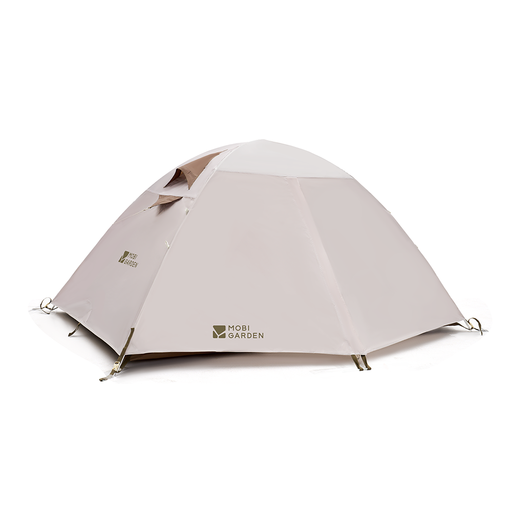
Why it's perfect for this profile : Ideal for weekend trips and hikes where durability is more important than gram counting. Its 68D polyester fabric offers much better resistance to abrasion and UV rays than ultralight nylons, ensuring peace of mind for regular use.
It doesn't sacrifice sturdiness for the sake of being lightweight. Its 2.64 kg weight is the right trade-off for enhanced durability, saving you from the nasty surprise of a torn fly mid-trip.
Durable 68D polyester fabric ; stable and easy-to-pitch freestanding dome structure.
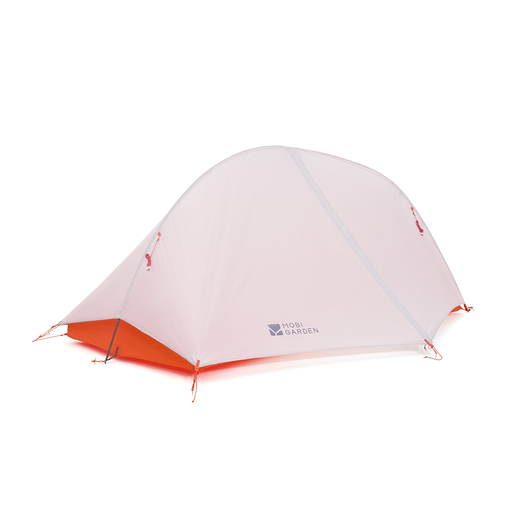
Why it's perfect for this profile : Designed for long-distance hikers and thru-hikes where every gram counts. Its featherweight of around 1.18 kg is a real asset for optimising your pack without sacrificing space for two.
Here, there are no false pretences : the ultralight promise is kept. Its weight is the deliberate result of using technical materials (20D nylon) that require a minimum of care. A clear pact for experienced hikers.
Total weight of around 1.18 kg ; remarkably compact when packed (48 x 11 cm).
We've compiled a complete selection of tents that meet our standards for quality and reliability.
The longevity of an ultralight tent depends primarily on its maintenance and frequency of use. A model made from more fragile 20D nylon will require more care than a 68D polyester one. To make it last, the golden rules are simple: always dry it completely before storing it, clean it with plain water (never use detergent?!), and store it in a dry place, away from the sun.
Not necessarily. A freestanding tent offers undeniable convenience, especially if you often camp on hard ground or wooden platforms where staking is impossible. Conversely, if your hiking areas are mostly forests and meadows, a non-freestanding model will save you precious grams. The choice depends on your habits and your favourite terrain.
Condensation is an unavoidable physical phenomenon—the camper's nightmare. The double-wall tent remains the best weapon to control it: moisture forms on the inner face of the rainfly, far from you and your precious sleeping bag. To minimise it, here are a few tips: maximise airflow by opening all the vents and, weather permitting, leave the vestibule doors partially open. Also, try to avoid pitching your tent right next to a stream or on overly damp ground.