
Livraison le jour même ou le lendemain

Qualité garantie

Débloquez vos offres de bienvenue: Livraison GRATUITE | Jusqu'à -80 % | 30 jours d'essai gratuits à JoyPlus
Téléchargez l'application
Finding the ideal 2-person hiking tent can be a daunting task. Weight, waterproofing, wind resistance, interior space... the spec sheets can quickly become overwhelming. Not to worry! Our guide is here to break down the essentials and help you make the right choice. We've analysed and selected tried-and-tested models so your only concern will be enjoying your next adventures.
Before diving into our selection, let's review the three key points that will make all the difference for comfort and safety in the field.
On a long-distance hike, the golden rule is simple: every gram counts. An ultralight 2-person tent should ideally weigh less than 2 kg. Less weight on your back means less fatigue and more energy to enjoy the scenery. Packability is just as crucial. A tent that packs down into a small compression sack frees up valuable space in your backpack for the rest of your gear.
Waterproofing, measured in millimetres (mm), is your best defence against rain. Aim for a minimum of 2000 mm for the rainfly and 3000 mm for the groundsheet; this is a good baseline for handling typical showers. For expeditions in wet terrain or in the mountains, a rating of 4000 mm (or more) will guarantee you complete peace of mind.
Seasonality is the other decisive factor:
Interior comfort isn't just measured in square metres. Headroom, near-vertical walls (which increase the perceived volume), and the presence of one or two vestibules for storing packs and boots out of the weather are details that make all the difference. A good bivouac tent should also set up in a flash, especially when a storm is looming. Freestanding designs are king in this category, prized for their remarkable simplicity.
From the weight-obsessed trekker to the all-season adventurer, here are the models that caught our eye.
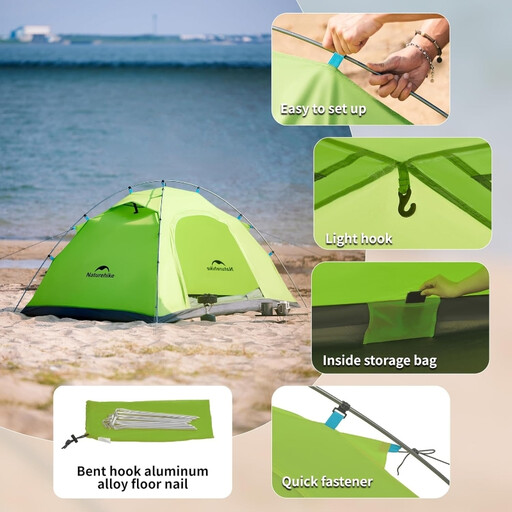
Why it stands out
This is the Swiss Army knife of our selection. With its 4-season design, it's all about versatility. Its treated polyester fabric protects against both bad weather and UV rays, making it an excellent option for year-round adventuring.
Key Features
Who is it for?
For hikers and campers looking for a single tent for all their outings, from spring to winter, without being weighed down by a heavy model. A smart choice for those who like to explore different terrains as the seasons change.
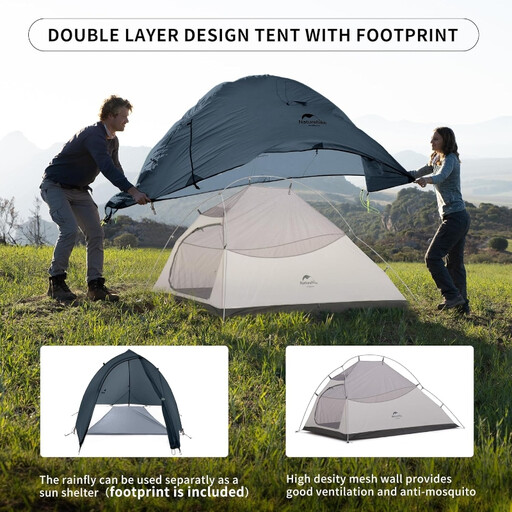
Why it stands out
The Cloud Up 2 is a true star in the world of ultralight 2-person tents. This "Upgrade" version pushes the boundaries even further with a stunning weight-to-waterproofing ratio, achieved through cutting-edge materials: 20D silicone-coated nylon and 7001 series aluminium poles.
Key Features
Who is it for?
For trekkers and long-distance hikers for whom every gram is the enemy. Its excellent waterproofing and durability make it a safe haven for 3 or 4-season adventures when the weather is unpredictable.
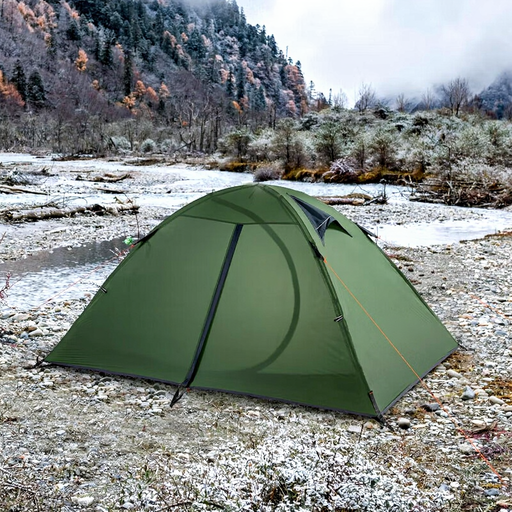
Why it stands out
This model is all about modularity and minimalism. Designed as a "1-person plus" or a "snug 2-person" tent, it proves to be an ultralight and ultra-compact solution. It's perfect for the solo adventurer who likes their space, or for duos travelling light.
Key Features
Who is it for?
For solo hikers who like to have space, bikepacking enthusiasts who count every gram, and duos for whom lightness is the top priority on quick getaways.
This selection is just a taste. If you have specific needs or are simply curious to see other models, our full catalogue awaits.
Explore our entire collection of waterproof tents to find your perfect match.
A 3-season tent is designed for the spring-summer-autumn trio. It focuses on ventilation (with large mesh panels) while providing good protection from rain. A 4-season tent, on the other hand, is a true miniature bunker: thicker materials, reinforced poles to stand up to wind and support light snow. Its inner tent is also less ventilated to better retain heat.
Absolutely. Below the 2 kg mark (all-inclusive: fabric, poles, stakes), a 2-person tent is considered ultralight. Models that hover around the 1.5 kg mark are the long-distance champions. Between 2 and 2.5 kg, you're still in the lightweight category, which often offers a bit more space or durability.
This is the secret to longevity! After every trip, the golden rule is: make sure your tent is 100% dry before storing it to avoid mould and mildew. For stains, a sponge, warm water, and mild soap are sufficient (never use a washing machine!). Also, remember to check the seams and zips from time to time. After a few years, a re-waterproofing spray can give it a new lease of life.