
Livraison le jour même ou le lendemain

Qualité garantie

Débloquez vos offres de bienvenue: Livraison GRATUITE | Jusqu'à -80 % | 30 jours d'essai gratuits à JoyPlus
Téléchargez l'application
Finding the perfect 2-person tent that can handle everything from the bright summer sun to the first snowfall can often be a real headache. With confusing spec sheets, materials with baffling names, and endless marketing promises, it's easy to get lost. Don't worry: we're here to break down the essentials for choosing the ideal shelter for your adventures, without all the unnecessary jargon.
This guide will review the key points to check and offer a selection of reliable models to help you make the right choice.
Before diving into our selection, let's review the three essential criteria that define a good 4-season hiking tent.
A four-season tent must be able to withstand extreme weather conditions, from driving rain to a light layer of snow. The waterproof rating, expressed in millimetres (mm) or as a PU rating, is the key indicator. Aim for a minimum of 3000 mm for the flysheet and groundsheet: this is the threshold that guarantees reliable protection for a waterproof bivouac tent. Materials like polyester or nylon with a silicone coating (silnylon) offer the best compromise between durability and water resistance.
When trekking, every gram counts. An ultralight 2-person tent is a decisive advantage, but it should never come at the expense of durability or basic comfort. For two people, the ideal weight for a lightweight trekking tent ranges from 1.5 kg to 2.5 kg. As for space, don't overlook the internal dimensions: an area of around 200 cm long by 130 cm wide provides adequate comfort for two adults and their gear.
A four-season tent isn't just for winter! In the middle of summer, a UV-protective camping shelter is essential for sun protection. Check that the fabric has a UV treatment (UPF rating). Additionally, good ventilation is crucial to prevent condensation. Look for models with mesh panels and adjustable vents to ensure effective airflow.
Here is our selection of tents that cater to different needs, from minimalist trekking duos to small families looking for comfort.
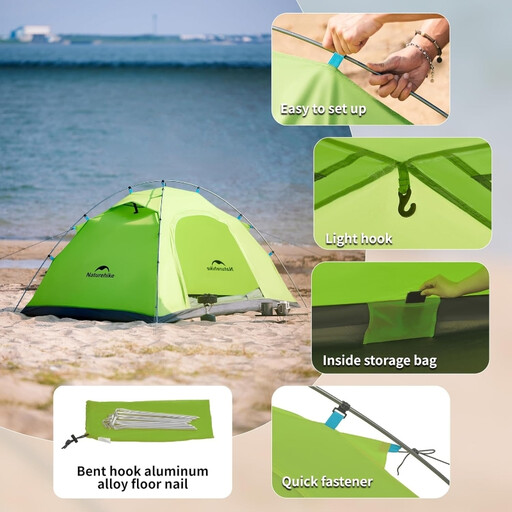
What sets it apart: An excellent compromise for those who prioritise versatility above all. Made from durable polyester with special treatments, it effectively protects against both rain and UV rays. Its low weight is a major asset for hikes where every gram counts.
Pros:
Who is it for? Trekking duos who want a reliable and lightweight shelter for their year-round outings, without breaking the bank or adding too much weight to their pack.
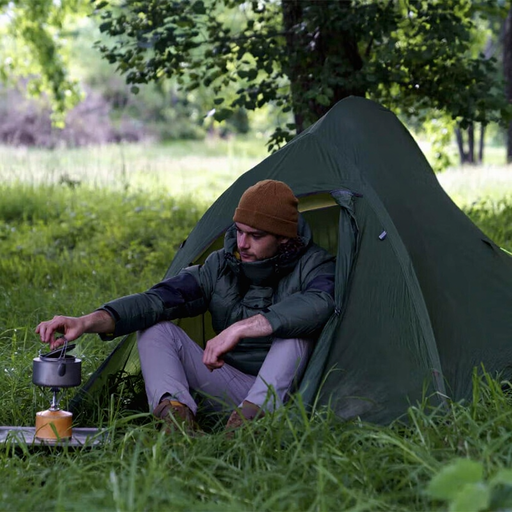
What sets it apart: This is a 3-season tent for one person, but it definitely earns its place here. It's ideal for the solo adventurer accompanying a duo or for those who make lightness an absolute priority in milder conditions. Its 20D silicone-coated nylon design and 7001 aluminium poles make it a technical and high-performance model.
Pros:
Who is it for? The solo hiker or mountaineer looking for an ultra-high-performance and compact lightweight trekking tent for trips from spring to autumn.
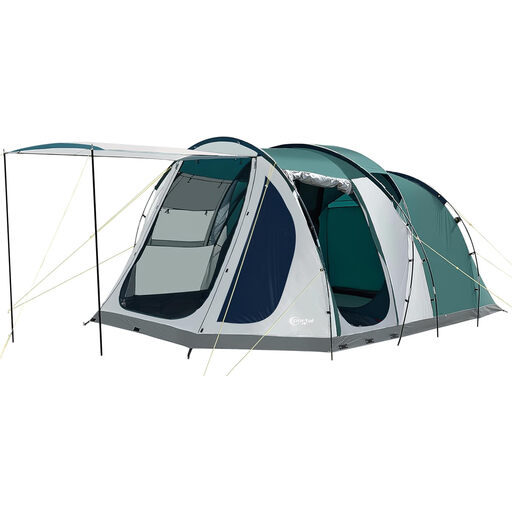
What sets it apart: We're switching gears with this XXL model for 5 people. It's the ideal solution for families or groups travelling by car, for whom space and comfort take priority over weight. Its tunnel structure creates a separate bedroom and a proper living area.
Pros:
Who is it for? Families or groups of friends on car camping trips who are looking for a spacious and comfortable base camp for multi-day stays, even if the weather turns.
If you're looking for a vehicle awning, a tarp, or an addition to your base camp, other options are available.
? Discover our selection of awning tents and outdoor shelters.
A 3-season tent is optimised for spring, summer, and autumn, prioritising light weight and ventilation. A 2-person, 4-season camping tent, on the other hand, is more robust: it features stronger poles and thicker fabrics to withstand wind and the weight of a light layer of snow. It also has fewer mesh panels to better retain heat.
For an ultralight 2-person hiking tent, a weight under 2 kg is considered excellent. Between 2 kg and 2.5 kg, the weight is still very acceptable for trekking. Anything heavier is generally considered a tent for car camping, where it doesn't need to be carried.
After each trip, make sure the tent is completely dry before packing it away to prevent mildew. Clean any stains locally with a damp sponge and mild soap. Most importantly, never put it in a washing machine, as this will destroy the waterproof coatings. Finally, store it in a dry place, away from direct sunlight.