
Livraison le jour même ou le lendemain

Qualité garantie

Débloquez vos offres de bienvenue: Livraison GRATUITE | Jusqu'à -80 % | 30 jours d'essai gratuits à JoyPlus
Téléchargez l'application
A 2-drawer metal toolbox might seem straightforward to pick. Yet several details directly affect how comfortable it is to use, how long it lasts, and how well it protects your gear. For a DIY enthusiast, occasional handyman, tradesperson or maintenance professional, the wrong size can quickly become cumbersome, unstable or awkward to carry.
Before comparing models, here are the main pitfalls to avoid.
A mini toolbox may look compact on paper but offer surprisingly little usable space. The thickness of the walls, the drawer slides and the dividers can eat into a fair amount of the interior volume. So always check the number of compartments and the height available in the top tray.
A drawer-style toolbox is best suited to small tools and accessories: screwdrivers, pliers, spanners, bits, fasteners or measuring instruments. It won't necessarily replace a large workshop chest designed for bulkier equipment.
A metal body can add rigidity to the box, but that alone doesn't guarantee a good day-to-day experience. Look closely at how smoothly the drawers open, how stable they are, and whether there's an interior liner. Without protection, tools can slide around, scratch the base or knock against each other during transport.
Drawers fitted with ball-bearing slides are designed to reduce friction and make handling easier. However, this feature only works well if the load stays reasonable and the closure keeps everything securely in place.
A portable tool chest needs to stay stable when you're moving it around a flat, garage, van or workshop. An integrated handle, combined with a lock or central latch, helps prevent the drawers from opening accidentally.
The closure isn't necessarily a proper anti-theft device. Its main job is to keep the box shut while you're on the move. For expensive equipment, also consider your storage and security arrangements.
A steel or iron box generally offers a more rigid structure than a lightweight plastic case. The trade-off is that it can be heavier and more prone to scratches or moisture. In a garage or cellar, place it on a dry surface and avoid prolonged contact with water.
A removable PVC liner offers several practical benefits:
For everyday use, choose an arrangement that clearly separates different types of tools. The top tray can hold the items you reach for most often, while the drawers are ideal for sorting screwdrivers, pliers, spanners and accessories.
An effective tool organiser should let you find each item quickly without having to empty the whole box. If you're looking for a storage case for a job site, also check that it can accommodate your drill, batteries and bits.
The dimensions need to match how you plan to carry the box. A model destined for a desk or workshop can sit on a shelf, whereas a portable tool chest must be easy to lift and move.
The green model shown below measures 27.43 × 14.99 × 20.83 cm and weighs 2.6 kg. These details help you judge its size more accurately before buying. For heavy-duty use, spread heavy tools across the different drawers to keep the box stable and the slides working smoothly.
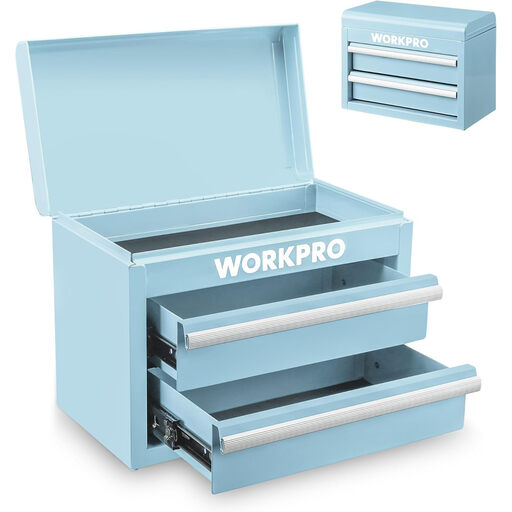
Why this suits this profile: Its compact size is ideal for small household repairs, creative hobbies and storing tools in a flat or compact workshop.
Its all-metal construction, two drawers and top compartment stop you from cramming all your tools into one space.
Ball-bearing slides, removable PVC liners, integrated handle and central lock.
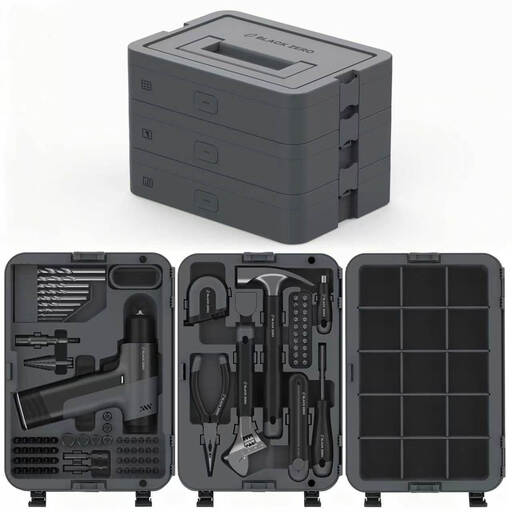
Why this suits this profile: This kit is designed for those who want to keep a cordless drill and hand tools together in one case.
The dedicated drill compartment separates the power tool from accessories, preventing loose storage.
16 V drill, 1,600 mAh battery, no-load speed of 0–1,000 rpm and three-tier box.
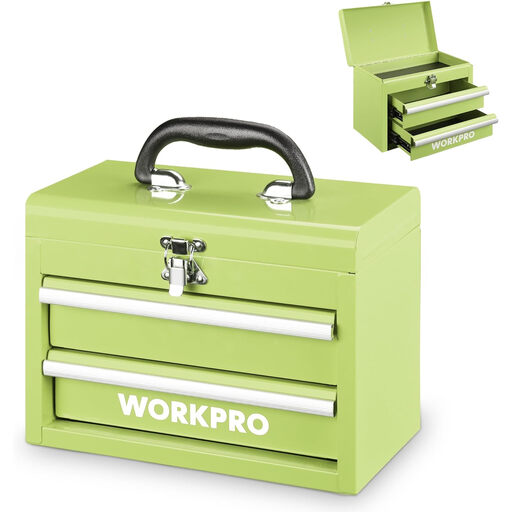
Why this suits this profile: At 27.43 × 14.99 × 20.83 cm, it's designed for carrying small tools in a vehicle, workshop or maintenance area.
The stated dimensions and weight let you judge its portability for yourself, rather than relying on a product photo alone.
Metal construction, portable size, two drawers and stated weight of 2.6 kg.
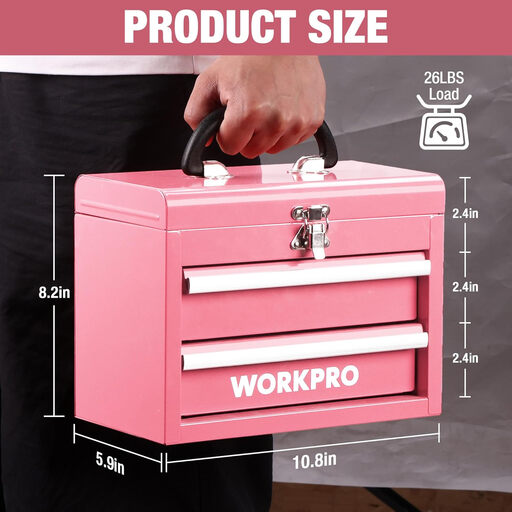
Why this suits this profile: Its three-zone layout can hold tools, office supplies or various small accessories used around the house.
The latch and integrated handle stop the drawers from opening during transport.
Two drawers, top compartment, removable PVC liners and ball-bearing slides.
We've put together a complete, real-time updated selection of products that meet these demanding criteria, while also complying with European safety regulations.
To extend the life of a 2-drawer metal toolbox, a few simple habits are all it takes:
For professional use, also check that the dimensions are compatible with your equipment. A mini toolbox is very handy for targeted jobs, but a more comprehensive DIY kit may prove essential for multi-purpose tasks.
Yes. This format works well for small repairs, flat-pack furniture assembly, routine maintenance and DIY activities. It's especially suitable when the tools you need to store are on the smaller side. For a bulky drill or several power tools, it's better to choose a deeper chest or a model with a dedicated compartment.
Keep it in a dry place, away from water splashes and major humidity changes. Wipe tools down before putting them away, and keep an eye on any scratched areas. If the manufacturer recommends it, apply a thin layer of protection suitable for metal surfaces, being careful not to get it on the liners or accessories.
It's generally more practical to carry, because the closure helps keep the drawers in place. However, an integrated lock shouldn't be treated as a certified anti-theft system. For expensive equipment, combine the closed box with secure storage and avoid leaving it unattended in a vehicle.