
Livraison le jour même ou le lendemain

Qualité garantie

Débloquez vos offres de bienvenue: Livraison GRATUITE | Jusqu'à -80 % | 30 jours d'essai gratuits à JoyPlus
Téléchargez l'application
Choosing a good 1 kg yellow PLA filament is the cornerstone of any successful 3D printing project. A vibrant, consistent colour, flawless bed adhesion, and smooth extrusion are essential criteria, whether you're creating rapid prototypes, decorative objects, or functional parts. But with the overwhelming number of options available, it can be difficult to know where to start.
This guide is designed to help you navigate the choices. We'll introduce a selection of reliable filaments and give you the keys to finding the one that perfectly matches your FDM 3D printer and creative ambitions.
Before you make a purchase, a few technical criteria deserve your full attention. They will help you select a 3D printer spool that ensures consistent results and minimises print failures.
Nearly all consumer FDM 3D printers use 1.75 mm diameter PLA filament. This is the current market standard. However, it's still crucial to check your machine's specifications. An incorrect diameter is a guaranteed cause of extrusion problems. A tight dimensional tolerance (e.g., ±0.02 mm) is a hallmark of quality, ensuring a consistent material flow from the beginning to the end of the 1 kg PLA spool.
Speed is undoubtedly the major innovation of recent years. Today, there are two main families of PLA:
A quality filament is made from pure polylactic acid (PLA) pellets, free of impurities. This is the best guarantee against clogged nozzles. Packaging is just as crucial: vacuum-sealed packaging with a desiccant packet protects the filament from moisture—PLA's main enemy, which causes bubbling and increased brittleness. Finally, neat, mechanical winding prevents tangles on the spool, a nightmare for any maker that can ruin a multi-hour print.
Here is a selection of products that stand out for their performance and market position, catering to different needs and user profiles.
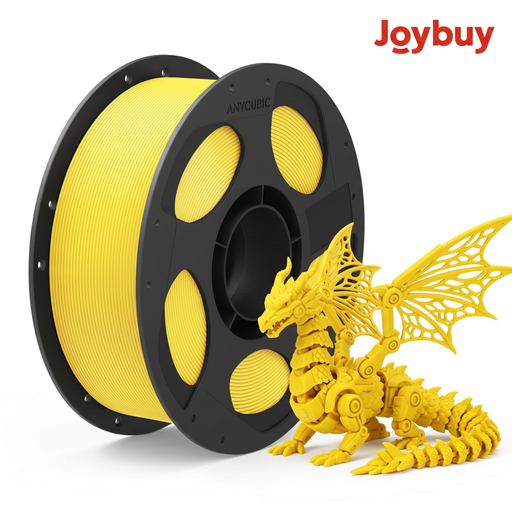
What sets it apart
This filament is a reliable choice for everyday use. It focuses on dependability and simplicity. Its formula is designed to provide a smooth printing experience, with a low risk of warping and a virtually non-existent odour—a significant advantage for use in an office or living space.
Key Features
Who is it for? Ideal for beginners, makers, and anyone looking for a reliable and affordable filament for their prototypes, display models, and everyday creative projects.
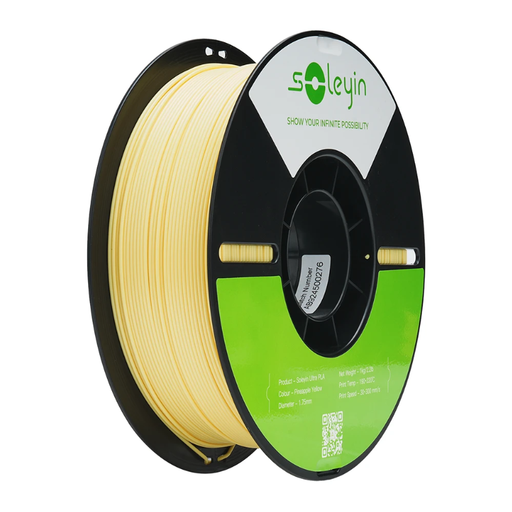
What sets it apart
Creality's Soleyin Ultra PLA is positioned as an enhanced version of classic PLA. According to the manufacturer, its "Ultra PLA" formula offers superior mechanical strength compared to standard PLA. It stands out with a very elegant matte finish and excellent inter-layer adhesion, which strengthens the final part.
Key Features
Who is it for? For intermediate to expert users who demand parts that are both aesthetically pleasing and more robust, whether for functional applications, precision modelling, or high-quality decorative objects.
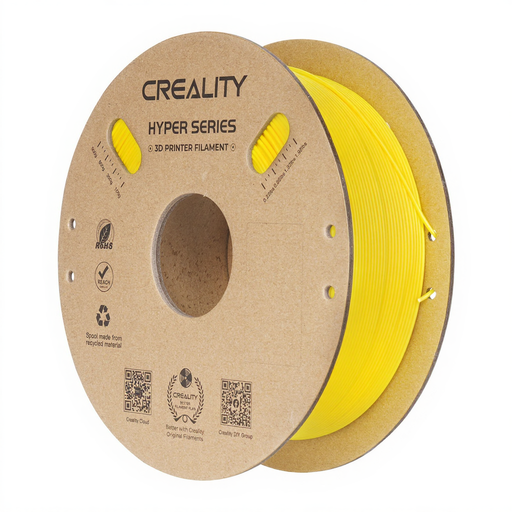
What sets it apart
This filament is all about pure performance. As its name suggests, Creality Hyper PLA is formulated for very high-speed printing, compatible with speeds up to 600 mm/s. Its high fluidity in a molten state and accelerated cooling allow it to maintain excellent surface quality, even at a frantic production pace.
Key Features
Who is it for? For owners of the latest generation of 3D printers (like the Creality K1, Ender-5 S1, or other high-speed models) who want to maximise their productivity without sacrificing quality.
The shade and properties of a filament can vary subtly from one brand to another. If the products featured here don't exactly match your project, or if you want to explore other finishes (like silk yellow, fluorescent yellow, or matte yellow), feel free to browse our full catalogue.
Explore our complete collection of yellow PLA filaments to find the perfect spool for your next project.
The fundamental difference lies in their chemical composition. High-speed PLA is formulated to have a lower viscosity at high temperatures, allowing it to flow faster through the nozzle. It is also designed to cool and solidify more quickly, which is crucial for preserving the object's geometry when the print head is moving at high speed. Attempting to use standard PLA at excessively high speeds will almost inevitably result in under-extrusion and surface defects.
PLA is a hygroscopic material, meaning it absorbs moisture from the air. This moisture degrades the filament, making it brittle and causing unsightly bubbles (popping) during printing. To preserve your 1 kg PLA spool, it is essential to store it in an airtight bag or a sealed storage box with silica gel packets (desiccant) between uses.
Polylactic acid (PLA) is a bioplastic derived from renewable resources like corn starch. It is often described as "biodegradable," but this claim requires clarification. PLA only degrades under very specific industrial composting conditions (high temperature, controlled humidity, etc.), which are never met in a home compost bin or in nature. It is therefore advisable to dispose of your failed prints and other PLA waste according to local recycling guidelines for plastics (recycling code #7).