
Livraison le jour même ou le lendemain

Qualité garantie

Débloquez vos offres de bienvenue: Livraison GRATUITE | Jusqu'à -80 % | 30 jours d'essai gratuits à JoyPlus
Téléchargez l'application
Choosing the right 1.75?mm PLA filament? It sounds simple enough—in theory. In practice, the quality of your 3D prints depends entirely on it. Between exotic materials, promises of insane speeds, and a multitude of finishes, it's easy to get lost. This guide is here to provide clear benchmarks and help you find the perfect filament for your projects, whether you're a passionate maker, a prototyping pro, or an educational institution. We'll break down the key factors to ensure your next 1?kg spool of PLA is anything but a disappointment.
Before diving into our top picks, let's review the criteria that truly matter. Once you've mastered these points, you'll know exactly which 3D printer filament is right for you.
Standard PLA remains a reliable choice, but the arrival of high-speed PLA has changed the game, especially for prototyping. If you're churning out iterations or producing parts in series, a filament optimised for high speeds (up to 600?mm/s) will dramatically boost your productivity. For decorative objects or models where every detail counts, a classic PLA will do the job perfectly, while also being easy on your wallet.
Not all PLAs are created equal when it comes to strength. For a simple figurine, a basic PLA is more than enough. However, for functional parts, jigs, or prototypes that will undergo stress, a tough PLA (like PLA+, Tough PLA, or Ultra PLA) is a must. These enhanced formulas handle impacts better and ensure much stronger layer adhesion. Don't forget the finish: some filaments offer a very elegant matte finish, perfect for hiding layer lines and achieving a professional look, all with no warping.
The secret to a hitch-free print? Filament consistency. A 1.75?mm diameter with a minimal tolerance (e.g., ±0.02?mm) ensures smooth extrusion and reduces the risk of nozzle clogs. In the same vein, a perfectly wound spool will save you from the nightmare of tangles that can ruin hours of printing. It's this kind of detail that separates an entry-level filament from a reliable choice for your FDM printer.
We have selected three PLA filaments that stand out from the crowd, each with its own strengths to meet specific needs.
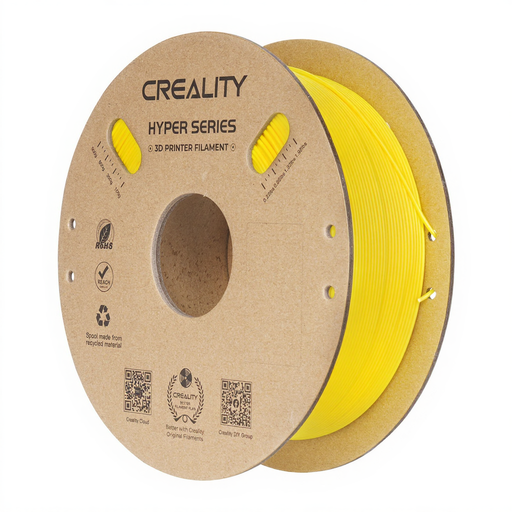
Why it stands out: As its name suggests, this filament is a thoroughbred built for speed. Capable of handling peaks of 600?mm/s, it slashes print times without sacrificing precision.
Key Features:
Who is it for? Professionals, engineers, and makers in a hurry who need to churn out functional prototypes and iterations. A formidable choice for maximising efficiency.
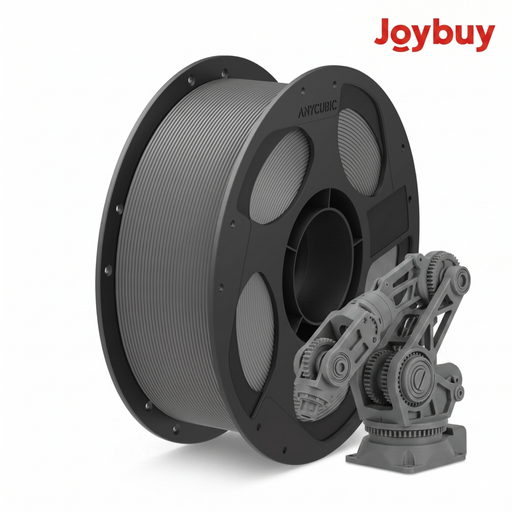
Why it stands out: This is the quintessential versatile and reliable filament. It's the sensible choice for a multitude of projects, delivering consistent results and disarming ease of use.
Key Features:
Who is it for? Beginners, schools, and anyone looking for a "workhorse" filament for their daily projects, from simple prototypes to display pieces.
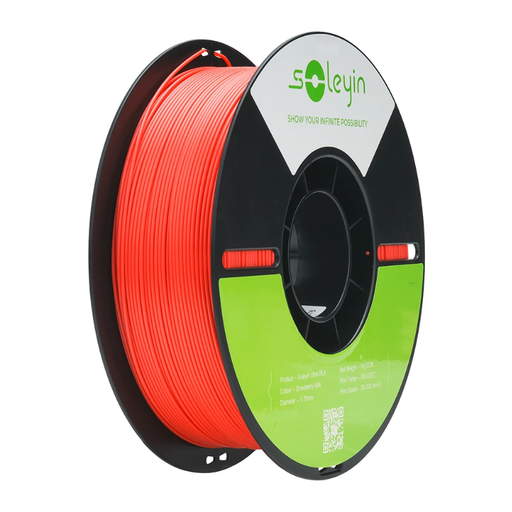
Why it stands out: This filament excels in two areas: superior mechanical strength and a refined aesthetic finish. Its pastel colour and matte surface give it an edge over classic PLAs.
Key Features:
Who is it for? Designers, artists, and creators who want to produce finished objects, decorative pieces, or models where aesthetics are as important as strength.
PLA is perfect for its rigidity and ease of printing. But for projects that require flexibility (like phone cases, gaskets, or soft parts), it will quickly show its limitations. For this type of application, you should turn to our range of TPE Filament. This elastomer offers the ideal flexibility and durability for very specific needs.
PLA+ (or Ultra PLA) is a "boosted" version of standard PLA. Manufacturers incorporate additives to improve its mechanical properties. In practical terms, a tough PLA of this type is less brittle, handles impacts better, and ensures stronger layer adhesion. It is recommended for functional parts subjected to light or moderate stress.
PLA is hygroscopic, meaning it absorbs moisture from the air. A filament that has absorbed moisture is a recipe for bubbles during extrusion, poor layer adhesion, and a catastrophic surface finish. To keep it dry, store your 1?kg spool of PLA in an airtight bag or box with a desiccant packet (silica gel).
Yes, high-speed PLA filament is compatible with almost all FDM printers. However, to truly take advantage of it, your machine must be able to reach and sustain high speeds (above 150?mm/s) and handle high accelerations. You can use it on a slower printer, but it would be like putting a Formula 1 engine in a city car: it works, but you won't be harnessing its full potential.