
Livraison le jour même ou le lendemain

Qualité garantie

Débloquez vos offres de bienvenue: Livraison GRATUITE | Jusqu'à -80 % | 30 jours d'essai gratuits à JoyPlus
Téléchargez l'application
Buying a new television, especially a high-performance 65-inch model, is a significant investment. For video game and cinema enthusiasts, features like Mini LED technology and a 144?Hz refresh rate have become essential criteria. But be warned: the marketing jungle can quickly become confusing and turn a dream purchase into one you'll regret. To avoid falling into this trap, here are the pitfalls to watch out for.
To get a clearer picture, let's focus on the features that have a direct impact on performance and image quality.
A high refresh rate is essential for perfect fluidity, especially in fast-paced action games.
The type of backlighting is crucial for the level of contrast and colour accuracy.
Rather than a simple list of features, we've matched specific models to concrete use cases to help you find the perfect fit.
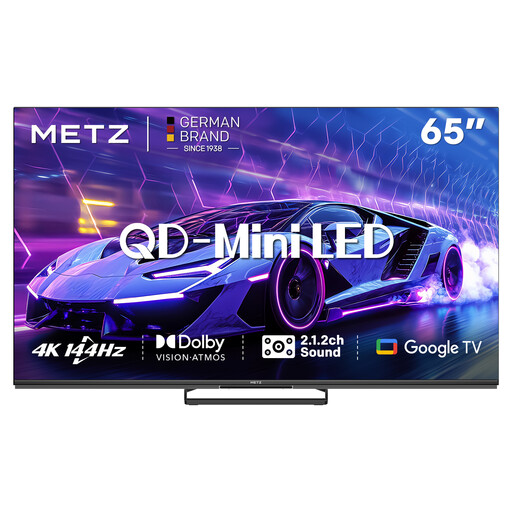
Why it's the right fit for them: This profile seeks raw performance for flawless responsiveness. The large 165 cm screen and cutting-edge technologies are perfect for total immersion in the latest gaming blockbusters.
It includes true HDMI 2.1 ports supporting 144 Hz, VRR, and ALLM, allowing it to avoid the trap of subpar connectivity. This guarantees you'll get the most out of today's and tomorrow's consoles and PCs.
The Mini LED + QLED+ combination ensures first-rate contrast and brightness. Its integrated 2.1.2 sound system with Dolby Atmos is more robust than average, offering a decent audio foundation without needing to immediately invest in a soundbar.
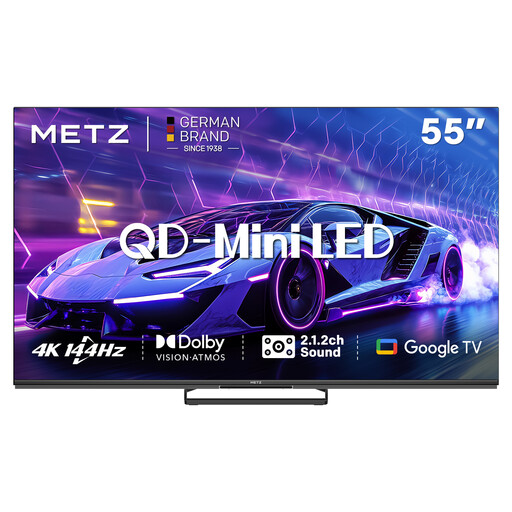
Why it's the right fit for them: For this profile, colour fidelity and deep blacks are non-negotiable. A 55-inch screen is often an excellent compromise for medium-sized living rooms, while still offering the same image technologies as larger models.
Mini LED technology offers far superior light control than a standard LED TV, approaching the quality of an OLED screen without the risk of burn-in. Compatibility with Dolby Vision and HDR10+ ensures an optimised picture that is true to the director's vision.
It packs the same premium image technologies (Mini LED, 144 Hz, Dolby Vision) as its 65-inch bigger brother, but in a more compact format. The Google TV interface is remarkably smooth and opens the door to a nearly infinite library of apps.
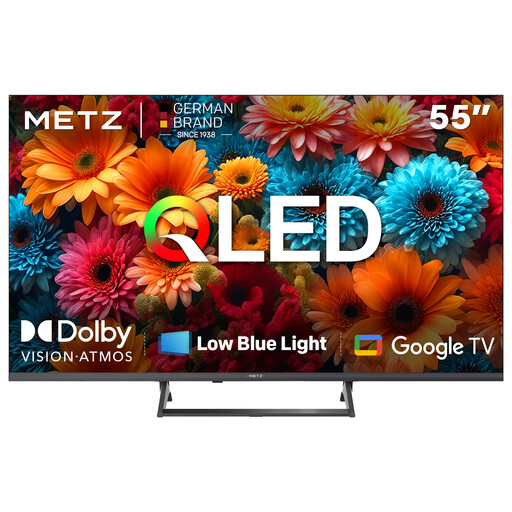
Why it's the right fit for them: This profile is looking for the best value for money. They play games occasionally and binge movies and series, but don't necessarily want to invest in the more expensive Mini LED technology.
Although it's not a Mini LED, this QLED model includes essential gaming features like VRR via its HDMI 2.1 ports. It doesn't make false promises and provides a solid foundation for console gaming.
It offers great QLED picture quality with rich colours and Dolby Vision and HDR10+ compatibility. It's the ideal compromise for those who juggle between movie nights and gaming sessions, all with the excellent Google TV ecosystem.
To perfect your setup, discover our selection of smart lighting that will adapt to the atmosphere of your films and games, all while respecting safety standards.
Next-gen consoles target a maximum output of 120?Hz. A 144?Hz screen is therefore mainly an asset for PC gamers. However, a panel capable of reaching 144?Hz is inherently high-performance, which guarantees perfect handling of the 120?Hz signal from consoles, with no compromise on fluidity or responsiveness.
In general, the power consumption of a Mini LED TV is similar to that of another high-end LED model of the same size. The easiest way to check is to look at its energy label. For example, the METZ 65MNE8000Z model is rated F. This technology logically consumes more than a simple Edge LED TV (due to more light sources), but its consumption remains perfectly reasonable for daily use.
For most people, absolutely not. Modern televisions offer very effective pre-calibrated picture modes, such as "Cinema" or "Filmmaker Mode". These modes disable most superfluous image processing to deliver a picture that is faithful to the original work, right out of the box.