
Livraison le jour même ou le lendemain

Qualité garantie

Débloquez vos offres de bienvenue: Livraison GRATUITE | Jusqu'à -80 % | 30 jours d'essai gratuits à JoyPlus
Téléchargez l'application
A 140x200 cm duvet is typically intended for a single bed of the same width, with fairly limited overhang on the sides. It can also work for a small double bed, provided you're not looking for a very enveloping cover. To make the right choice, it's best to look beyond the price or the stated thickness.
Three common mistakes crop up time and again when buying:
In a room that isn't well heated, a warm duvet with a high fill weight will often be the best choice. Conversely, in a room heated to around 20 °C or more, a lightweight duvet stops you feeling stifled during the night. Also remember to check that the 140x200 cm duvet cover matches the dimensions of the filling.
Labels like "summer", "winter" or "all-season" should always be considered alongside the actual composition and fill weight.
The summer model featured in this selection uses siliconised hollow fibres with a fill weight of 250 g/m². The synthetic version intended for winter reaches 400 g/m². These figures allow you to compare models more concretely than marketing claims like "superior warmth".
A duck feather duvet provides a very different feel to a synthetic model. The combination of feathers and down offers loft, good thermal insulation and a firmer hold. On the downside, this type of filling requires more care when drying and strict adherence to care instructions.
A synthetic duvet made from hollow fibres appeals mainly for its easy care and consistent performance. It suits households that wash their bedding often or want to avoid the hassle of specialist cleaning.
The term hypoallergenic duvet is worth taking with a pinch of salt. Check the materials used, any treatments applied and the certifications actually listed on the product page, rather than relying on the marketing promise alone. OEKO-TEX Standard 100, CertiPUR, Sanitized and ISO 9001 refer to different standards: these labels don't all carry the same weight and don't constitute a medical guarantee.
A cotton cover, particularly percale, offers a breathable, pleasant feel. Cotton sateen is smoother and silkier to the touch. To assess long-term durability, also look at the type of quilting: a box-stitch construction helps keep the filling evenly distributed.
Also remember to check:
A very bulky duvet may require a machine of at least 12 kg. With a smaller washing machine, the launderette is often the simplest solution.
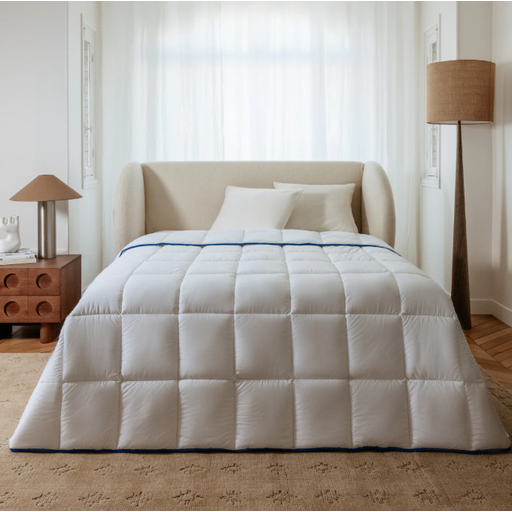
Why this choice suits this profile: With its 250 g/m² fill weight and lightweight design, it's ideal for those who want a simple solution for warm nights or rooms heated to 20 °C and above.
The product page clearly states it's a summer model, with a 3 cm thickness and polyester filling. No risk of mistaking it for a winter duvet.
100 % cotton percale cover, siliconised hollow fibres, machine washable at 40 °C and certifications listed on the product page.

Why this choice suits this profile: This warm duvet is aimed at those who appreciate a natural filling and sleep in a cold or poorly heated room.
The composition is detailed: 90 % duck feathers and 10 % duck down. Its high warmth level is clearly linked to winter use and cold nights.
100 % cotton sateen cover, box-stitch quilting and washable up to 40 °C, with gentle tumble drying or professional cleaning.
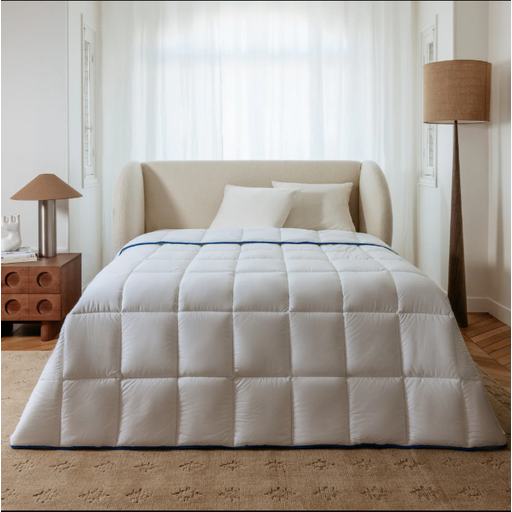
Why this choice suits this profile: Its 400 g/m² synthetic filling suits people who want a versatile duvet that can be washed regularly at home.
The product page distinguishes between the stated warmth, fill weight and composition. It also specifies that a washing machine of at least 12 kg is recommended.
Siliconised hollow fibre filling, 100 % cotton percale cover and washable at 40 °C, without bleach or dry cleaning.
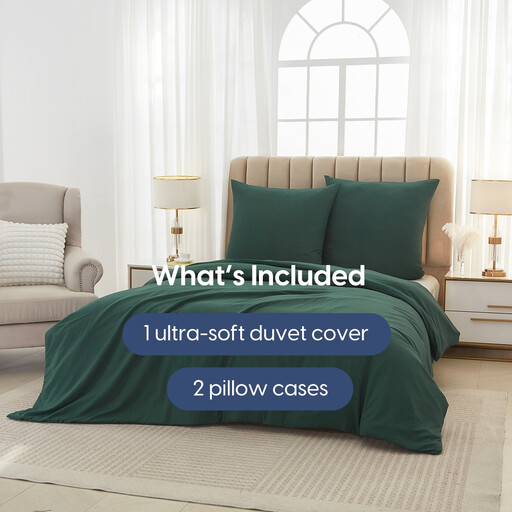
Why this choice suits this profile: This set is for people who already own a 140x200 cm duvet and want to refresh their bedding quickly.
The product page states that the filling is not included. So there's no risk of confusing this cover with a complete duvet.
Double-sided polyester microfibre, zip closure, eight tie fastenings and recommended washing below 30 °C.
We've compiled a complete, real-time updated selection of products that meet these exacting criteria and European safety regulations.
Choose a 140x200 cm duvet cover with the same dimensions as your duvet. Also check the type of closure and whether there are internal ties if the filling has fastenings. A cover that's too big may allow the duvet to slip and form clumps during the night.
In a room kept at around 20 °C or more, a summer duvet 140x200 cm with a moderate fill weight will usually be sufficient. The polyester model at 250 g/m² featured above is specifically designed for warm nights. The feeling of warmth also depends on your bedding, room ventilation and personal preferences.
The lifespan depends on the type of filling, how often it's washed, drying and airing. To preserve its loft, air your duvet regularly, avoid leaving it compressed for long periods and follow the manufacturer's recommendations. A clean cover also protects the filling and reduces the need for full washes.