
Livraison le jour même ou le lendemain

Qualité garantie

Débloquez vos offres de bienvenue: Livraison GRATUITE | Jusqu'à -80 % | 30 jours d'essai gratuits à JoyPlus
Téléchargez l'application
A 140x200 cm duvet is generally suitable for one person, a single bed or a guest bedroom. This size is also very common in student accommodation. However, choosing the wrong dimensions, tog weight or material can quickly turn a carefully considered purchase into a disappointment.
Before comparing the different models, it is best to avoid three common pitfalls:
For a 140x200 summer duvet, choose a moderate tog weight and a breathable construction. The summer model shown below has a tog weight of 250 g/m² and uses siliconised hollow polyester fibres. It is recommended for rooms at 20 °C or above.
A 140x200 winter duvet designed for cold nights will generally have a higher tog weight. The winter model featured reaches 400 g/m². It therefore contains more insulating material, but this figure alone is not enough to predict how comfortable it will be: the room temperature, your sleeping habits and the bedding you use also matter.
The choice generally comes down to several main categories:
A tightly woven cotton percale cover provides a more structured feel. Polyester microfibre is more appealing for its softness, light weight and easy care.
A 140x200 cm duvet must be compatible with the duvet cover you use. Also check the size of the mattress and the amount of overhang you want at the sides. For a matching set, a 140x200 duvet cover or 140x200 bed set may include a 65x65 cm or 60x63 cm pillowcase: these sizes are not interchangeable.
Certifications should be treated as precise information rather than a general promise. The products featured mention STANDARD 100 by OEKO-TEX, CertiPUR, Sanitized or ISO 9001, depending on the model. Check each product page to find out which certification it actually carries.
Also check the washing temperature, whether bleach is prohibited and the drying instructions. Some models require a machine with a capacity of at least 12 kg. A vacuum-packed duvet may also need 48 to 72 hours to regain its full loft after unpacking.
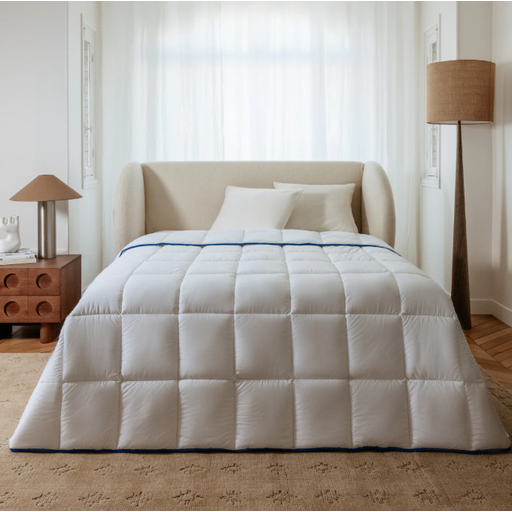
Why this choice suits this profile : This lightweight duvet is suitable for a well-heated bedroom or mild nights. Its 100% cotton percale cover and 250 g/m² polyester filling offer a straightforward option for first-time buyers.
The tog weight and recommended use temperature are clearly stated, reducing the risk of choosing a duvet that is too warm for summer.
Siliconised hollow-fibre filling, machine washable at 40 °C according to the product page, with the certifications stated on the product.
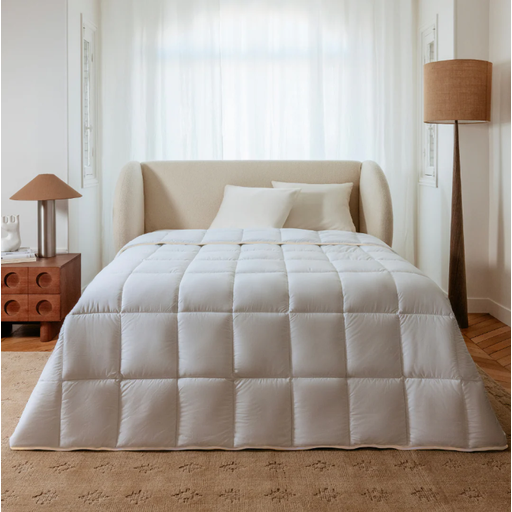
Why this choice suits this profile : With a filling made up of 90% duck feathers and 10% down, this duvet is aimed at people looking for a warm option for winter or a poorly heated bedroom.
The detailed composition prevents you from confusing a duvet filled mainly with feathers with a model filled primarily with down.
Organic cotton satin cover, square quilting and care instructions specifying washing at 40 °C.
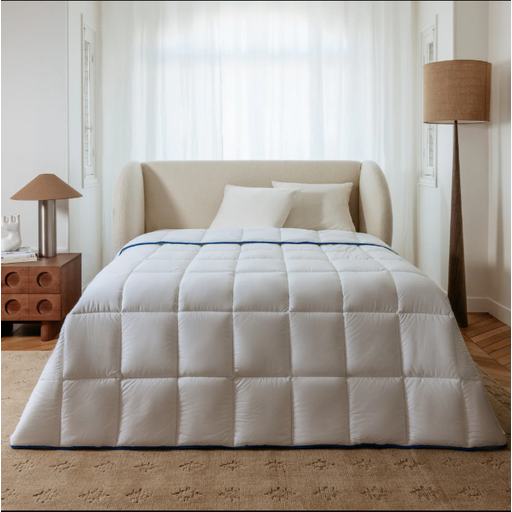
Why this choice suits this profile : This 400 g/m² synthetic model is suitable for people who want a warm winter duvet while benefiting from easier care than a natural filling offers.
The tog weight, composition and maximum washing temperature are clearly stated, making it easier to compare the options in practical terms.
100% cotton percale cover, siliconised hollow fibres and washing at 40 °C in a large-capacity machine.
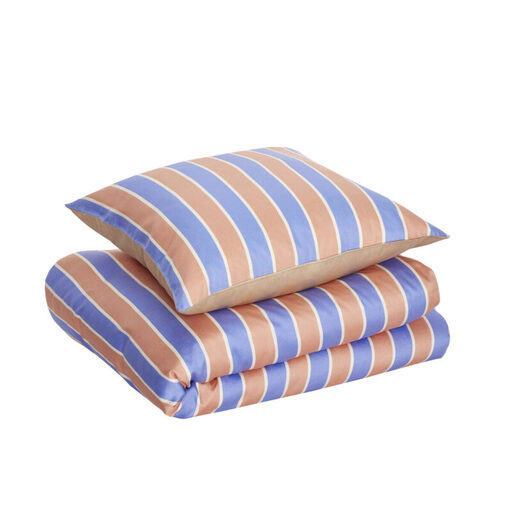
Why this choice suits this profile : This set includes a 140x200 cm duvet cover and a 60x63 cm pillowcase. It is a quick way to refresh the bedding in a guest bedroom or student accommodation.
The contents are clearly detailed: one duvet cover and one pillowcase, without suggesting that a duvet is included.
100% cotton, 140x200 cm size and 60x63 cm pillowcase, with a blue, orange and white design.
We have brought together a complete, real-time selection of products that meet these demanding criteria and European safety regulations.
Yes, this size is generally intended for one person. However, check the dimensions of the mattress, the height of the bed and the amount of overhang you want. The duvet cover must be exactly 140x200 cm to prevent creasing and stop the filling from shifting.
For a bedroom at 20 °C or above, a lightweight duvet with a moderate tog weight will generally be the most suitable choice. The summer model in cotton percale and polyester has a tog weight of 250 g/m². If the room remains cool or you feel the cold particularly easily, choose a warmer model.
The lifespan depends on the filling, how often it is washed, the drying process and the duvet’s overall condition. Replace it if the filling forms compact clumps, if the outer cover is damaged or if it no longer regains its loft. Washing the duvet cover regularly protects the duvet and may reduce how often the duvet itself needs a full wash.