
Livraison le jour même ou le lendemain

Qualité garantie

Débloquez vos offres de bienvenue: Livraison GRATUITE | Jusqu'à -80 % | 30 jours d'essai gratuits à JoyPlus
Téléchargez l'application
Changing your mattress is an investment in your sleep—a crucial decision. But with the overwhelming number of online options, it's easy to get lost. Our editorial team's mission is to decode the jargon and help you find THE mattress that's truly right for you, without falling for marketing ploys.
Buying a 140x190 mattress can quickly become a headache. Here are the most common pitfalls to avoid:
To make sense of it all, you need to master a few key concepts. They will empower you to compare models objectively, far beyond advertising claims.
The core of the mattress, or its "soul," largely determines its comfort and durability.
The firmness level should be chosen primarily based on your body type (weight and height). A mattress that is too firm won't allow your shoulders and hips to sink in enough, causing poor spinal alignment. Conversely, a mattress that is too soft won't provide enough support.
The 7-zone comfort mattress concept is a technical solution to this problem. This type of mattress provides differentiated support across seven strategic zones (head, shoulders, lumbar, pelvis, thighs, legs, and feet). This ergonomic design can be particularly beneficial for an orthopaedic mattress for back pain, as it promotes proper spinal alignment.
The 140x190 cm size is the traditional standard for a double bed in France. It's suitable for a single person who wants more space or for a couple in a smaller bedroom. However, for optimal comfort for two people, it's often wise to consider larger sizes like a 160x200 mattress or even 180x200 cm. This extra space significantly reduces nighttime disturbances caused by a partner's movements.
To put these criteria into practice, here is our selection of models suited for different types of sleepers.
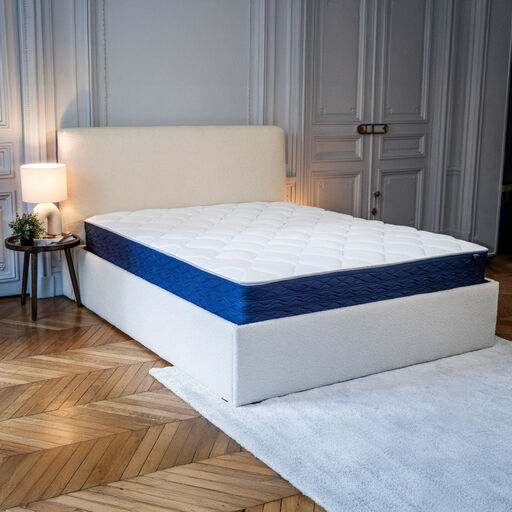
Why we chose it: Perfect for a first-time purchase or for those who want to experience the benefits of memory foam on a budget. Its 16 cm thickness makes it suitable for guest beds, teen rooms, or lighter body types.
It doesn't claim to be a universal solution. It's a simple and effective memory foam mattress whose specifications (thickness, composition) are clearly stated to prevent unpleasant surprises.
Oeko-Tex Standard 100 and Certipur certified materials, guaranteeing it's free from harmful substances. Its 3D fabric underside improves ventilation.
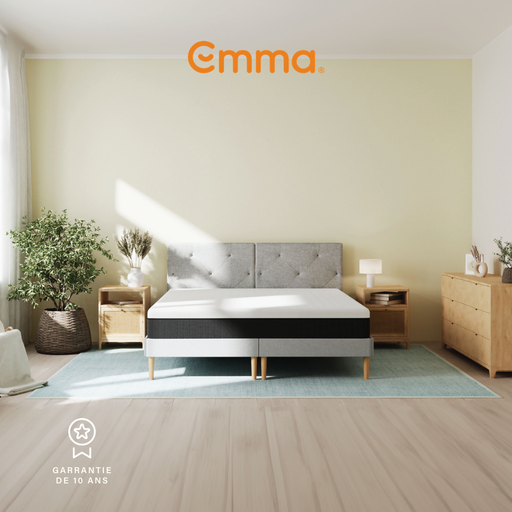
Why we chose it: Ideal for those on the fence between foam and springs. This hybrid mattress is a versatile solution that suits many sleepers, including couples looking for a great balance of comfort and support.
It directly tackles the heat trap (pitfall #3). Its spring core ensures far superior air circulation than a dense foam block, making it a truly breathable mattress.
Ergonomic 3-zone structure for targeted support. The "Lite+" version features a more breathable cover, which enhances temperature regulation.
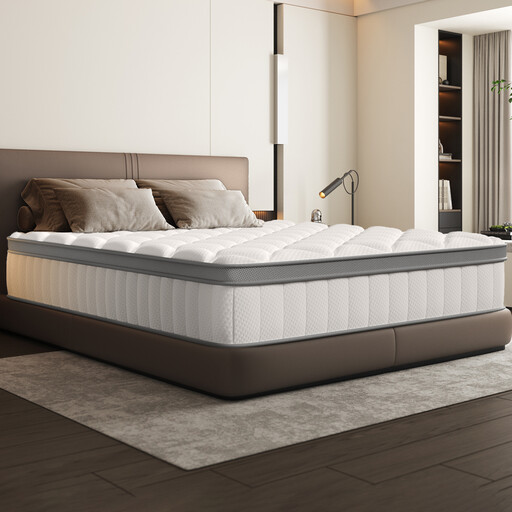
Why we chose it: Designed for those with specific support needs, especially people prone to back pain or couples who want zero motion transfer. Its 25 cm thickness offers undeniable comfort and presence.
It goes beyond the simple "firm" label (pitfall #2) by offering a true 7-zone comfort mattress. This structured approach provides precise, verifiable orthopaedic support tailored to each part of the body.
Individual pocketed spring technology for maximum motion isolation and movement absorption. Quiet design thanks to the combination of springs and foam layers.
Discover our complete mattress selection, with every model evaluated by our editors against strict criteria.
Most mattresses that arrive compressed and rolled will regain most of their shape within a few hours. However, manufacturers generally recommend waiting 48 to 72 hours for the mattress to reach its final size and firmness. While you can sleep on it the first night, you'll only experience optimal comfort after this full expansion period is complete.
On average, a good mattress should last between 7 and 10 years. This lifespan varies depending on the quality of the materials, the technology (pocketed springs and high-density foams are more durable), and how it's maintained. Remember to rotate or flip it regularly (if the model allows) and use a mattress protector to shield it from moisture and stains.
This is a common misconception. A mattress that is too firm can actually worsen pain by creating pressure points on the hips and shoulders, leading to poor spinal alignment. For back pain, it's often recommended to find a mattress that combines firm support with a softer comfort layer to relieve pressure. A model with comfort zones, like an orthopaedic mattress, is often a more suitable option than one simply labelled "extra firm."