
Livraison le jour même ou le lendemain

Qualité garantie

Débloquez vos offres de bienvenue: Livraison GRATUITE | Jusqu'à -80 % | 30 jours d'essai gratuits à JoyPlus
Téléchargez l'application
Good sleep is the key to a healthy and fulfilling life. Yet, too many people in France wake up tired with an aching back after a restless night. The culprit is often clear:?an unsuitable mattress. Choosing a new 140x190 mattress, the most common size in France, is a crucial decision for your daily well-being.
Between the different technologies, firmness levels, and marketing jargon, it's hard to know where to start. As the Head of Product Recommendations at Joybuy, my role is to decode it all for you with clear, practical information, far from the usual advertising promises. This guide has one simple goal:?to help you find THE mattress that will perfectly meet your needs, whether you suffer from back pain, sleep hot at night, or are disturbed by your partner's movements.
Before we dive into our selection, let's review the essential criteria that will guide your choice.
The core of the mattress is its technology. It largely determines its comfort, support, and lifespan.
Contrary to popular belief, a firm mattress is not always the solution for back pain. The ideal choice depends on your body type (weight and height) and your sleeping position. The goal is to keep your spine perfectly aligned.
In short, a good orthopaedic mattress for back pain isn't necessarily the hardest one. It's one that offers differentiated support zones to adapt to your body shape.
A healthy sleep environment is paramount. If you tend to sweat at night, the mattress's breathability becomes a non-negotiable criterion. Opt for a breathable mattress, such as spring models or those with open-cell foams that promote air circulation.
Also, remember to check for certifications. Labels like OEKO-TEX Standard 100 or CertiPUR guarantee that the materials used are free from substances harmful to your health and the environment. This is an essential seal of safety, especially for people with allergies or sensitive skin.
After analysing dozens of models and their customer reviews, our team has selected three mattresses that stand out for their design, materials, and performance.
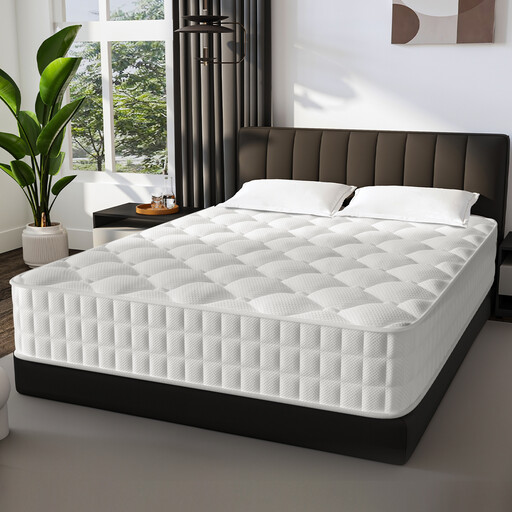
Key feature: This mattress focuses entirely on ergonomic support thanks to its 7-zone comfort structure. Each part of the body (head, shoulders, lumbar, pelvis, etc.) receives tailored support, promoting optimal spinal alignment. Its spring-based design is a guarantee of durability.
Benefits:
Who is it for? Those looking for targeted support to relieve body aches and who appreciate the responsiveness and breathability of a spring mattress.
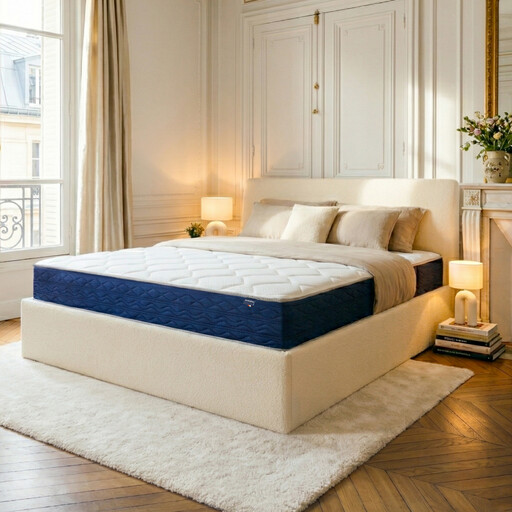
Key feature: The Morphea Lumea One+ places health at the heart of its design, as evidenced by its impressive collection of labels (Oeko-Tex Standard 100, Certipur, Sanitized). Its multi-layer structure, which includes memory foam, seeks the perfect balance between cradling comfort and firm support.
Benefits:
Who is it for? For those who prioritise health and are looking for the cradling comfort of memory foam without sacrificing ventilation.
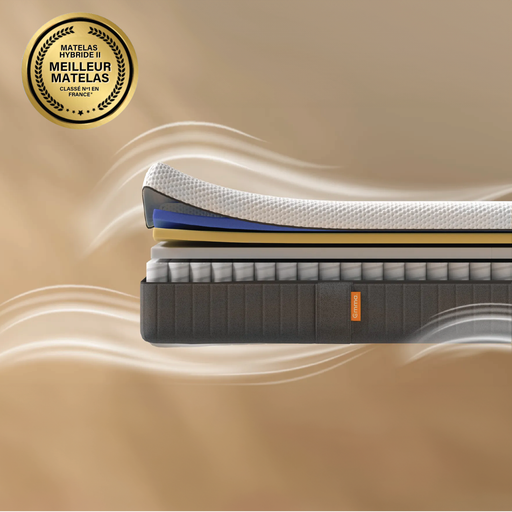
Key feature: As a hybrid mattress, the Emma Original+ combines pocket springs with several layers of premium foam. It goes a step further by incorporating specific technologies like "Edge-to-Edge" springs, which ensure consistent support right to the mattress edges, and a thermoregulating cover. This model was also recognised by several French consumer comparison sites in 2024.
Benefits:
Who is it for? Ideal for couples, thanks to its excellent motion isolation. It will also suit people who often get hot at night and those looking for versatile, high-end comfort.
The traditional mattress isn't the only option. For those exploring other paths—minimalism, posture, or simply the need for a quality guest bed—sleeping on the floor is an interesting alternative.
? Discover our selection of Mattress Toppers for Floor Sleeping for comfort tailored to this practice.
On average, it's recommended to change your mattress every 10 years. Of course, this lifespan depends on the quality of its materials, its use, and its maintenance. A mattress that is regularly rotated and aired out will retain its properties for longer.
No, that's a stubborn myth. On the contrary, a mattress that is too hard can create painful pressure points on the hips and shoulders, while leaving the lumbar area unsupported. The key is support:?the ideal mattress keeps your spine perfectly straight. A "medium" or "firm" support with a soft top layer is often the best compromise.
Several tell-tale signs are unmistakable:?you notice a dip in the middle (the infamous "hammock effect"), you can feel the springs, you wake up with aches and pains, or your allergies are getting worse (a sign of dust mite accumulation). The ultimate test??If you consistently sleep better in a hotel bed or at a friend's house, it's high time to part with your old mattress.