
Livraison le jour même ou le lendemain

Qualité garantie

Débloquez vos offres de bienvenue: Livraison GRATUITE | Jusqu'à -80 % | 30 jours d'essai gratuits à JoyPlus
Téléchargez l'application
Choosing a new mattress can quickly become a daunting task. Faced with an avalanche of technical terms and marketing promises, it's hard to sort through the noise. A 140x190 hybrid mattress combines multiple technologies for balanced comfort, but not all models are created equal. Before you take the plunge, it's essential to know the most common pitfalls to avoid a purchase you might regret.
Our mission: to give you the keys to making an informed choice, cutting through the marketing jargon.
To evaluate a mattress objectively, forget the marketing for a moment and focus on what truly matters: its structure. This is what determines your comfort and the lifespan of your investment.
The hybrid mattress concept is based on the meeting of two worlds:
The combination of a memory foam and pocket spring mattress aims to offer the best of both technologies: the dynamic support of springs and the cradling comfort of foam.
A 7-zone comfort mattress is designed to provide tailored support to each part of the body. The zones at the shoulders and pelvis are generally softer to allow them to sink in slightly, while the lumbar zone is firmer to ensure perfect spinal alignment. This is a major asset for those looking for a mattress for back pain.
Be careful not to confuse two key concepts:
Rather than an endless list, we've selected models that meet specific needs, applying the quality criteria we've just defined.
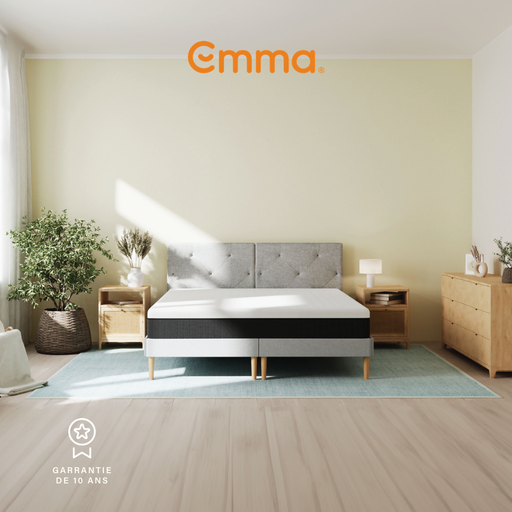
Why we chose it: The ideal entry point into the world of hybrid mattresses. It offers a great balance between the support of springs and the comfort of foam, making it a versatile and well-positioned option for a first purchase or a controlled budget.
It doesn't fall for the "magic" cooling gimmick. Its approach is pragmatic: a breathable cover and a spring structure that ensures good ventilation, plain and simple.
Its value for money. Its spring core gives it superior durability compared to an entry-level 100% foam mattress.
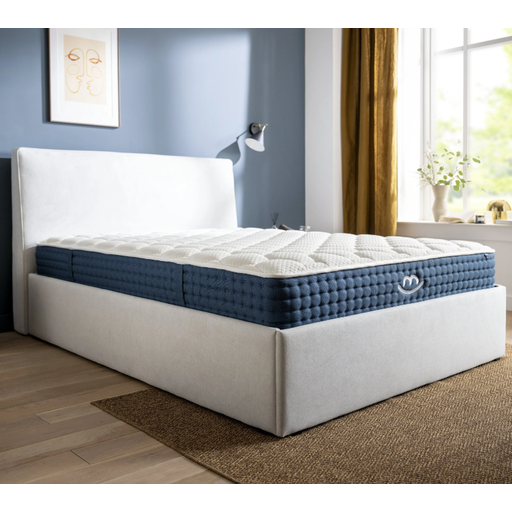
Why we chose it: For those seeking precise support and quality materials. With its 26 cm thickness, 20 cm pocket springs, and 7-zone design, it's engineered for lasting comfort and optimal body alignment. A reliable choice for a 140x200 mattress.
Here, thickness isn't just a marketing ploy. It's justified by specific technical data (spring height, foam density of 50 kg/m?). These are reassuring figures that speak for themselves.
Its 7-zone comfort mattress structure for precise anatomical support. Excellent motion isolation thanks to its 682 pocket springs (in the 140x200 size).
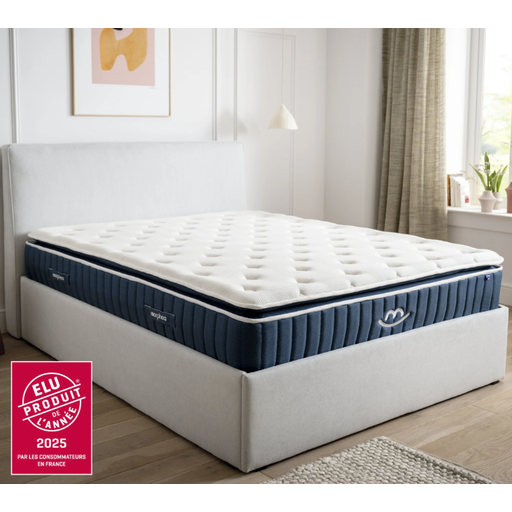
Why we chose it: For a single sleeper aiming for excellence without compromise. Its 30 cm height contains a stack of technical layers (Air Memory, ErgoFeel foams) and 22 cm pocket springs. The result: an ultra-cradling feel and deep-down support.
This mattress doesn't hide behind its thickness. Every centimetre is justified by a specific function, with the role of each layer detailed. It's a far cry from simple "filler" to inflate the spec sheet.
The combination of technical foams for tailored comfort. The certifications (Oeko-Tex Standard 100, Certipur, Sanitized) attest to the quality and safety of the materials.
Discover our full selection of mattresses, all chosen according to our quality criteria and current standards.
A good hybrid mattress will last for 8 to 10 years on average. Its longevity, of course, depends on the quality of the materials (foam density, spring steel), the sleepers' weight, and its care. The secret to making it last? Remember to rotate it head-to-toe every six months and, most importantly, protect it with a mattress protector.
Absolutely. The bed base is your mattress's best friend (or worst enemy). Opt for a base with solid, closely spaced slats or a platform base, which provide the stable and uniform support that the springs need. Conversely, avoid bases with slats that are too far apart (more than 7 cm) or are worn out: they risk deforming the mattress, damaging the springs, and completely nullifying your investment.
This is a persistent myth, but the answer is no. Support that is too firm can even be counterproductive by creating pressure points and misaligning your spine. The number one criterion for a mattress for back pain is maintaining a natural posture. The support must be adapted to your body type (weight and height) so that your spine remains perfectly straight, regardless of your sleeping position.