
Livraison le jour même ou le lendemain

Qualité garantie

Débloquez vos offres de bienvenue: Livraison GRATUITE | Jusqu'à -80 % | 30 jours d'essai gratuits à JoyPlus
Téléchargez l'application
For a family or a household that cooks often, a 14-place 60 cm dishwasher cuts down on the number of daily cycles you need to run. But the stated capacity isn’t everything. The type of installation, noise level, energy consumption and basket layout all have a direct impact on how convenient the appliance is to use.
Before you place your order, three common mistakes keep cropping up:
A 60 cm freestanding dishwasher can sit under a worktop or next to your cabinets, as long as you have a water supply, a drain and a suitable electrical socket nearby. Some models have a removable worktop so they can slide under a worktop around 82 cm high.
A 60 cm built-in dishwasher, on the other hand, is designed to take a kitchen door panel that matches your cabinetry. Make sure you check:
Always compare the detailed dimensions on the spec sheet with those of your cabinet. The nominal 60 cm width alone isn’t enough.
14 place settings refers to a standardised loading capacity. In practice, the usable space depends largely on the shape of the baskets. A third cutlery tray frees up the lower basket, while an adjustable upper basket makes it easier to store tall glasses, saucepans and large plates.
When choosing a large-capacity family dishwasher, look for:
A large capacity is only useful if you can arrange the dishes properly without blocking the jets.
With a noise level between 41 and 44 dB, an appliance can be considered quiet for domestic use. This figure is especially useful in an open-plan kitchen or if you plan to run it at night – far more reliable than vague marketing claims. Also check the noise class and the duration of the Eco programme.
The models featured here cover several consumption levels:
Compare the figures given in kWh per 100 cycles as well as the water consumption per cycle. An Eco programme can last several hours – that’s normal operation, not necessarily a sign of a problem.
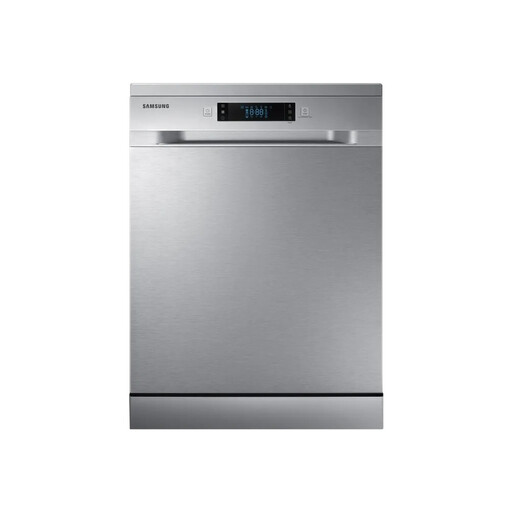
Why this suits this profile: This freestanding model offers 14 place settings, seven programmes and a width of 59.8 cm. Its LED display and straightforward interface make it ideal for anyone looking for an easy-to-use appliance.
The spec sheet states energy class E, water consumption of 10.5 litres per cycle and a noise level of 44 dB – concrete figures you can compare before buying, rather than a vague promise.
Adjustable upper basket, half-load option, Eco programme and delay start, all accessible from the display.
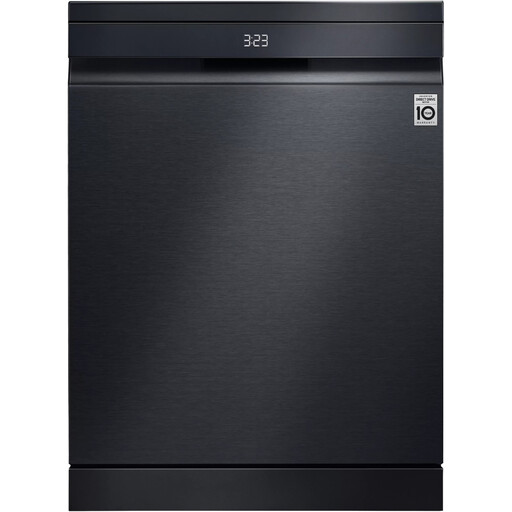
Why this suits this profile: It’s aimed at households looking for 14 place settings, a stated consumption of 49 kWh per 100 cycles and smart connectivity features.
The spec sheet states 43 dB, 9.5 litres per Eco cycle and automatic door opening. This gives you a much clearer picture of day-to-day convenience and drying performance.
Rated class A, adjustable third basket, LG ThinQ Wi-Fi connectivity and a motor covered by a 10-year guarantee according to the product sheet.
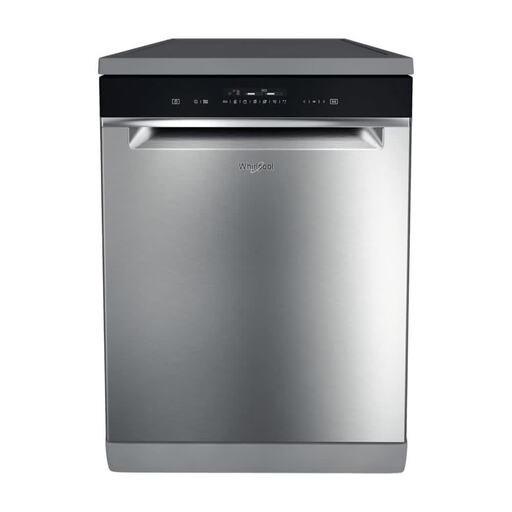
Why this suits this profile: With 14 place settings, 11 programmes and a stated noise level of 41 dB, this stainless steel dishwasher works well in open-plan kitchens and handles loads that vary from day to day.
The noise level, water consumption of 9.5 litres and class C rating are all listed separately. This makes it easier and more objective to compare with other models.
Third cutlery tray, Wi-Fi, delay start up to 24 hours, AquaStop protection and a machine care programme.
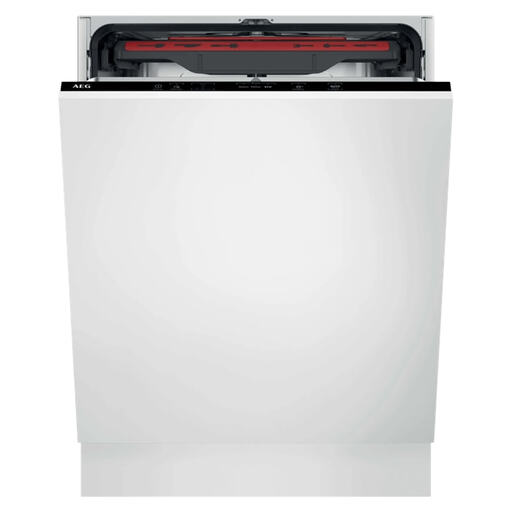
Why this suits this profile: Its fully integrated format and 14-place capacity fit naturally into a fitted kitchen project where you want a matching door panel.
The spec sheet mentions sliding hinges, class C, a noise level of 44 dB and Eco water consumption of 10.5 litres. These details should be checked against your niche requirements.
AirDry automatic door opening, cutlery tray, stainless steel interior and five programmes including Eco, Intensive and Machine Care.
We’ve put together a full, real-time updated selection of products that meet these exacting criteria as well as European safety standards.
Before using the dishwasher for the first time, set the water softener according to the hardness of your local water supply. Then fill the salt reservoir and the rinse aid compartment. Only use products designed specifically for dishwashers.
To keep performance at its best:
Automatic door opening helps steam escape, but you need to keep the space in front of the appliance clear. Wi-Fi features are mainly useful for monitoring a cycle remotely, receiving notifications and, in some cases, accessing extra programmes – they don’t replace careful installation.
Allow a width close to 60 cm, then refer to the exact dimensions of the model, its adjustable height and its depth once the hoses are connected. For a built-in appliance, also check the compatibility of the door panel and hinges.
On the European scale, class C means lower energy consumption than class E. However, you should always compare using the product’s energy label. The actual running cost then depends on your electricity price, the number of cycles you run and the programme you use.
An appliance rated between 41 and 44 dB can work well in an open-plan room. If you plan to run it at night, also look for a quiet programme or a delay start feature. Making sure the appliance is properly levelled also helps reduce vibrations and unwanted noise.