
Livraison le jour même ou le lendemain

Qualité garantie

Débloquez vos offres de bienvenue: Livraison GRATUITE | Jusqu'à -80 % | 30 jours d'essai gratuits à JoyPlus
Téléchargez l'application
Setting up an autonomous electrical system in a car, campervan, or motorhome requires converting direct current (12V DC) stored in leisure or vehicle batteries into the alternating current (220V to 230V AC) used by household appliances. The most critical decision during this process is selecting the correct output waveform. While modified sine wave inverters remain an inexpensive option, their stepped electrical signal can introduce audible humming, excessive component heat, and potential damage to sensitive electronic circuits.
Pure sine wave inverters replicate the smooth, rounded wave profile of standard mains electricity supplied across France and the rest of Europe. Choosing the right inverter involves balancing waveform quality against continuous operating wattage, peak start-up surge allowances, and installation requirements, ensuring your devices run reliably whether plugged into a dashboard socket or connected directly to a heavy-duty battery bank.
A frequent mistake is attempting to draw several hundred watts through a vehicle cigarette lighter socket. Most vehicle auxiliary circuits are wired with thin automotive cables and protected by a 10A or 15A fuse, which restricts continuous output to roughly 120W to 150W. Connecting heavy-draw devices through this port will promptly blow the car fuse or risk melting internal socket wiring. Any load exceeding 150W must be wired directly to the battery terminals using appropriately rated cables.
Retail listings frequently display peak surge ratings prominently in product names, such as 2,000W or 4,000W, when the actual continuous working output is half that figure. Appliances featuring electric motors, compressors, or pumps—such as portable fridges and corded drills—require a high initial burst of current to start. Sizing an inverter purely on continuous wattage without accounting for this initial start-up spike leads to immediate overload tripping.
Modified sine wave models generate an alternating current composed of abrupt, blocky voltage steps rather than a smooth curve. Switched-mode power supplies found in modern laptops, precision medical equipment, lithium battery chargers, and electronic coffee makers often struggle to filter this uneven frequency. This leads to component overheating, reduced appliance lifespan, or safety shut-downs within the appliance itself.
Waveform quality determines which types of appliances you can safely operate off-grid without electrical interference or thermal stress.
Matching your power budget against real-world appliance consumption prevents system shutdowns and component failure.
Low-voltage, high-current direct current circuits require robust thermal management and adequate cable dimensions to prevent voltage drops.
These pure sine wave models provide clean, reliable 220V/230V electricity across different vehicle and off-grid scenarios.
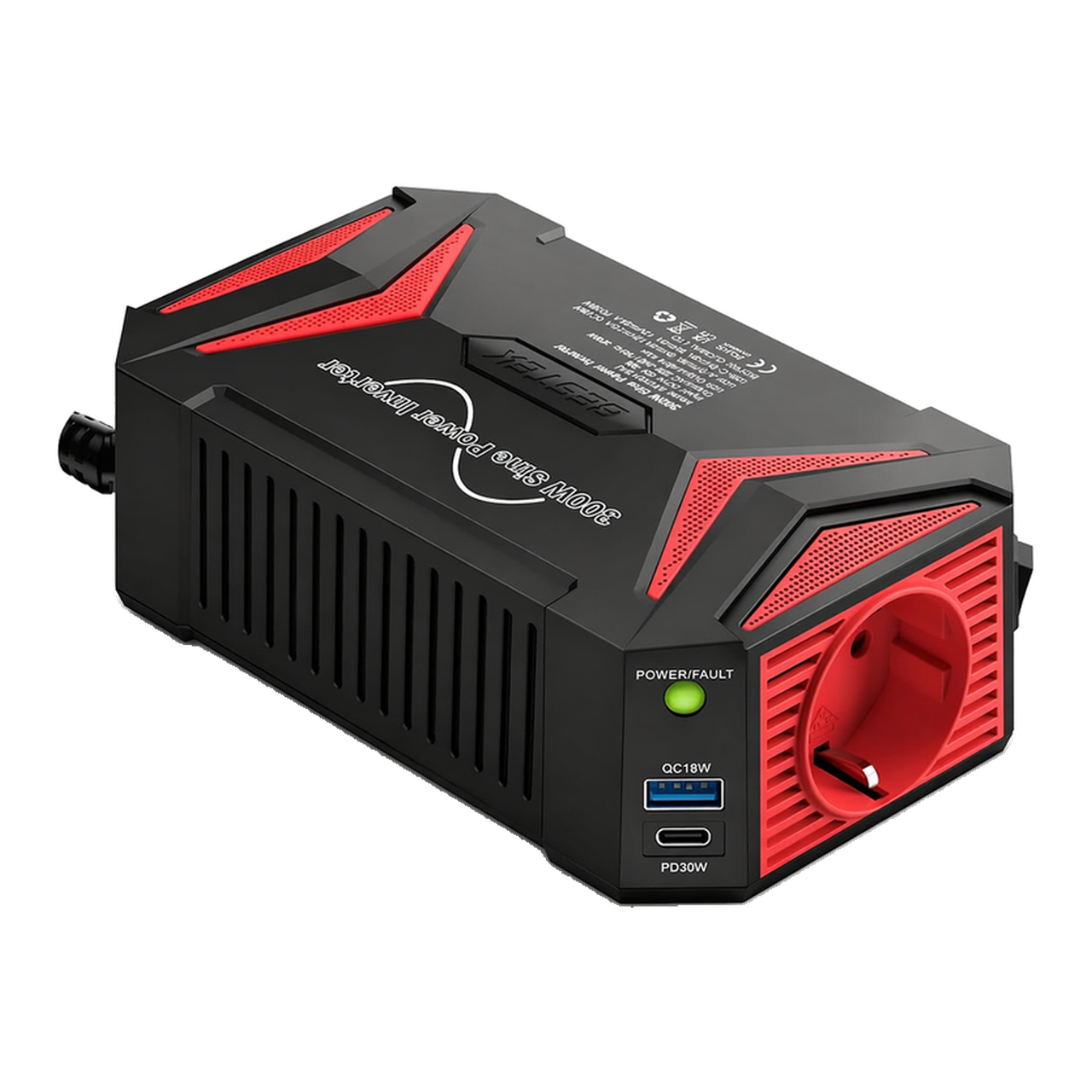
Why This Fits Their Persona: Designed for road trips, everyday commuting, and remote professionals working from a passenger seat, this compact unit plugs directly into a 12V vehicle socket to safely run laptops, digital cameras, and mobile computing setups. It features a standard 230V AC socket alongside dedicated 30W USB-C Power Delivery and 18W Quick Charge ports for rapid mobile device replenishment.
It eliminates the risk of overloading your vehicle dashboard circuit by incorporating a built-in 40A safety fuse calibrated to protect vehicle wiring during everyday use.
Clean pure sine wave output ensures premium laptop power supplies and sensitive mobile peripherals charge smoothly without electrical buzzing or high surface temperatures.
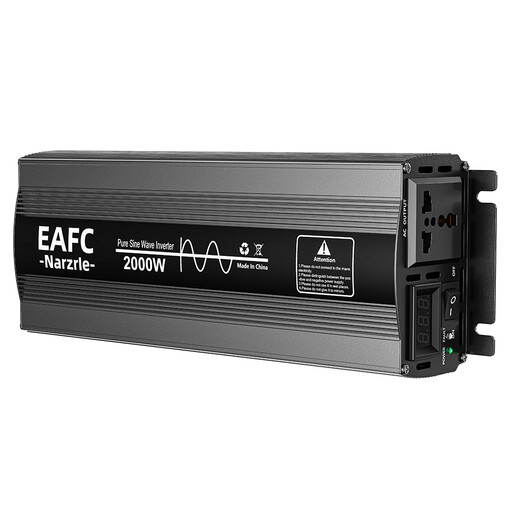
Why This Fits Their Persona: Ideal for DIY camper van conversions, weekend camping trips, and leisure vehicle installations, this inverter supplies 1,000W continuous output with a 2,000W peak surge. It comfortably powers portable compressor fridges, kitchen appliances, and drone battery banks from an auxiliary 12V leisure battery.
A clear digital input voltage display removes the guesswork from leisure battery health, while integrated overload protection automatically shuts down power before deep-discharge or over-current conditions cause damage.
An intelligent temperature-activated cooling fan runs only when internal heat levels rise, keeping the living cabin remarkably quiet during low-power evening use.
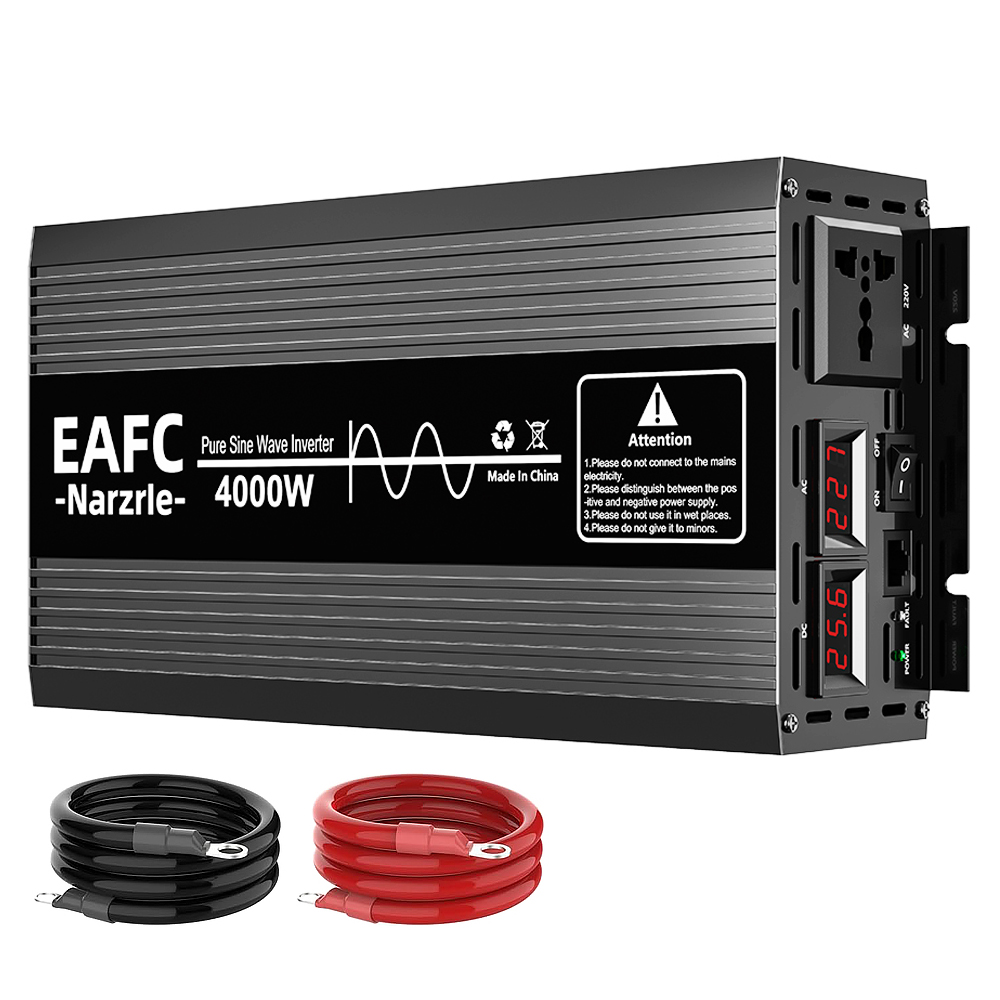
Why This Fits Their Persona: Delivering a substantial 2,000W continuous capacity alongside a 4,000W surge threshold, this heavy-duty unit is built for demanding off-grid motorhomes, remote chalets, and utility work vehicles. It effortlessly runs high-draw equipment including pod coffee machines, microwaves, small power tools, and household emergency backup lines.
It avoids premature thermal shutdowns under continuous heavy loads thanks to a dual intelligent cooling fan design and an aluminium casing that effectively dissipates concentrated internal heat.
The comprehensive dual digital readout monitors both the incoming 12V DC input voltage and outgoing 220V AC output voltage simultaneously, offering complete electrical oversight.
Appliances with sensitive microprocessors, digital timers, variable-speed electric motors, and medical devices such as CPAP machines can suffer malfunction or permanent damage from modified sine waves. Switched-mode power supplies found in laptops, lithium tool chargers, and capsule coffee makers often generate excessive heat, emit noticeable humming, or shut down entirely when operated on stepped waveforms.
Check the rating plate on each appliance for its continuous wattage in watts (W) or calculate it by multiplying volts by amperes (V x A). For resistive loads like incandescent bulbs or simple kettles, nominal wattage is sufficient. For inductive equipment with electric motors or cooling compressors, multiply the running wattage by two to three to ensure the inverter peak surge rating can absorb the initial start-up current.
Most vehicle 12V auxiliary sockets are protected by a 10A or 15A fuse, which caps safe continuous draw at approximately 120W to 150W. Using an inverter rated higher than 150W via this socket will blow the fuse and risks overheating your dashboard wiring. Any power requirement above 150W requires direct connection to the battery terminals using heavy-gauge cables.