
Livraison le jour même ou le lendemain

Qualité garantie

Débloquez vos offres de bienvenue: Livraison GRATUITE | Jusqu'à -80 % | 30 jours d'essai gratuits à JoyPlus
Téléchargez l'application
Whether you're on a campervan road trip, at a remote worksite, or simply seeking power independence during outages, a reliable 220V power source is essential. This is where the 12V to 220V pure sine wave inverter comes in: the device that transforms the current from a simple 12V battery into a stable and safe 220V supply for all your equipment.
But between the different power ratings, technical specifications, and marketing jargon, choosing the right model can quickly become a headache. This guide is here to help you see things more clearly and find the device that truly meets your needs.
Choosing a 12V to 220V power inverter isn't just about picking the most powerful one. To make an informed decision, here are the three crucial points to check.
Power is the first criterion to consider, but be careful not to confuse the two values displayed:
For example, a 2000W inverter might only offer 1000W of nominal power. It's this latter figure that you must check to ensure you can cover your actual day-to-day needs.
There are two main types of inverters: modified sine wave and pure sine wave. For your sensitive equipment, don't hesitate for a second: choosing a pure sine wave inverter is non-negotiable.
A "pure sine wave" signal generates an electrical current as stable and clean as the one from your wall outlet. This is the best way to protect your fragile electronic devices: laptops, televisions, drones, game consoles, or even certain medical equipment. Conversely, a modified sine wave signal, while cheaper, can cause buzzing, glitches, and, in the long run, irreparably damage these same devices.
A good 12V to 220V inverter must include several protections for risk-free use, both for your devices, your battery, and yourself. Check that it includes the following safety features:
These safeguards are the key to reliable operation, whether you're in a campervan or using it as a 220V backup battery at home.
We have selected three models that cover different uses, from van getaways to more demanding professional needs.
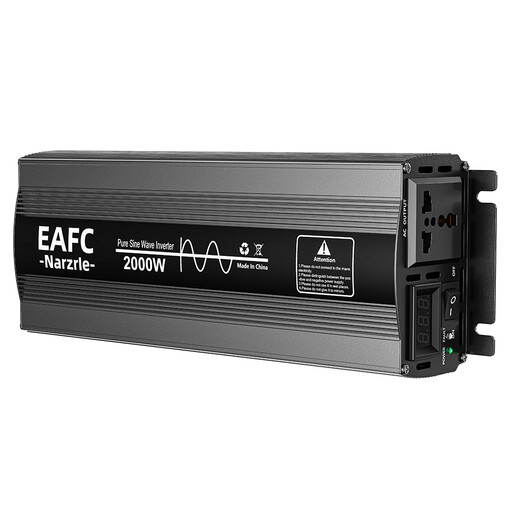
What Sets It Apart
This model is an excellent compromise between compactness and performance. With its 1000W of nominal power, it can easily power most everyday devices on the go. We appreciate its digital display for real-time voltage monitoring and its smart fan that only activates when needed, ensuring quiet operation.
Advantages
Who is it for?
Perfect for van owners, campers, or as a backup 220V power supply for the car. It will effortlessly handle charging laptops, a small fridge, a fan, or light power tools.
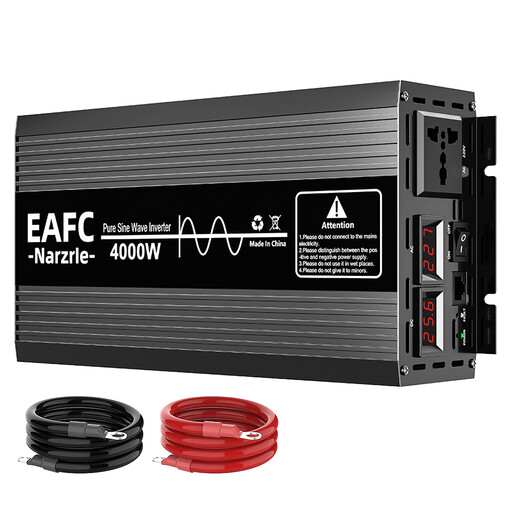
What Sets It Apart
Here we step things up a notch with 2000W of nominal power (and 4000W peak). This inverter is built for heavy-duty use: it can run several devices at once, including power-hungry equipment like a coffee machine, a kettle, or portable power tools. Its dual fans ensure effective heat dissipation even under heavy load.
Advantages
Who is it for?
The logical choice for large campervans, tradespeople on mobile worksites, or as a home backup solution capable of keeping critical appliances like a refrigerator and freezer running.
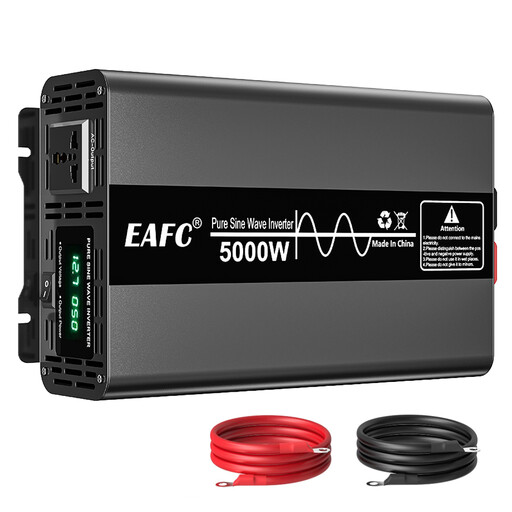
What Sets It Apart
This is the heavyweight category. This model is designed for the most demanding needs. With 2500W continuous (and 5000W peak), it can handle heavy loads: large worksite tools, a small oven, or even a portable air conditioner. Its comprehensive LCD screen is a real asset for fixed installations, providing a complete overview of the system's status (voltage, power, temperature, etc.).
Advantages
Who is it for?
The ultimate solution for off-grid installations, emergency response vehicles, or as a robust home backup system capable of powering a significant portion of the house during an outage.
If these three models don't quite match what you're looking for in terms of power or budget, many other references are available.
? Discover our full range of electrical equipment for camping and find the model that's right for you.
To put it simply: a pure sine wave inverter produces a current of the same quality as your home outlet. It's essential for anything electronic (laptops, TVs, smartphones...). A modified sine wave model, on the other hand, generates a lower-quality, "square" wave current. It should only be used for very simple devices (an incandescent bulb, a basic heater), otherwise you risk damaging everything else.
It's simple: list the devices you plan to use at the same time and add up their power ratings in watts (it's written on the label). For example: laptop (65W) + small fridge (150W) + LED lighting (20W) = 235W. Always choose an inverter whose nominal power is higher than this total, keeping a safety margin of 20-30%.
Yes, but be careful: only for small, low-power models (generally under 150W). The cigarette lighter socket is limited by a fuse and cannot supply much current. For any more powerful car inverter, a direct connection to the battery is mandatory, using the appropriate cables provided with the device.