
Livraison le jour même ou le lendemain

Qualité garantie

Débloquez vos offres de bienvenue: Livraison GRATUITE | Jusqu'à -80 % | 30 jours d'essai gratuits à JoyPlus
Téléchargez l'application
A 12 V to 220 V pure sine wave inverter converts a battery’s direct current into alternating current, similar to the electricity supplied by a household socket. It can be used in a car, lorry, motorhome, caravan or on a building site, or as a backup solution in the event of a power cut.
The problem is that product listings often mix up peak power, continuous power and actual compatibility with 12 V sockets. Before placing your order, it is important to carry out a few checks to avoid an underpowered device, a battery that runs flat within a few hours or an installation that overheats dangerously.
The mention of “2,000 W” or “4,000 W” may refer to the rated power, maximum power or starting power. A motor, refrigerator or power tool may require much more energy during the first few seconds.
To compare a 12 V to 230 V inverter correctly, always check:
A model advertised at 300 W will not run a coffee machine, hairdryer or electric oven, even if its listing shows a much higher peak power.
A cigarette lighter socket is convenient, but it is not suitable for every load. Depending on the vehicle, it may be limited to around 150 or 200 W. Above this level, you will generally need to connect the inverter directly to the battery, using cables with a sufficient cross-sectional area and suitable protection.
This precaution is particularly important for inverters rated at 2,000 W and above. When the load is high, these devices must not be powered through a simple cigarette lighter cable.
A modified sine wave inverter can power some chargers and less demanding devices. However, it may cause buzzing, overheating or unstable operation with sensitive equipment. For a laptop, television, audio system or electronic power supply, a pure sine wave inverter remains the safest choice for stable power.
You should still consult the instructions for each device. Even a pure sine wave inverter cannot replace a properly installed permanent electrical system.
The power required depends on the device with the highest energy consumption, as well as its starting current. Allowing some headroom prevents the inverter from running constantly at its limit.
As a general guide:
At 12 V, a 1,000 W load already represents a very high current on the battery side. The cable cross-section, connection length, ventilation and condition of the battery therefore play an essential role. For backup power, also bear in mind that runtime depends on the battery capacity and the actual efficiency of the complete system.
In product listings, the terms 12 V to 220 V inverter and 12 V to 230 V inverter often refer to the same product category. In France, the nominal domestic mains voltage is 230 V. A model advertised as 220 V may therefore be suitable for many devices, but check its output voltage, 50 Hz frequency and the type of plug supplied.
A compatible European socket does not mean that the inverter can be connected to a consumer unit. It is generally a standalone output intended for connecting devices directly.
The main safety features to look for generally include:
Surge protection does not remove the need to respect the device’s rated power. A digital display can also make it easier to monitor input and output voltages, particularly in a motorhome or converted vehicle.
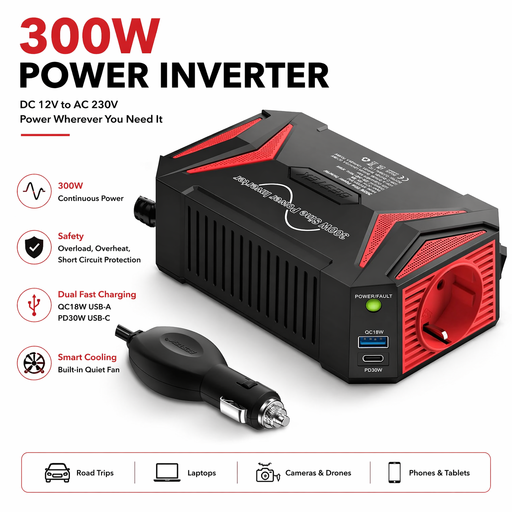
Why this choice suits this profile : Its compact design is ideal for motorists who want to power a laptop, camera or small devices without installing a permanent system. The listing states 300 W continuous power, 700 W peak power and a 12 V cigarette lighter socket.
Its power rating and the usage limit of a 12 V socket need to be taken into account. It should not be chosen to power a heating appliance or a substantial load.
Pure sine wave output, 30 W USB-C PD and 18 W QC ports, built-in protection and a smart cooling fan.
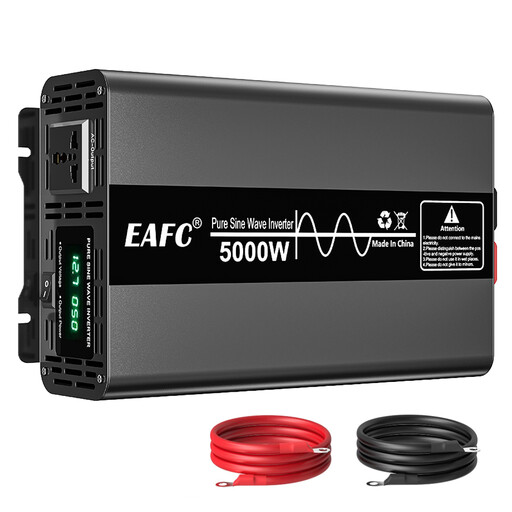
Why this choice suits this profile : Designed for motorhomes and caravans, this inverter is intended for 12 V systems capable of supplying a high current and for off-grid applications requiring, according to the listing, 2,500 W continuous power.
The distinction between 2,500 W rated power and 5,000 W peak power helps prevent you from confusing the starting power, available briefly, with the continuous power.
Detailed LCD display, pure sine wave output, regulated fan and protection against overload, overheating and voltage fluctuations.
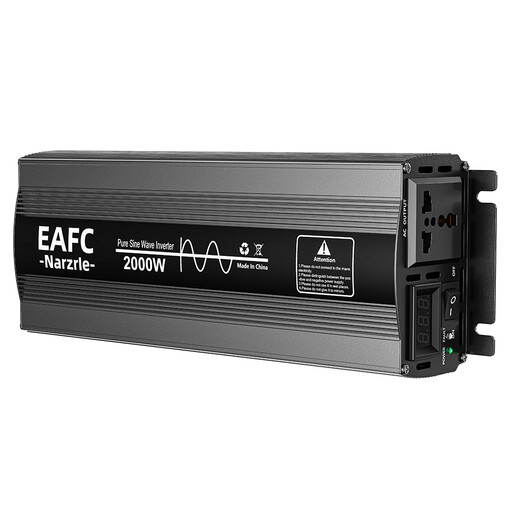
Why this choice suits this profile : This model is suitable for a motorhome user or backup system looking to power several everyday devices, without tackling the most demanding loads.
The listing distinguishes between 1,000 W continuous power and 2,000 W peak power. This is a useful detail that prevents you from choosing a model based solely on the higher figure.
Digital display, temperature-controlled fan and protection against overload, under-voltage and reverse polarity.
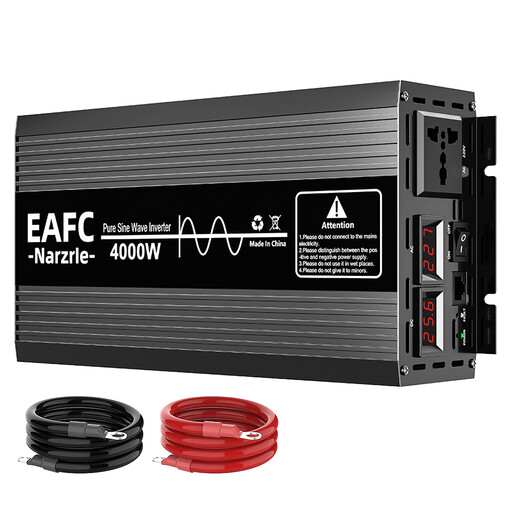
Why this choice suits this profile : With 2,000 W continuous power and 4,000 W peak power according to the stated specifications, this model may be suitable for a lorry, mobile building site or leisure vehicle fitted with a sufficiently powerful battery.
The two displays show the input and output voltages. This lets you monitor the system precisely rather than relying on a simple general indicator light.
Dual automatic cooling, an advertised noise level of around 45 dB, and protection against reverse polarity, short circuits and overheating.
We have put together a complete, real-time updated selection of products that meet these strict criteria and European safety requirements.
Before connecting a car voltage inverter or a 12 V motorhome inverter, check the following:
A 150 to 300 W model is generally sufficient, provided you take into account the power used by the chargers and any other devices connected at the same time. An inverter with USB ports can help you avoid using the 220 or 230 V output for small devices.
Yes, but only if the lorry has a compatible 12 V circuit. Many heavy goods vehicles run on 24 V. Check the battery voltage before buying and choose an inverter that matches the vehicle’s actual electrical system.
It depends on the battery capacity, the power being consumed, the inverter’s efficiency and the condition of the battery. The higher the load, the faster the battery will discharge. For extended use, plan for an auxiliary battery and a suitable charging system.