
Livraison le jour même ou le lendemain

Qualité garantie

Débloquez vos offres de bienvenue: Livraison GRATUITE | Jusqu'à -80 % | 30 jours d'essai gratuits à JoyPlus
Téléchargez l'application
A 12 V to 220 V 2000 W pure sine wave inverter can power a coffee machine, computer, television or certain tools from a 12 V battery. However, product listings often blur the distinction between continuous power, peak power and efficiency. As a result, a device advertised as “4000 W” may be limited to 2000 W during extended use, while incorrectly sized wiring can cause voltage drops or overheating.
For a motorhome, caravan, truck, boat, food truck or 12 V backup installation, three common pitfalls come up time and again.
The 4000 W figure generally refers to peak power available for a few seconds. It is designed to handle the initial power surge from a refrigerator, pump or motor-driven tool when it starts up.
The actual continuous output is often lower. For a 2000 W inverter, check the following separately:
A combined load of 1800 W leaves little headroom for fluctuations in power demand. For regular use, it is better to maintain a safety margin than to run the inverter constantly at the limit of its capabilities.
A 12 V pure sine wave inverter produces an AC waveform that more closely resembles household mains power than a modified sine wave model. This can be particularly beneficial when powering computers, chargers, televisions, audio equipment and motor-driven appliances.
That said, the “pure sine wave” label alone is not enough to assess an inverter’s overall quality. Also review:
EAFC states an efficiency of over 95% under the conditions specified by the manufacturer. This remains a figure supplied by the brand, rather than a guarantee of identical performance in every installation.
At 2000 W, a 12 V inverter may draw approximately 167 A, even before accounting for losses. The battery, cables, terminals and fuses must therefore be sized to handle a high current.
To reduce the risks:
Overload protection does not remove the need for a correctly sized installation. It may shut the device down if a problem occurs, but it cannot compensate for an undersized battery or cable.
Add up the wattage shown on each appliance’s rating plate, then identify devices fitted with a motor or compressor. A refrigerator, pump or drill may draw several times its usual operating power when starting.
A 12 V to 220 V 4000 W inverter advertised with a 2000 W rated output can be useful if you need additional starting headroom. It does not, however, turn the battery into a source capable of delivering 4000 W continuously. The rated power remains the figure that matters.
For use in a motorhome, truck or on a worksite, look for an inverter with overload protection and, at a minimum, the following features:
These features limit the consequences of a fault, but the manual should specify their operating conditions and the inverter’s usage limits.
A universal socket accepts several plug types, which can be convenient when using equipment from different countries. However, it does not guarantee that every appliance is compatible with the supplied voltage or with the available grounding arrangement.
Before buying, also check:
The cards below feature the selected inverter along with several pieces of equipment that may appeal to users of converted vehicles, mobile workshops or self-contained workstations. They do not replace the essential technical specifications required when choosing an inverter.
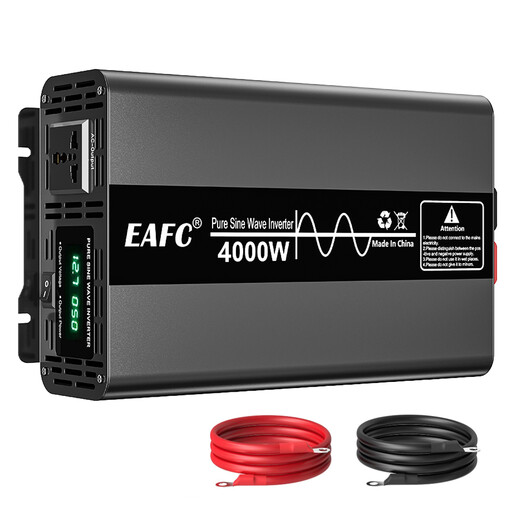
Why this model suits this profile: it is designed for motorhome, truck and boat owners looking to obtain a 220 V output from a 12 V battery, with advertised headroom for startup surges.
The specifications clearly distinguish the 2000 W continuous output from the 4000 W peak output. They also mention protection against overloads, overheating, short circuits and reverse polarity.
Pure sine wave output, universal socket, dual automatic ventilation, 12 V DC input and advertised dimensions of 28 × 18 × 8 cm.
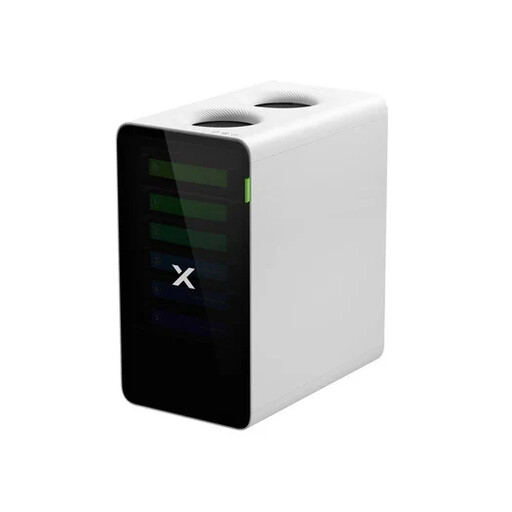
Why this model suits this profile: in a food truck, mobile workshop or engraving station, it can complement a mobile power setup. However, it does not replace a 12 V to 220 V inverter.
Its purpose is clearly different: it filters dust and odours generated by laser engraving, but it does not convert voltage.
The system is advertised with six filtration stages and quiet operation, according to the available product description.
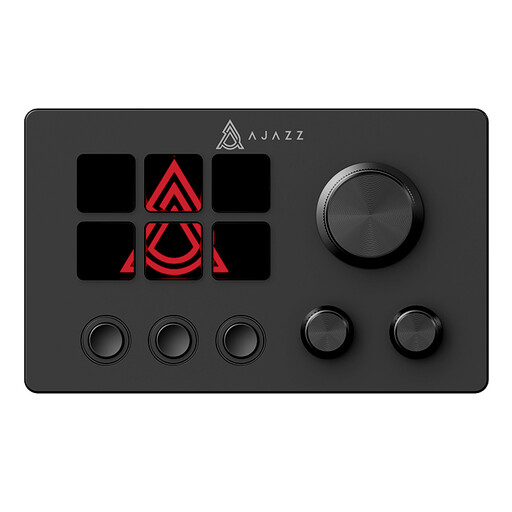
Why this model suits this profile: it is intended for users setting up a workstation in a vehicle or self-contained location. A compatible power supply must nevertheless be provided separately.
The specifications clearly detail its six programmable keys, buttons and dials, so it should not be confused with a 12 V inverter.
Keys with an LCD display, customisable controls and an advertised USB connection.
Yes, provided the battery, cables and protection devices can handle the required current. At full power, the current on the 12 V side can exceed 160 A. A low-capacity auxiliary battery may then drain quickly or trigger a shutdown.
A pure sine wave inverter delivers a smoother AC voltage that is suitable for many chargers, electronic devices and motors. A modified sine wave may be less suitable for certain equipment, generate electrical noise or increase heat build-up. Check the manual for the appliance you intend to power before making your choice.
The cost depends primarily on the appliance’s power consumption, the inverter’s efficiency and the battery’s capacity. Even without a load, the inverter generally draws a small amount of current in standby mode. Switch it off when it is not needed and avoid connecting energy-hungry appliances to a small battery.