
Livraison le jour même ou le lendemain

Qualité garantie

Débloquez vos offres de bienvenue: Livraison GRATUITE | Jusqu'à -80 % | 30 jours d'essai gratuits à JoyPlus
Téléchargez l'application
With its authentic charm and warmth, stoneware has become a staple on our tables. A 12-piece stoneware dinnerware set is the promise of a warm, elegant table setting, perfect for both everyday meals and special occasions. But be careful?: behind the appeal of rustic style and the art of tablescaping, pitfalls can lurk, turning an impulse buy into a major disappointment.
Before taking the plunge, it's essential to know the common mistakes to avoid. Some sets that look stunning in photos turn out to be fragile, impractical, or incomplete. The result?? Chipped or unusable plates after just a few months. This guide is here to help you identify the true markers of quality and choose a set that will be a lasting enhancement to your table.
The excitement of the moment can sometimes make us forget to check a few crucial details. Here are the three most common mistakes to avoid.
The term '?artisan?' evokes a unique design and careful craftsmanship. But be warned, it can also hide poor quality. An artisan stoneware dinnerware set at an unbeatably low price should be a red flag?: the glaze is often too thin and fragile, making the stoneware plates vulnerable to chips and cutlery scratches. The result?: a set that quickly loses its lustre.
A dinnerware set is meant to be used every day. Yet, many designs aren't made for our modern lifestyles. The main drawback?? The absence of a '?dishwasher and microwave safe?' label. Dinnerware that requires hand-washing after every meal or can't be used to quickly reheat a dish loses all its appeal. Worse, some low-quality stoneware can become dangerously hot in the microwave, posing a real burn risk.
A 12-piece dinnerware set is typically designed for 4 people. But what does it actually include?? Some bundles only contain dinner plates and dessert plates, leaving out soup plates. Yet, these are essential for soups, saucy dishes, or large salads. You're then left with an incomplete set, forcing you to spend more to make it whole.
To ensure your dinnerware set is long-lasting and practical, focus on these three fundamental aspects.
Stoneware is a type of ceramic fired at very high temperatures (over 1200?°C), which makes it denser, less porous, and therefore more durable than earthenware. This is the source of its renowned toughness.
A close look at the finish is crucial. Reactive glaze stoneware, for example, refers to a type of glaze that reacts to heat during firing, creating unique shades and patterns on each piece. Far from being a flaw, this is an aesthetic signature that adds character. A quality glaze should be smooth, non-porous, and thick enough to protect the plate from scratches and stains.
A truly complete 12-piece dinnerware set, designed for everyday use, should include?:
This composition guarantees unbeatable versatility, from morning to night.
Always check the manufacturer's instructions. The '?dishwasher and microwave safe?' label isn't an option—it's a prerequisite. To preserve your dinnerware's shine, even if it's dishwasher-safe, be sure to space the pieces properly in the dishwasher to prevent impacts that could chip the edges.
To help you see more clearly, here are a few models that meet these criteria, suited for different styles and tastes.
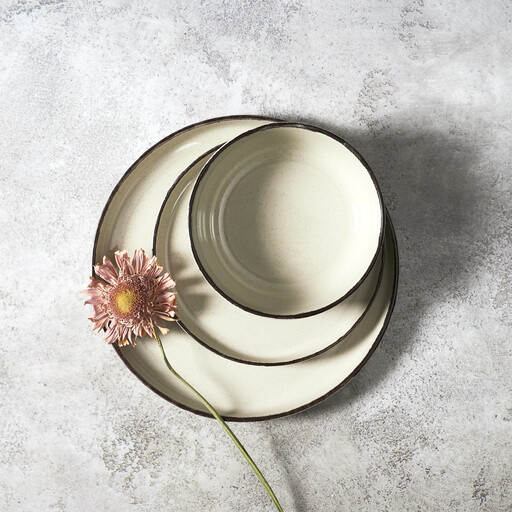
This set is ideal for creating a warm, authentic atmosphere. Its creamy beige hue and delicately textured finish evoke the sophisticated charm of a country home, perfect for convivial meals.
Made from durable stoneware and designed for daily use, it combines an artisan aesthetic with unbeatable durability. The reactive glaze ensures a unique look without compromising on resistance to scratches and chips.
Complete composition (dinner, soup, and dessert plates) for a full-course meal. Excellent heat retention keeps food warm for longer.
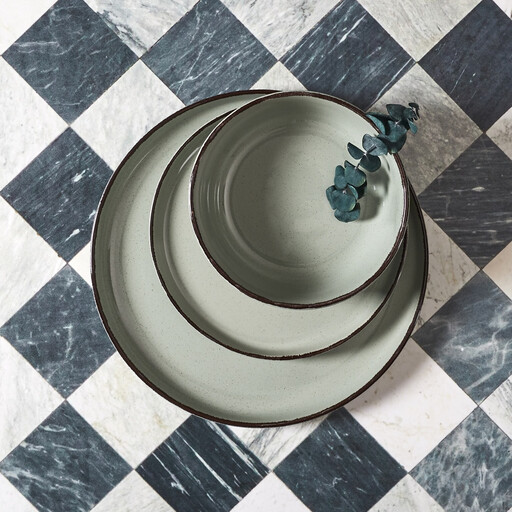
Perfect for adding a touch of colour to your table that is both organic and sophisticated. The deep green and the nuances of the reactive glaze bring a soothing, botanical dimension that's very on-trend.
Fully dishwasher and microwave safe, this set proves you don't have to choose between beauty and practicality. It makes no sacrifices on functionality.
The generous size of the soup plates is ideal for stews, large salads, or pasta dishes. Its deep colour beautifully enhances the presentation of food.
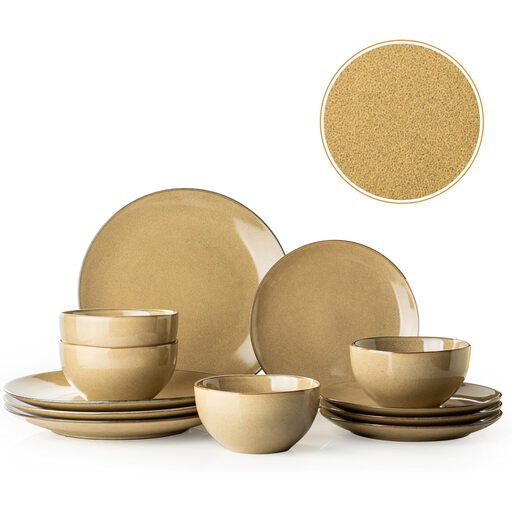
This set is for those who favour clean lines and a contemporary style. It combines the warmth of stoneware with a modern aesthetic and integrates beautifully into today's interiors.
This set checks all the boxes for safety and durability : it's made from lead- and cadmium-free ceramic clay, and its high-temperature firing gives it increased resistance to both thermal shock and chipping.
Its composition is highly functional, with dinner plates, salad plates, and versatile bowls. The special GLIDECOAT glaze promises excellent resistance to cutlery scratches.
We have selected other dinnerware sets that meet all our quality criteria and current safety standards.
Yes, stoneware is one of the most robust ceramics for everyday use, thanks largely to its high-temperature firing process. However, no material is indestructible. Resistance will always depend on the manufacturing quality and the thickness of the glaze. To minimise risks, avoid extreme thermal shock (like moving a plate from the refrigerator to a hot oven) and handle pieces with care during washing and storage.
The term '?reactive glaze?' refers to a glazing technique where different minerals are added to the glaze. During the high-temperature firing, these minerals react in a semi-random way, creating variations in colour, texture, and pattern. It's this process that gives each plate or bowl a completely unique character, offering the best of both worlds?: an artisanal look with the reliability of controlled manufacturing.
Even for a set labelled as dishwasher-safe, a few best practices can help preserve its shine. Consider rinsing plates before putting them in the machine to prevent food residue (especially acidic ones) from damaging the glaze. In the rack, space the pieces well so they don't knock against each other during the cycle. If washing by hand, use a soft sponge. Finally, make sure each piece is completely dry before stacking to prevent any residual moisture.