
Livraison le jour même ou le lendemain

Qualité garantie

Débloquez vos offres de bienvenue: Livraison GRATUITE | Jusqu'à -80 % | 30 jours d'essai gratuits à JoyPlus
Téléchargez l'application
A stoneware dinner set promises to bring a touch of authenticity and warmth to every meal. Its aesthetic, both natural and sophisticated, is winning over more and more households. But be warned: the craze for rustic-chic style can sometimes hide real disappointments. To make an informed and lasting choice, it's essential to know the pitfalls to avoid.
Who hasn't cursed a dinner set that chips after just a few washes or proves impractical for daily use? To avoid buyer's remorse, here are the key points to keep in mind.
The Illusion of an "Artisanal Look": A matte finish or a rough texture is very appealing, but it's not always a guarantee of quality. Some low-end sets feature weak glazes that scratch at the first touch of a fork or chip at the slightest impact. The handmade charm quickly fades.
The False Promise of Convenience: A modern dinner set should be low-maintenance. However, many stoneware sets, despite their contemporary design, are not microwave or dishwasher-safe. Verifying these compatibilities is a non-negotiable step for hassle-free daily use.
An Unbalanced Set Composition: The term "12-piece stoneware dinner set" generally refers to a stoneware set for 4 people. Ideally, this includes 4 dinner plates, 4 soup plates, and 4 dessert plates. Be wary of sets that swap out the essential soup plates, perfect for pasta or soups, for much less versatile small cereal bowls.
To be sure of your dinnerware's longevity and practicality, focus on a few key technical points.
The term "stoneware" refers to a type of ceramic fired at very high temperatures (typically above 1200°C / 2192°F). This process, known as vitrification, makes the material dense, strong, and non-porous. In practice, high-quality stoneware absorbs almost no water, protecting it from stains and cracks. Pay close attention to the finish: a quality glaze should be non-toxic (lead and cadmium-free) and robust enough to withstand scratches from cutlery and repeated washing. This is what separates genuine artisanal stoneware plates from a pale imitation.
A dishwasher-safe dinner set will make your life significantly easier. Ensure this feature is clearly stated by the manufacturer. Microwave compatibility is also a major plus for quickly reheating a meal. A good stoneware set should handle these demands without a hitch. As for care, quality stoneware is as easy to clean as porcelain, requiring no special precautions.
A set for 4 people should cover all the needs of a standard meal. The most functional configuration includes:
This combination of dinner, soup, and dessert plates ensures maximum versatility for both everyday meals and for entertaining guests.
Here are a few models that meet specific needs while checking all the boxes for our quality and practicality criteria.
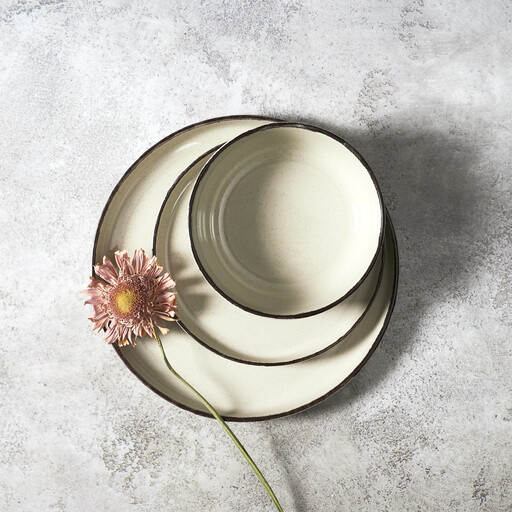
Why we love it: Perfect for those seeking rustic-style dinnerware without sacrificing elegance. This complete beige dinner set creates a soft and welcoming atmosphere, ideal for meals with family or friends.
Unlike sets with fragile finishes, this one features durable stoneware with a reactive glaze, giving each piece a unique character while ensuring its sturdiness.
It combines an authentic artisanal aesthetic with the convenience of a dishwasher-safe set, perfectly meeting the demands of modern life.
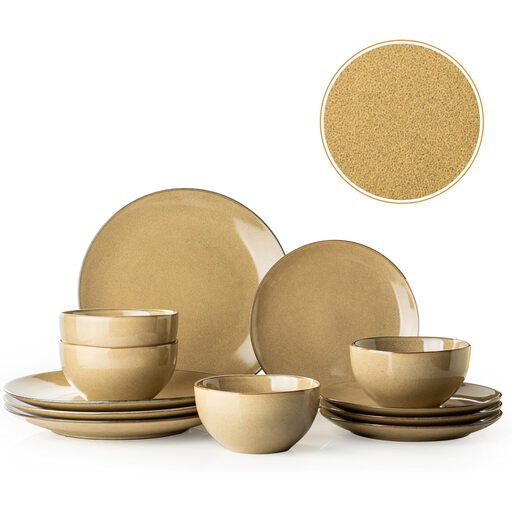
Why we love it: Perfect for families and daily use. Its modern design and high-temperature manufacturing make it a reliable and durable choice for those who prioritise functionality without compromising on style.
This set sidesteps the pitfall of false convenience. It is explicitly designed to resist scratches and is fully microwave and dishwasher-safe.
Made from lead and cadmium-free ceramic clay fired at 1400°C (2552°F), it ensures optimal food safety and enhanced durability against thermal shock and chipping.
We have curated a full range of products that meet our strict selection criteria and current safety standards.
The main difference lies in the clay composition and firing temperature. Porcelain, fired at an even higher temperature than stoneware, is finer, more translucent, and generally more resistant to chipping. Stoneware, on the other hand, is more opaque, thicker, and offers a more rustic and warm feel. The choice ultimately depends on the aesthetic and durability you are looking for.
Yes, provided it is of high quality. Well-vitrified stoneware with a resistant glaze will easily withstand repeated wash cycles. To preserve its longevity, avoid overloading the dishwasher so that the pieces do not knock against each other. In any case, always follow the manufacturer's recommendations—that's your best guarantee.
Care is very simple. Use mild detergents and non-abrasive sponges to avoid scratching the glaze. Although most quality sets are durable, it's best to avoid extreme thermal shock (like moving a plate from the refrigerator directly into a hot oven). After washing, ensure the pieces are completely dry before stacking them.