
Livraison le jour même ou le lendemain

Qualité garantie

Débloquez vos offres de bienvenue: Livraison GRATUITE | Jusqu'à -80 % | 30 jours d'essai gratuits à JoyPlus
Téléchargez l'application
A box of 12 coloured pencils can be perfectly suited for school, creative colouring or artistic drawing. Yet two sets with the same number of pencils can offer a very different experience. A lead that's too thin, a shape that's awkward for small hands, or colours that are difficult to blend — some details only become apparent after you've bought them.
This guide from the Joybuy Head of Product Recommendations helps you compare the criteria that really matter, without relying solely on the packaging or marketing promises.
Twelve shades can be enough for homework and everyday colouring. However, a standard palette won't replace watercolour pencils, metallic pencils or a set designed for artists. So check the type of lead, rather than just focusing on the number of pencils.
A thin pencil is generally good for precise drawing, but it can be less comfortable for a child who is still learning to hold their tool. Ergonomic, triangular or jumbo models make them easier to grip and often withstand repeated pressure better. However, they do need a suitable sharpener.
The strength of a lead depends on its composition, its diameter and how the pencil is made. A thick lead of 4.2 or 5 mm is generally better for energetic colouring than a fine lead. That doesn't make it unbreakable, though — a drop or an unsuitable sharpener can still damage it.
For children, a break-resistant lead can reduce interruptions caused by snapping. For an illustrator, the ability to layer and blend colours will often be more important than the thickness of the lead.
Coloured pencils for children come in several sizes. A triangular shape, possibly with a non-slip zone, can help with finger placement. Models designed for right-handed or left-handed users are also worth your attention — their grooves aren't always oriented the same way.
Jumbo pencils take up more space in a pencil case and sometimes need a specific sharpener. On the plus side, their large diameter suits young children well and allows you to fill large areas quickly.
A cardboard box of coloured pencils is lightweight and economical. A metal tin protects the tips better during transport, but it is usually a little heavier. Also check whether a sharpener is included and make sure it is compatible with the diameter of the pencils supplied.
With children under 3 years old, the tips, shavings and small accessories require extra care. Always follow the recommended age on the packaging and the manufacturer's instructions. A pencil is not meant to be put in the mouth.
The models below meet different needs. The features listed correspond to the information given on the product pages.
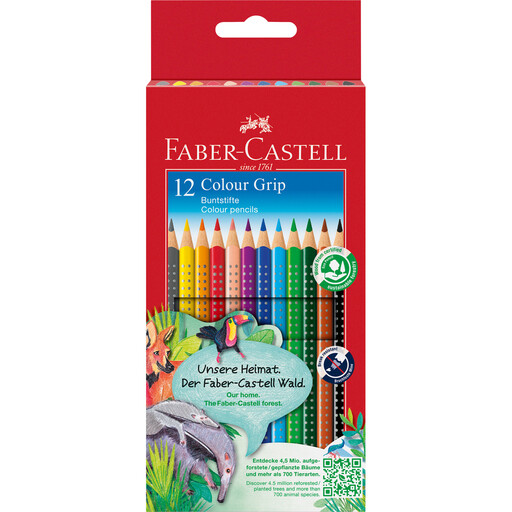
Why this choice suits this profile: This set combines a triangular grip, a strong lead and a compact format, practical for homework, colouring at home or first drawings.
The ergonomic shape and reinforced lead reduce problems linked to an unstable grip or excessive pressure.
12 triangular pencils, colours described as vibrant, compact storage and suitable for both drawing and colouring.
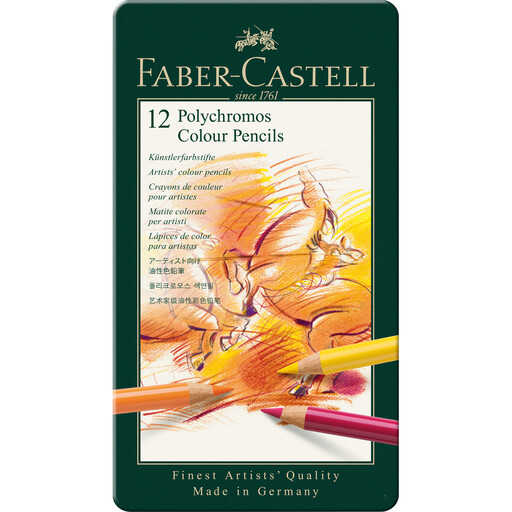
Why this choice suits this profile: This set is aimed at adults and artists who want an oil-based lead, consistent application and a metal tin to protect their pencils.
The product page states that the pigmented, oil-based lead is break-resistant and suitable for layering colours.
Pigments described as lightfast, a robust lead and a metal tin that's easy to carry.
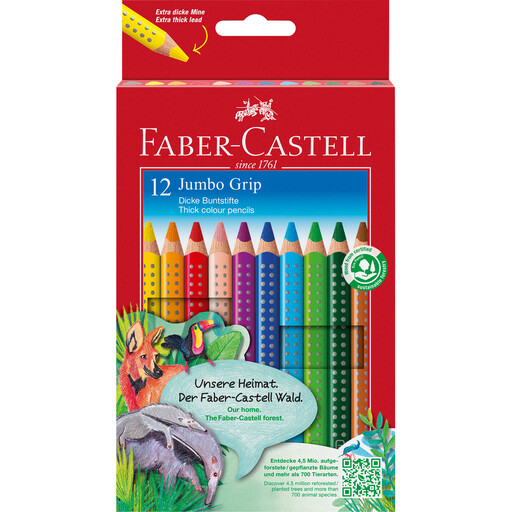
Why this choice suits this profile: The jumbo format is ideal for children, colouring large areas and users who press down hard on the lead.
The large diameter, triangular shape and watercolour lead meet the needs for both durability and versatility.
A soft grip zone, water-resistant lead and a metal tin for storage.
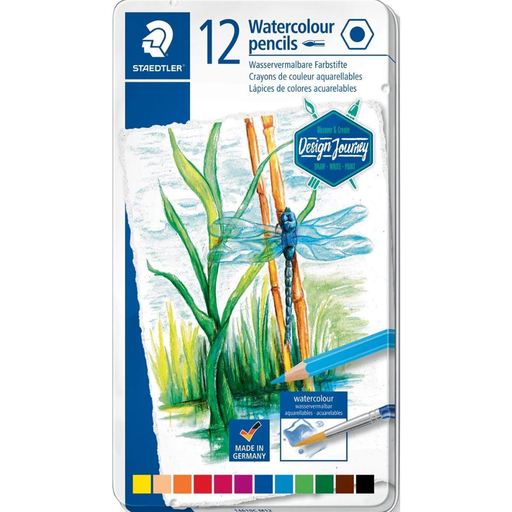
Why this choice suits this profile: Students, hobbyists and creators who want to move from dry drawing to coloured washes have a compact and versatile set at their disposal.
The product page clearly states that the colours are water-soluble — no risk of thinking a standard pencil will automatically produce a watercolour effect.
12 water-soluble leads, a hexagonal barrel, a soft lead and a protective metal tin.
We've put together a comprehensive list, updated in real time, of products that meet these strict selection criteria and European safety regulations.
It all depends on how often you use them, how much pressure you apply and how many times you sharpen them. To make your pencils last longer, use a sharpener that matches the diameter of the lead, avoid dropping them and store them in their box after each session.
For a light water activation, a thick drawing paper can be enough. If you plan to do several wet layers, choose watercolour paper instead. Start with a small amount of water and rinse the brush between colours to avoid muddying them.
The triangular shape can improve stability, but some models have grooves that are oriented in a particular direction. The STABILO EASYcolors, for example, come in both right-handed and left-handed versions. Be sure to check the specific variant before ordering, especially for a young child.