
Livraison le jour même ou le lendemain

Qualité garantie

Débloquez vos offres de bienvenue: Livraison GRATUITE | Jusqu'à -80 % | 30 jours d'essai gratuits à JoyPlus
Téléchargez l'application
Looking to transform a room's atmosphere with modern, customisable lighting? The 10m multicolour LED strip has become a go-to for its simple installation and instant "wow" factor. Perfect for LED lighting in a bedroom, levelling up a gaming setup, or accentuating the lines of furniture, the promise is appealing. But be warned: not all models are created equal. To prevent a promising purchase from turning into a disappointment, here are the pitfalls to avoid.
The market is flooded with options, but a few often-overlooked details separate a good investment from a short-lived gadget. Here are the key things to watch out for to make the right choice.
An LED strip might be labelled "multicolour," but the richness and vibrancy of the hues depend directly on the quality and number of diodes. The classic trap? Falling for a low-cost model with LEDs that are too far apart and not powerful enough. The result: dim light, washed-out colours, and a "Christmas light" effect with unsightly hotspots, a far cry from the desired continuous glow. A good RGB LED strip must offer sufficient density for a uniform look.
This is the deal-breaker: an LED strip that peels off after just a few weeks. Unfortunately, it's a common problem. To cut costs, many manufacturers skimp on the quality of the adhesive tape. Soon after being installed, it starts to sag, especially on vertical surfaces or underneath furniture. Checking reviews on the adhesive's durability will save you from having to rig up makeshift fasteners.
A "10m LED strip" doesn't always mean a single 10-metre strip. It often consists of two 5-metre rolls that need to be connected. If the connector is poorly designed, expect brightness loss, desynchronised colours between the two sections, or even a connection that fails at the slightest movement. Verify that the kit is well-designed for a simple and reliable assembly.
To make sure you get it right, focus on these few technical specifications. They are the true guarantees of your multicolour LED light strip's performance and longevity.
Density is expressed in the number of LEDs per metre. For a 10m length, a total of 300 LEDs (or 30 LEDs/m) is a good baseline for diffuse and uniform ambient lighting. The power, expressed in watts (W), directly affects the brightness. A 24W model for 10m, for example, offers an excellent balance between intensity and energy consumption.
A mains-powered LED strip (230V) with a supplied adapter ensures a stable power supply and consistent brightness, unlike USB models, which are often less powerful. For indoor use, check for the IP20 standard. This rating certifies that the product is protected against solid objects larger than 12.5mm but is not waterproof. It should therefore be reserved for dry rooms like a bedroom, living room, or office.
Most kits include an LED strip with a remote control. Infrared (IR) models are the most common: they require a direct line of sight to the receiver. They allow you to change colours, adjust brightness, and launch pre-programmed modes (fade, strobe, etc.). Simple and effective for everyday use.
Rather than an endless list, we've selected a few products that meet specific needs while adhering to our standards for quality and ease of use.
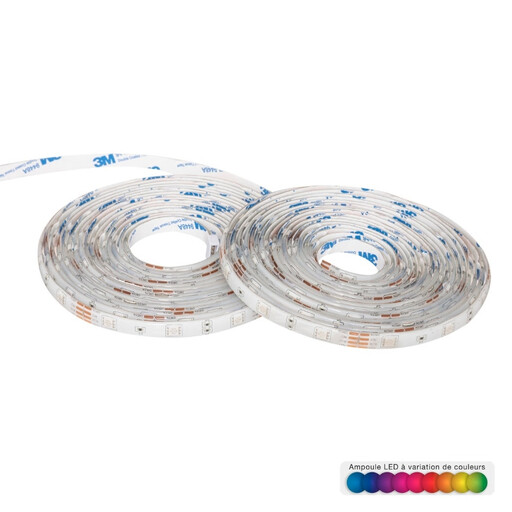
Who it's for: Perfect for those who want a complete and versatile solution. Its 10m length is ideal for outfitting a TV stand, a headboard, or creating an immersive atmosphere in an office or game room.
This model consists of two 5m strips designed for easy connection, which prevents synchronisation issues. The mains power supply ensures stable brightness along the entire length.
A complete, ready-to-use kit (300 LEDs, IR remote, and mains adapter included). Programmed colour-changing modes for dynamic effects.
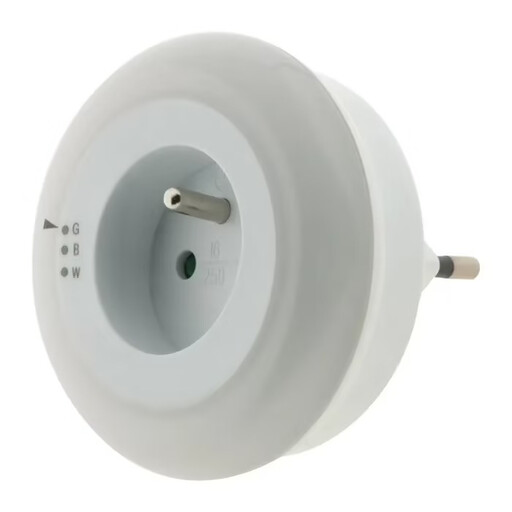
Who it's for: For those seeking a simple, automatic, and discreet accent lighting solution. Ideal for lighting a hallway, staircase, or a child's room at night, without the hassle of installing an LED strip.
This product is a "plug-and-play" unit. There's no risk related to adhesive or complex wiring. Its function is clear, effective, and gets straight to the point.
Its "passthrough" design leaves the wall socket free. The dusk-to-dawn sensor automatically turns the light on at nightfall. Very low power consumption (0.5W).
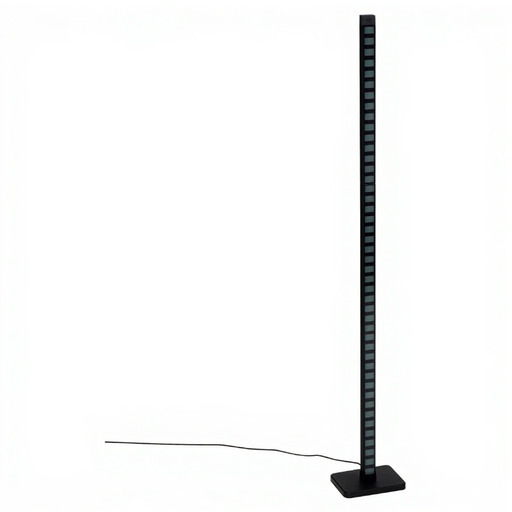
Who it's for: For those who prefer a beautiful decorative object over an integrated installation. This floor lamp brings a touch of originality and colour to a child's room or living room, while offering controllable ambient light.
Since this is a standalone floor lamp, there are no headaches with adhesive, cutting, or installation. It's a finished product, ready to plug in.
An original design that serves as both a light fixture and a decorative object. Fully controllable multicolour light via the included remote.
Discover our complete and up-to-date selection of products that meet strict selection criteria and current safety standards.
The lifespan of LEDs, typically between 15,000 and 30,000 hours, is a guarantee of longevity. For an average use of 4 hours per day, that's more than 10 years of peace of mind! Of course, this longevity depends on the quality of the components and good heat dissipation.
No, LED technology is renowned for its excellent energy efficiency. A 10m strip with a power rating of 24W, for example, has very low consumption. For comparison, that's less than an old 25W incandescent bulb. The impact on your electricity bill will therefore be minimal, even with daily use.
Yes, most LED strips are cuttable. They have cutting marks (often a scissor icon) at regular intervals, usually every 5 or 10 cm. It is imperative to cut only on these marks to avoid damaging the circuit. However, models like the Atmosphera strip featured above, composed of two 5m sections, offer excellent modularity without even needing to take out the scissors.