
Livraison le jour même ou le lendemain

Qualité garantie

Débloquez vos offres de bienvenue: Livraison GRATUITE | Jusqu'à -80 % | 30 jours d'essai gratuits à JoyPlus
Téléchargez l'application
LED strips have revolutionized the way we light our homes. Whether it's for creating a soft ambiance in a bedroom, energizing a gaming setup, or highlighting the lines of a TV stand, a 10m LED strip is the ideal solution. It's simple, effective, and accessible to everyone. Yet, with an overwhelming number of options on the market, disappointment is often just around the corner. To make the right choice, it's best to know the most common pitfalls.
As a Product Expert at Joybuy, my mission is to decode the technical specs for you, looking beyond the marketing hype to guide you toward the perfect choice.
The promise of an easy installation and an instant "wow" factor often makes people overlook a few crucial technical details. Here are the three most common mistakes that can turn a fun accent lighting project into a real headache.
To avoid these traps, focus on a few key technical specifications that never lie. They are the true guarantees of quality and durability for your future LED strip with a remote.
Density is measured in the number of LEDs per meter. For smooth and powerful ambient lighting, aim for a density of at least 30 LEDs per meter. Anything less risks the "Christmas light" effect with overly visible dots. A higher density (60 LEDs/m or more) will provide a smoother, more professional look—a crucial detail for TV accent lighting, where the light source is often exposed.
Most models plug into a wall outlet via an adapter. This is the case for a mains-powered LED strip, which ensures a stable power supply and therefore consistent brightness along the entire length. It is imperative to check that the provided adapter has the CE mark, which guarantees compliance with European safety standards. USB-powered models are convenient for shorter lengths (e.g., behind a computer monitor), but they often lack the power to properly light a full 10m LED strip.
A good LED strip should be easy to install cleanly, even in corners. Make sure it's flexible enough and, most importantly, that it can be cut. Most models have cutting marks (often a scissor icon) every 5 or 10?cm. Finally, an LED strip with a remote is a virtually essential standard today. Infrared (IR) remotes are the most common: they get the job done, as long as you aim them directly at the receiver.
Instead of an endless catalog, here are a few products that meet specific needs, keeping our quality and practicality criteria in mind.
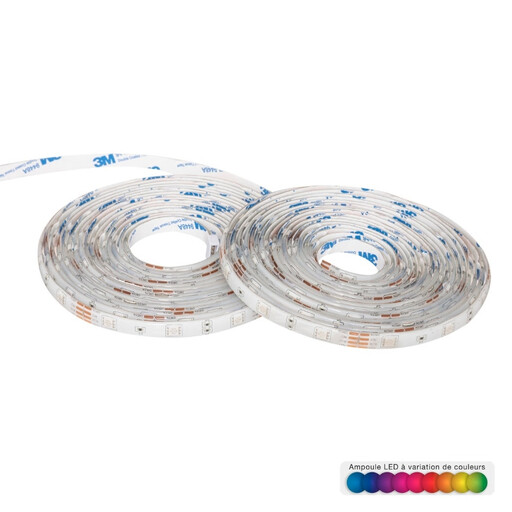
Why it's a great choice: This all-in-one solution is perfect for outfitting a large room. It's designed to cover a significant length without complications, whether you're running it around a living room or along a hallway.
The kit consists of two 5m strips designed to be connected cleanly, ensuring perfect continuity. The mains power supply guarantees stable power across the full 10 meters.
With 300 LEDs (that's 30 LEDs/m), an IR remote, and a mains adapter, this is a complete, ready-to-use pack for any large-scale project.
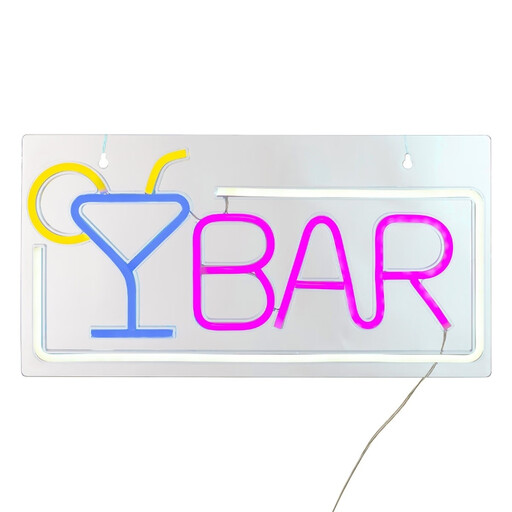
Why it's a great choice: If your goal is to create a visual focal point rather than linear lighting, this type of neon sign is an excellent alternative. It brings a festive vibe and unique character to a home bar, kitchen, or living room.
As a standalone decorative object, it bypasses the adhesive and length issues of traditional strips. Installation is as simple as mounting it on the wall.
A bold and original design. Its rechargeable USB-C battery offers complete placement freedom, with no need to worry about outlets.
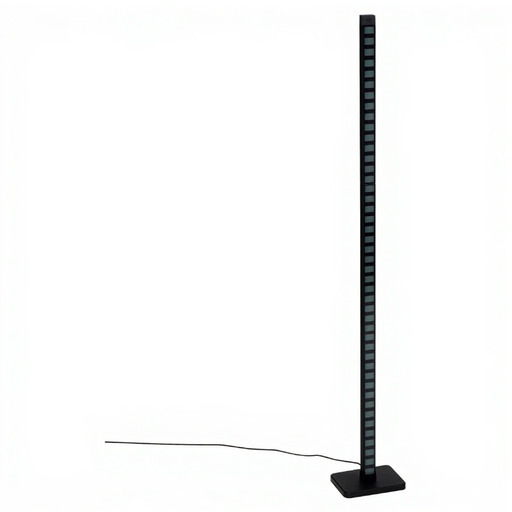
Why it's a great choice: Perfect for a kid's room, a teen's bedroom, or a game room, this floor lamp provides multicolor lighting without the hassle of a wall installation. It's mobile, safe, and easy to use.
This product bypasses all the common pitfalls of LED strips: no adhesive, no cutting, and no complex connections. Just plug it in, and you're good to go! The lighting ambiance is instantly customizable.
Its playful design makes it a decorative piece in its own right. The remote lets you change colors and intensity in a flash, and its portable nature invites you to reinvent the ambiance whenever the mood strikes.
We have curated a complete selection of products that meet our quality criteria and current safety standards.
The lifespan of an indoor LED strip is generally estimated to be between 30,000 and 50,000 hours. In practice, this translates to several years of normal use. The main factors that can shorten this lifespan are overheating (due to poor ventilation) and a poor-quality power supply.
Yes, most LED strips are cuttable. They have clear cutting marks (usually a scissor icon on copper contacts) at regular intervals. Simply cut the strip at these points with a standard pair of scissors. The remaining part will no longer be powered, but be aware that specific connectors are available to reuse it if needed.
No, LED technology is known for its low energy consumption. A high-quality 10-meter LED strip consumes between 20 and 40 watts at full power, which is far less than a single traditional incandescent bulb. This makes it a decorative lighting solution that will have a minimal impact on your electricity bill.