
Livraison le jour même ou le lendemain

Qualité garantie

Débloquez vos offres de bienvenue: Livraison GRATUITE | Jusqu'à -80 % | 30 jours d'essai gratuits à JoyPlus
Téléchargez l'application
Whether you're paddling on a lake, hiking in a downpour, or cycling to the office, keeping your gear dry isn't an option—it's a necessity. The 10L waterproof backpack emerges as the ideal solution: compact, lightweight, and protective. The problem? The market is flooded with models making tempting promises that, all too often, don't hold water. As the Head of Product Recommendations at Joybuy, I'm here to help you navigate this jungle and make the right choice.
Before you dive in, let's review the three most common pitfalls that turn a promising purchase into a soggy disappointment.
To avoid these unpleasant surprises, rely on objective technical criteria. Here are the three points to inspect to ensure your bag will keep your gear dry—for real, and for the long haul.
The Ingress Protection (IP) rating is an international standard that measures a product's degree of protection against solids (the first digit) and liquids (the second digit). For a waterproof bag, it's the second digit that matters.
For most outdoor activities and daily commutes, an IPX6 or IPX7 rating provides real peace of mind.
The closure system is just as crucial as the material. For a small waterproof backpack, the roll-top closure is by far the most reliable. The principle is simple: you roll the top of the bag down on itself three times before clipping it shut. This method creates a physical seal that blocks water entry, a much more secure solution than a standard zipper. Also, look for high-frequency welded seams, which, unlike stitched seams, leave no needle holes for water to seep through.
A good waterproof bag must offer the perfect balance between durability and weight. A lightweight hiking bag needs to be easy to carry, while a compressible dry bag should be unnoticeable when packed away.
Rather than an endless list, we've selected models that cater to specific uses, all validated against the reliability criteria we've just covered.
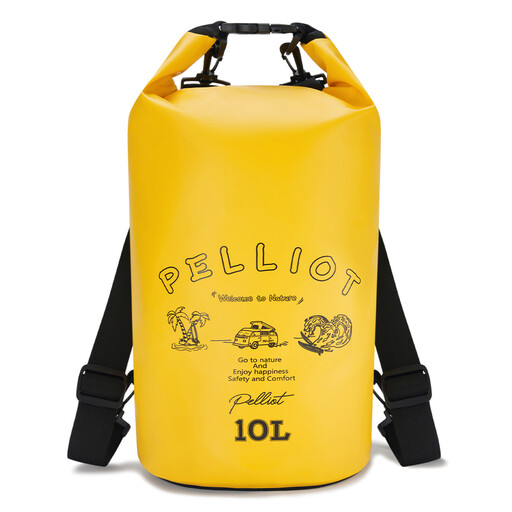
Why we love it: Perfect for kayaking, paddleboarding, or sailing. Its bright yellow color makes it highly visible on the water—a real safety bonus. Its 10L capacity is more than enough for a towel, a smartphone, and keys.
It relies on a proven roll-top closure and ripstop fabric, sidestepping the traps of flimsy zippers and low-quality materials.
Ultra-light (around 200g) and compressible, it packs down incredibly small. The clever detail: the emergency whistle integrated into the chest buckle.
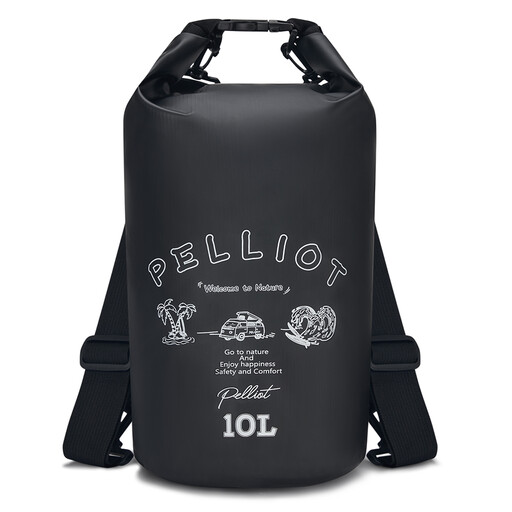
Why we love it: Its understated look and black color make it an ideal all-rounder for the city and the trails. It will shield a small laptop or tablet from unexpected daily downpours.
No compromises here: the roll-top closure and treated fabric provide real protection, where many urban bags are merely "water-resistant."
Its versatility. Discreet enough for daily use, it folds completely into its own pocket to become a perfect backup bag for travel or a day hike.
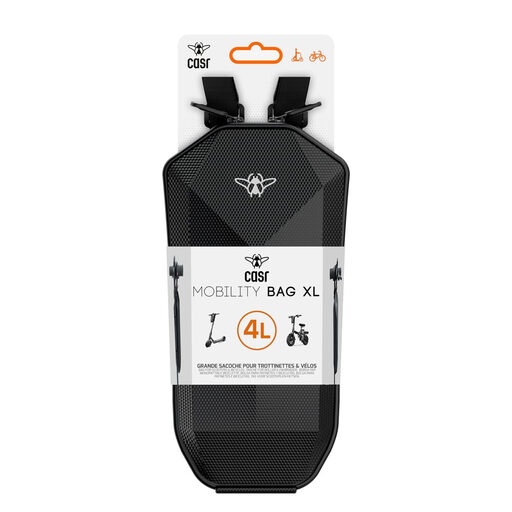
Why we love it: The perfect solution for those who don't want a bag on their back. This handlebar bag is compact, accessible, and its hard shell protects fragile items from both impacts and rain.
Its secret: a waterproof PU coating and heat-sealed seams. This provides weather protection that's in a different league from classic fabric bags.
Its rigid EVA shell absorbs shocks and vibrations, acting as true armor for your electronics. Its universal mounting system installs in seconds on most handlebars.
If these models aren't exactly what you're looking for, explore our full selection of products that meet our standards for quality and durability.
For maximum waterproofness, push some air out of the bag, then roll the top edge down on itself very tightly—at least three full turns. Then, clip the buckles without forcing them; a fold that is too taut could let water in.
It all depends on the quality of the materials and how often you use it. A good PVC or TPU bag with welded seams can last for years, even with heavy use. The secret to making it last: rinse it with fresh water after contact with seawater and always store it completely dry.
No. The IPX6 standard guarantees protection against powerful water jets (strong waves, driving rain), but not against submersion. If there's a risk your bag might fall into the water, opt for a model certified IPX7 at a minimum.