Households with regularly full laundry baskets
If clothes, sheets and towels mean you do laundry frequently, compare the capacity with the size of your usual loads rather than simply counting the people in your household.


For a household of 3 to 4 people, 8 to 9 kg is usually enough, according to UFC-Que Choisir; moving up to 10 to 12 kg makes more sense if you regularly have large loads of laundry. If you only wash duvets occasionally or your loads vary considerably, also check the limits for each programme, the space the machine will take up and its energy label before choosing a larger drum.
If clothes, sheets and towels mean you do laundry frequently, compare the capacity with the size of your usual loads rather than simply counting the people in your household.
If you often wash a thick duvet in your machine, a larger capacity may be worth considering. However, check the duvet’s care instructions and the maximum load for the relevant programme.
If you often split your laundry into smaller loads but also wash bulky items, check the consumption figures and load-sensing features for the specific model.
Start by considering how often you wash large loads, then check what the stated capacity can actually handle and how much space the machine needs.
| Criteria | What to check | What I need |
|---|---|---|
| Capacity | According to UFC-Que Choisir, 8 to 9 kg is usually enough for a household of 3 to 4 people; 10 to 12 kg is more suitable when you regularly wash large loads. Compare these guidelines with the loads you actually do. | Do I often wash sheets and towels together, or are my large loads only occasional? |
| Programmes | Check the manual for the maximum load for each fabric-specific programme. The stated capacity is the weight of dry laundry, not a limit that applies equally to every cycle: UFC-Que Choisir’s test protocol notes, for example, that the maximum load for synthetics is lower than for cotton. | I need to be able to fit and wash my duvet using a suitable programme, rather than relying on the stated capacity alone. |
| Energy consumption | Compare the energy label figures for kWh per 100 cycles, litres per cycle and the duration of the Eco 40-60 programme. If your loads vary, also check what the model’s product information says about adapting to the load. | I often do small loads, so I don’t want to choose a capacity based only on my busiest laundry days. |
| Washing performance and noise | Check the spin speed, noise level and cycle duration. If there’s an independent test of the exact model, look at its washing and rinsing results too. | A large load still needs to meet my expectations for washing performance, and noise matters if the machine is near living areas. |
| Space requirements | Check the model’s width, height, depth and the clearance needed with the door open. Also measure the delivery route and the available space; UFC-Que Choisir notes that very large appliances can take up more room. | I need to be able to get the machine into the space, open the door and access it for maintenance once it’s installed. |
Extra capacity won’t reduce the number of cycles if your usual loads are small or need to be split into several washes.
Make a note of how often you do large loads, then compare 8 to 9 kg and 10 to 12 kg capacities with your habits and the energy label figures.
Some fabrics and programmes have lower load limits. UFC-Que Choisir’s test protocol distinguishes, for example, between the maximum capacity for the synthetics programme and that for cotton.
Check the machine’s manual and the fabric’s care instructions before planning to wash a duvet, woollens or synthetic items.
A machine may fit in its allotted space but still not have enough clearance for the door to open, or may be difficult to get into the room.
Check the exact model’s dimensions, the space needed with the door open and the delivery route before ordering.
How load-sensing features work depends on the model; the name alone isn’t enough to compare energy consumption.
Check the feature on the specific model’s product information and compare it with the figures on its energy label.
These brand examples highlight capacities and features to check for each individual model; they don’t represent every product in each brand’s range.
Worth considering if you’re looking for a family washing machine with a stated load-adapting feature.
The LG F14R31WHSA is an example of an 11 kg front-loading model for larger loads.
The Miele WWR860WPS is an option to consider if you’re looking at a 9 kg capacity rather than a 10 kg or larger model.
These models offer higher capacities for large, frequent washes. Their inclusion here doesn’t mean that a 10 kg or larger drum is a better fit for loads that are usually modest in size.
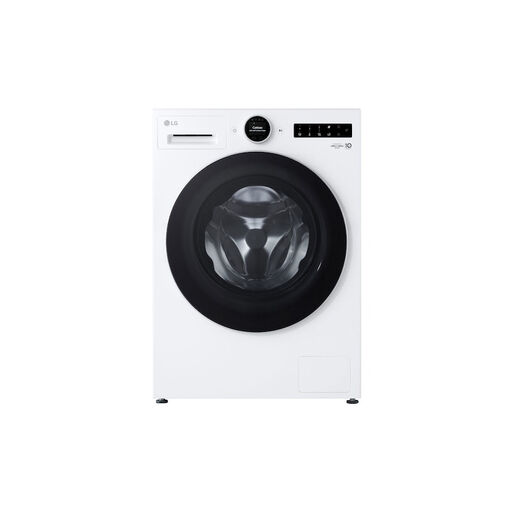 Image unavailable
Worth considering if you regularly do large loads. It has a stated capacity of 11 kg and an A energy rating. If you’re washing a duvet, check the manual for the maximum load for the relevant programme, along with the space needed for installation.
 Image unavailable
Its stated capacity of 10 kg is suited to regular large loads. The model name indicates a 1,400 rpm spin speed, an A energy rating and AutoDose; check the load limits for each programme and the clearance needed with the door open to make sure it suits your needs.
 Image unavailable
Its stated capacity of 10 kg is worth considering if you regularly do large loads. Before planning to wash a duvet or doing frequent small loads, check the programme limits and the model information on how it adapts to the load.
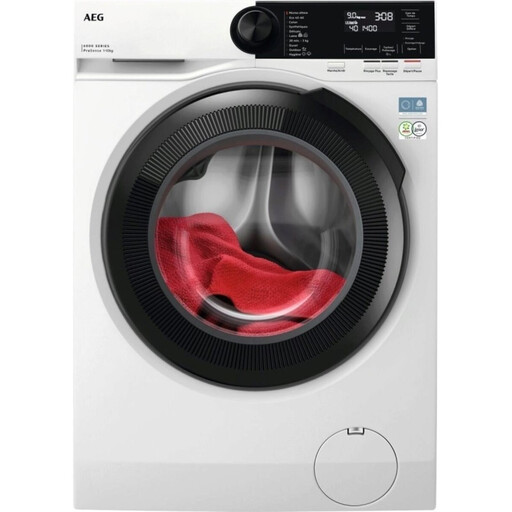 Image unavailable
This 10 kg freestanding model may suit households that regularly wash large loads of household linen. It has a 1,400 rpm spin speed and an A energy rating; check its dimensions, energy label and the maximum load for each programme you’ll use.
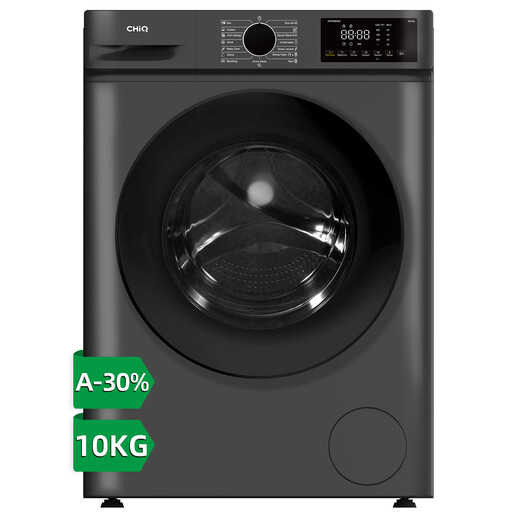 Image unavailable
Its stated capacity of 10 kg makes it one to consider for regular large loads. The product name indicates a 1,400 rpm spin speed and 16 programmes; check the energy label, dimensions and the maximum load for a duvet before choosing.
No. The right capacity depends on factors such as the size of the duvet, its care instructions and the washing machine programme’s maximum load. If you only wash bulky items occasionally, don’t choose a machine for all your laundry based on this one use; UFC-Que Choisir generally puts the needs of a household of 3 to 4 people at around 8 to 9 kg.
No. It refers to a stated weight of dry laundry under specific programme conditions; other cycles may take a smaller load. UFC-Que Choisir’s test protocol, for example, states that the maximum capacity of the synthetics programme is no more than half that of the cotton programme in the machines it tests.
Compare their energy labels, including kWh per 100 cycles, litres per cycle and the duration of the Eco 40-60 programme, then check the spin speed, noise level and dimensions. If you alternate between small and large loads, also look at the load-adapting features listed for each model, without assuming that a higher capacity alone will reduce energy consumption.