An 8–10 kg washing machine is worth considering if your laundry baskets are often full and you regularly wash bulky items. If you mostly do smaller loads, a standard-capacity machine may be a better fit. Before choosing, check the load limits for the programmes you use, the care instructions for your duvets, and the space needed to install and open the machine.
Who these options are for
Households with frequently full laundry baskets
If sheets, towels and everyday laundry regularly add up to several loads, an 8–10 kg capacity is worth looking at. UFC-Que Choisir suggests this range for families with children; however, ADEME advises choosing a capacity that suits the loads you actually wash.
People who regularly wash duvets or throws
The capacity in kilograms alone won’t tell you whether you can wash a duvet at home. Its dimensions, filling, care label and the programme’s load limit all matter too. UFC-Que Choisir notes that larger duvets need a higher-capacity drum.
Households with a small laundry room
Combining loads is only practical if you can get the machine into place and open its door. Measure the available depth, the space in front of the machine and the delivery route before choosing a larger capacity.
What can influence your decision
Start with the size of your usual loads, then rule out machines that won’t fit in the room. Next, compare their energy and water-use information on a like-for-like basis. Don’t assume a load-sensing feature will make up for choosing the wrong drum capacity.
| What to consider |
What to check |
Who this matters to |
| Combining larger loads |
Compare the capacity for dry laundry with the load limits of the programmes you use, particularly for delicate fabrics. |
When sheets and towels often fill my basket, I want to avoid running several cycles for one lot of laundry. Around 42% of consumers would prioritise this need for capacity. |
| Fitting the machine |
Measure the space, the clearance needed to open the door and the route the delivery team will take. |
In a small laundry room, I need to be able to load the machine without blocking the way. This would be a priority for around 33% of consumers. |
| Washing smaller loads |
Consider the size of your usual loads, then check the consumption figures for the Eco 40-60 programme and the conditions for any advertised load-sensing features. |
If I sort my laundry into lots of different loads, my machine is rarely full and I don’t want to choose its capacity based only on my biggest washes. Around 25% of consumers would prioritise a good fit for smaller loads. |
Mistakes to avoid
-
Assuming the stated capacity applies to every programme
The stated capacity in kilograms refers to dry laundry under set test conditions. Load limits may be lower for synthetic, wool or delicate programmes.
Check the load table in the manual for the fabrics you actually wash.
-
Choosing a large drum for the occasional bulky item
A larger capacity is most useful when you regularly wash large loads. ADEME recommends matching the washing machine’s size to your actual needs rather than running multiple cycles with underfilled drums.
Think about your usual laundry loads and how often you wash duvets or throws before moving up to 8 or 10 kg.
-
Measuring the space but not the door opening or access route
A machine may fit in its space but still leave too little room to open the door. You’ll also need to get it through doorways and corridors.
Check the machine’s height, width and depth, the clearance needed to open the door, and the measurements along the delivery route.
-
Relying on a programme called ‘duvet’
A programme with this name won’t make every duvet suitable for machine washing. Its filling, size and care label still matter; UFC-Que Choisir recommends a moderate spin speed for synthetic duvets, for example.
Check the fabric’s care label and the washing machine manual. If the duvet is too large or isn’t suitable for washing at home, choose an appropriate laundry service.
Brands to consider
These model examples can help you compare capacity and dimensions; their features don’t apply to every model in each brand’s range.
Bosch
The Bosch WGG254FAFR is a 10 kg front-loading model that you can compare with the space available.
- Bosch lists this model’s dimensions as 845 × 598 × 588 mm, which can help you plan the installation.
- Check the load limits for the programmes you use separately, as well as the clearance needed in front of the door.
Electrolux
The PerfectCare 600 EW6FI4112RA is a 10 kg front-loading model for households that alternate between large and small loads.
- Electrolux says the SensiCare feature on this model adjusts the programme duration, water and energy use to the load weight. Check the conditions for using this feature with your chosen programmes.
- Its stated depth of 658 mm means you’ll need to check the available space and door clearance.
Samsung
The Samsung WW10FG6U94LBU3 is another 10 kg front-loading model to consider in light of your loads and available space.
- Samsung lists this model as 600 mm wide, 850 mm high and 560 mm deep.
- Also measure the doors, corridors and lifts along the delivery route, as well as the space needed to use the machine.
Washing machines for your laundry loads
These Joybuy models range from 7 to 10 kg. Compare them based on how often your laundry baskets are full, the space you have available and the fabrics you want to wash. A high capacity or a programme with bedding in its name doesn’t remove the need to check the manual and the duvet’s care label.
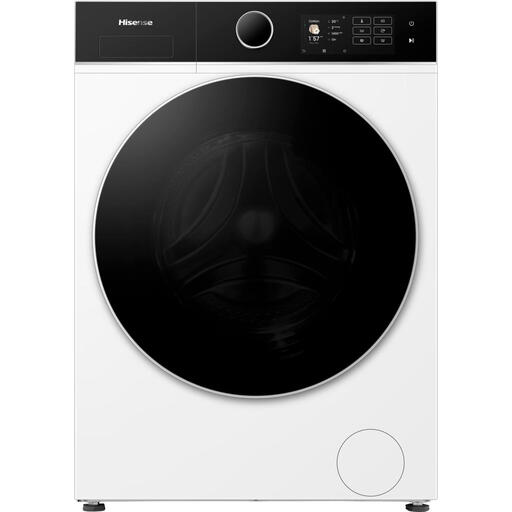 Image unavailable
Hisense WF5I8043BWF, 8 kg front-loading washing machine
Worth considering if your usual loads are often large, but you don’t always need a 10 kg drum.
Stated spin speed of 1,400 rpm; an Inverter motor is mentioned in the model name.
If you plan to wash a duvet, check the manual for the load limit on the programme you’ll use and follow the fabric’s care instructions.
View on Joybuy
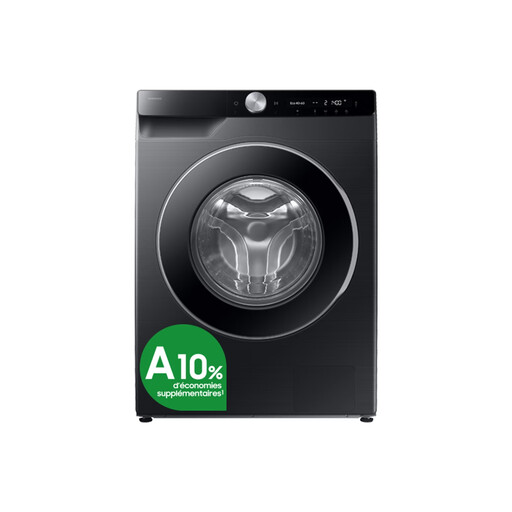 Image unavailable
Samsung WW90DG6U85LBU3 AI Wash 6000 Series, 9 kg
Its 9 kg capacity is worth considering if your laundry baskets are often full, subject to the load limits of each programme.
This model is listed with an A energy rating; compare the figures on the label for the reference programme.
Before planning to wash a duvet, check the manual and its care label.
View on Joybuy
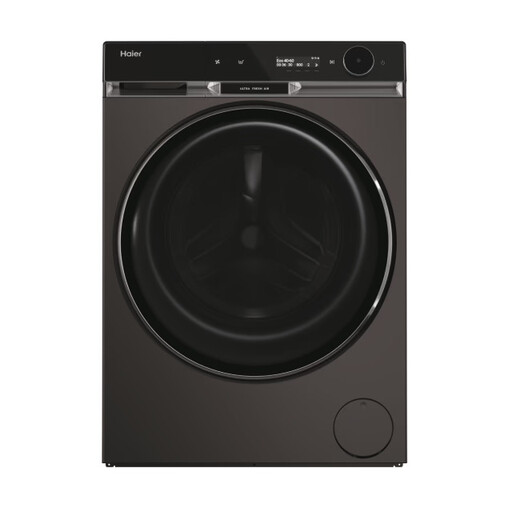 Image unavailable
Haier X Series 11 HW100-BD14397PGU1, 10 kg
A 10 kg capacity is worth considering if you regularly have large loads that are big enough to fill the drum.
Stated spin speed of 1,400 rpm and an A energy rating; the model also features AutoDose.
Check the machine’s dimensions, programme load limits and the duvet’s care instructions before choosing this size.
View on Joybuy
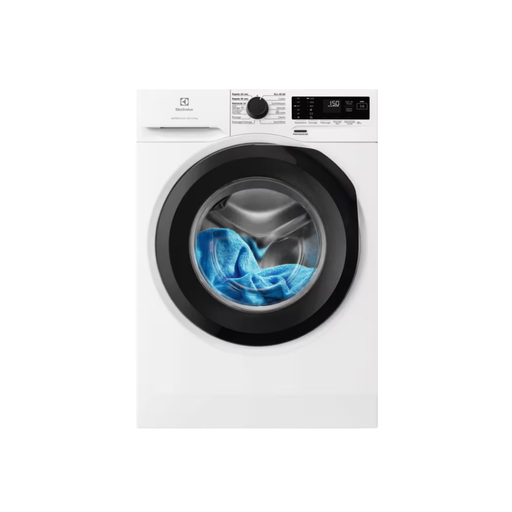 Image unavailable
Electrolux EWF1410N2, 10 kg front-loading washing machine
This size is suited to households that regularly wash large loads, rather than those that mostly do smaller washes.
The model name mentions Steam Anti-Allergy and TimeSave features; neither determines whether it’s suitable for washing a duvet.
Check the available depth, door clearance and load limits in the manual.
View on Joybuy
 Image unavailable
Haier T Series 7 THASN276TM6-S, top-loading, 7 kg
Worth considering if your usual loads are fairly small and limited width makes a top-loading machine a better fit.
Stated spin speed of 1,200 rpm and an A energy rating; you may need another solution for bulky items.
Check the clearance above the machine for opening the lid and consult the manual before washing a bulky item.
View on Joybuy
Frequently asked questions
Can a 10 kg washing machine take 10 kg on every programme?
No. The stated capacity refers to dry laundry under set test conditions; synthetic, wool and delicate programmes may have lower limits. Check the load table in the manual before combining several items in one cycle.
Will a duvet fit in a standard-capacity washing machine?
Some will, depending on their dimensions, filling and care label. UFC-Que Choisir says a 140 × 200 cm synthetic duvet may fit in a standard 5 kg machine, while a larger one may need a bigger drum or a specialist service. Always check the care label and the manual. For a natural-fill duvet, ask a specialist for advice before machine washing it.
What should I measure before buying a front-loading washing machine?
Measure the space available for the machine, the room needed to open the door and every access point along the delivery route. Width alone isn’t enough: the machine’s depth and the space in front of it can determine whether it’s practical for everyday use.
What should I compare on a washing machine’s energy label?
Compare the energy rating and the consumption figures for the reference programme, rather than assuming you can tell how a machine will perform from its capacity alone. The European Commission explains that washing machine requirements for efficiency and water consumption apply to the Eco 40-60 programme; other programmes and load sizes may produce different results.


