
Livraison le jour même ou le lendemain

Qualité garantie

Débloquez vos offres de bienvenue: Livraison GRATUITE | Jusqu'à -80 % | 30 jours d'essai gratuits à JoyPlus
Téléchargez l'application
The idea of a 150-inch screen for a movie night at home or in the garden is an exciting prospect. The 1080p portable projector market is booming, promising a home cinema experience that is both flexible and affordable. But be warned: behind the tempting spec sheets often lie major disappointments, from a blurry image and disappointing brightness to a supposedly "smart" system that lags horribly.
As the Head of Product Selection at Joybuy, my mission is to help you decode the technical jargon so you can make an informed purchase. This guide breaks down the three most common scams and gives you the keys to finding the device that will truly meet your expectations.
Marketing is often misleading. Here are the points to watch closely to avoid regretting your purchase.
To be sure of your choice, focus on these three objective technical specifications.
Don't be distracted by "supported resolution." The only thing that matters is the native resolution—the actual number of pixels the projector can display. For image quality worthy of a home cinema projector, a native 1080p (1920 x 1080 pixels) resolution is the bare minimum today. Anything less will result in an image that lacks sharpness and makes text difficult to read.
Brightness directly determines the conditions in which you can use your projector. Here are some benchmarks based on the ANSI Lumens standard:
A portable projector is meant to be moved. Therefore, automatic functions are not gimmicks, but necessities for optimal ease of use.
Here are a few models suited to different needs, taking into account the quality and performance criteria we've just discussed.
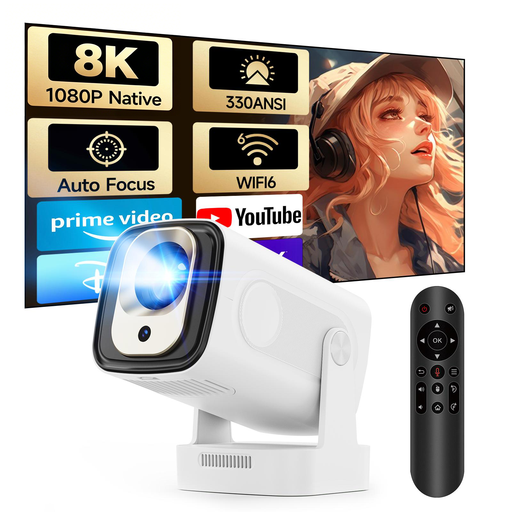
Ideal for turning a bedroom or living room into a pop-up cinema without breaking the bank. Its simplicity makes it perfect for impromptu movie nights or for projecting cartoons for the kids.
It offers true 1080p native resolution, not just "compatible," avoiding the blurry effect typical of entry-level models. Its brightness of 330 ANSI lumens is clearly stated, perfect for use in dim light.
It includes autofocus and automatic keystone correction, features usually reserved for more expensive models. Its Android 14 system and Wi-Fi 6 provide up-to-date connectivity.
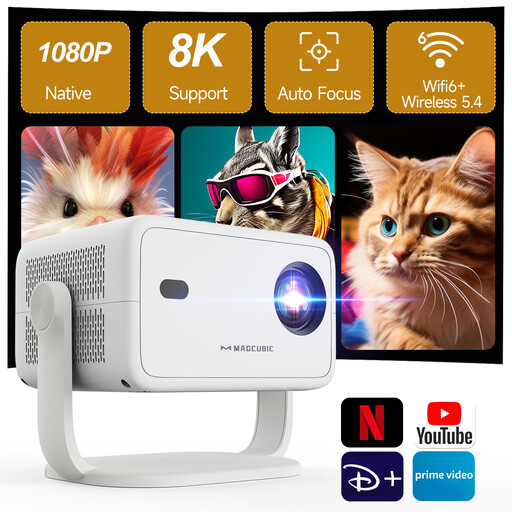
Perfect for those seeking a versatile and high-performing solution, equally at home in the living room or for an outdoor movie night thanks to its high brightness. An excellent balance of performance and portability.
At 650 ANSI lumens, its brightness is a reliable figure, not a fantasy marketing number. It's enough to get a high-contrast image even in a room with moderate ambient light.
It offers full automatic correction (focus, keystone, obstacle avoidance) for a nearly instantaneous setup. Its responsive Android 14 system provides access to a wide catalogue of apps.
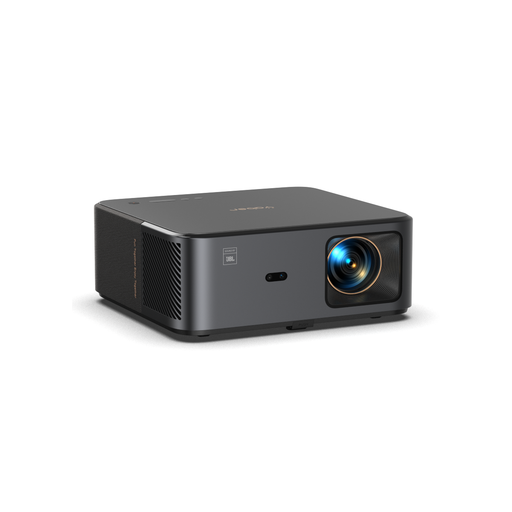
For the most demanding users who want to make no compromises on image and sound quality. It can replace a TV in the living room for a truly immersive cinema experience, with powerful sound and direct access to all your content.
It includes certified Google TV, which guarantees native, smooth access to Netflix, Disney+, and others, without the bugs or shortcomings of unofficial Android systems. The experience is identical to that of a modern smart TV.
Its audio system by JBL with Dolby Audio provides convincing sound immersion without an external speaker. Its high brightness of 800 ANSI lumens and NFC Screencast feature make it an incredibly practical high-end device.
We have compiled a complete and up-to-date selection of projectors that meet these quality standards.
Most modern portable projectors use an LED light source. Their lifespan is generally between 20,000 and 30,000 hours. In practical terms, this equates to more than 10 years of use at 5 hours per day—a much longer lifespan than old lamps that required costly replacement.
For occasional use, a smooth, matte white wall can work just fine. However, a dedicated projection screen is a wise investment to achieve better contrast and more accurate colours. There are very practical tripod or roll-up models available for temporary setups.
Yes, but on one condition: the projector must be equipped with a certified operating system, such as Google TV or an official version of Android TV. Models with uncertified systems will often be unable to play Netflix in HD (or at all) due to digital rights management (DRM). This is a crucial point to check before buying to avoid a nasty surprise.