
Livraison le jour même ou le lendemain

Qualité garantie

Débloquez vos offres de bienvenue: Livraison GRATUITE | Jusqu'à -80 % | 30 jours d'essai gratuits à JoyPlus
Téléchargez l'application
Smartphone, laptop, tablet… Our bags and desks have become a tangled mess of cables. The promise of USB-C?? One single charger to rule them all. But in the vast sea of available models, not all cables are created equal. An unsuitable model can not only throttle your charging speed but also wear out incredibly fast.
This guide is here to help you cut through the noise and choose THE high-performance, durable 100W USB-C cable that will power all your devices, including the most power-hungry ones like a MacBook Pro.
Before diving into our selection, let's review the three essential criteria to ensure you make the right choice.
Expressed in watts (W), power determines your device's charging speed. Power Delivery (PD) technology is what allows USB-C cables to intelligently modulate this power.
A 100W cable is backward compatible. It will automatically adapt to the maximum power accepted by a less demanding device, without any risk of damaging it.
Tossed in a bag, hastily coiled, pulled without a second thought… A cable takes a lot of abuse. Its longevity, therefore, isn't optional. A durable braided nylon cable offers far superior resistance to standard plastic sheaths. Pay close attention to the joints between the cable and the connectors: this is the Achilles' heel of most models. Reinforcements at this point are an excellent indicator of sturdiness.
Two main certifications act as a seal of quality and safety for your cable:
Our editors have scoured the market to bring you a selection of cables that excel in versatility, power, and durability.
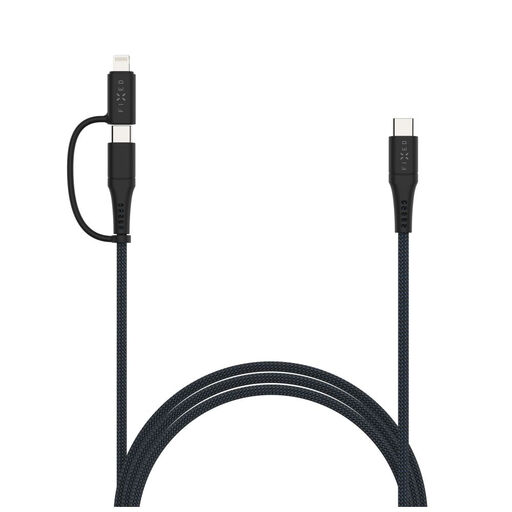
Its standout feature?: ultimate versatility. Thanks to its MFi-certified Lightning adapter, it's the ideal all-in-one solution for juggling older Apple devices and new USB-C arrivals.
Advantages?:
Who is it for? For those who switch between the Apple ecosystem (with a Lightning port) and the Android/PC world, and want to carry just one cable for travel or home.
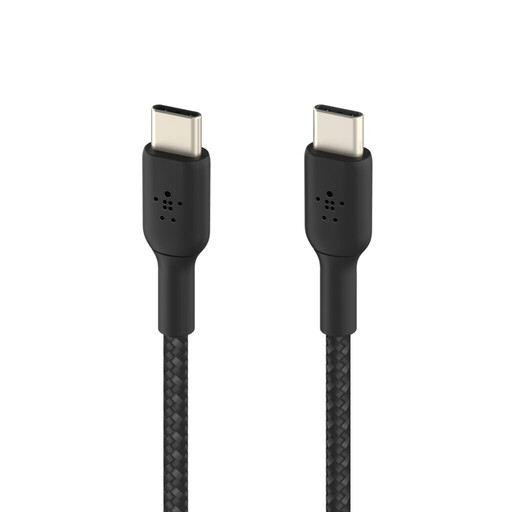
Its standout feature?: a pocket-sized powerhouse. Belkin designed it for adventure: tested to withstand over 30,000 bends, it's a featherweight built for globetrotters and minimalists.
Advantages?:
Who is it for? For nomads, power bank users, and anyone who hates messy cables cluttering their desk or car.
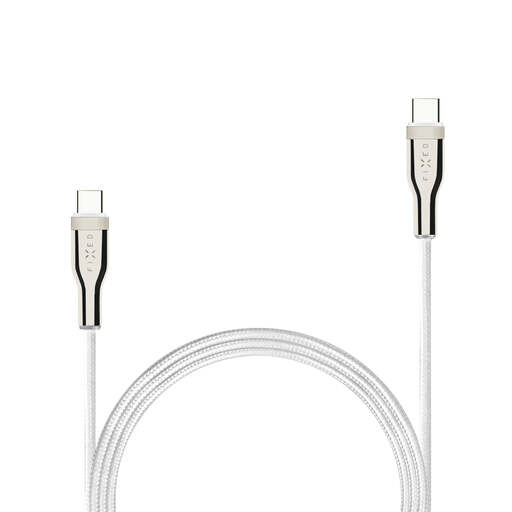
Its standout feature?: pure power. With its 100W capability, this cable is built to unleash the full potential of the most power-hungry chargers and devices.
Advantages?:
Who is it for? For professionals, creatives, and students who work on a powerful laptop and for whom every minute of charging counts.
Didn't find the perfect fit in this selection? Length, color, brand… many other solutions are available. Explore our full catalog to find your ideal cable.
Discover all our laptop cables and chargers
Absolutely not. Thanks to the Power Delivery (PD) standard, the cable, charger, and your device communicate to adjust the power output to exactly what's needed. Using a 100W USB-C cable to charge a 25W smartphone is therefore perfectly safe.
USB-C is a universal and reversible connector that has become the standard on almost all new devices (Android, PC, Mac, iPad). Lightning is Apple's proprietary connector, found on iPhones (up to the 14 series) and certain accessories. The European Union now mandates USB-C on new electronic devices, signaling the gradual end of Lightning and the rise of a single standard.
For charging, the impact is negligible on standard lengths (up to 2 meters). A very slight drop-off might be noticeable on cables over 3 meters, but it's nothing significant. However, for very high-speed data transfer (USB4, Thunderbolt), length is a critical factor. For everyday use, a 1 to 2-meter cable offers the best compromise between convenience and portability.