
Livraison le jour même ou le lendemain

Qualité garantie

Débloquez vos offres de bienvenue: Livraison GRATUITE | Jusqu'à -80 % | 30 jours d'essai gratuits à JoyPlus
Téléchargez l'application
By the Joybuy Team, Our Product ExpertsPublished July 22, 2026
USB-C has established itself as the universal connector, from our smartphones to our most powerful laptops. The problem? Not all cables are created equal. An unsuitable model can not only throttle charging speeds but also wear out in record time. If you're looking to replace a faulty cable or simply get the most out of your devices, this guide is for you.
Our mission is to help you navigate the jungle of options. Follow our guide to discover the essential criteria for buying a high-performance, durable 100W USB-C to USB-C cable, along with our selection of the best models available today.
Before you grab the first model you see, let's review the few technical specifications that make all the difference. Here are the three key points to check to ensure you make the right choice.
Power, measured in watts (W), is the most critical factor: it dictates charging speed. A 100W USB-C cable is designed to support ultra-fast charging, capable of powering everything from a smartphone to tablets and power-hungry laptops, like those using a USB-C charger for MacBook.
A non-negotiable feature: the cable must be compatible with the Power Delivery (PD) standard. This smart technology allows the charger, cable, and device to "communicate" to safely adjust the power to the optimal level. To achieve 100W, a cable supporting a 5A current is essential (20V x 5A = 100W).
A cable's lifespan is directly linked to its build quality. A braided USB-C cable made of nylon or another textile fibre will withstand twists and wear far better than a basic plastic model that inevitably frays.
Also, pay close attention to the connectors. A reinforced USB-C cable at the junction between the plug and the wire—that well-known weak point—is much less likely to snap after repeated bending. It's a detail that makes all the difference for a long-lasting purchase.
The standard 1-metre length often proves too short in practice. A 2m USB-C cable offers much more welcome freedom, whether you're using your device from the sofa while it charges or reaching a distant outlet at the office.
For specific uses, like gaming on a smartphone or using a laptop in a tight space, a 90-degree angled USB-C cable is often a much smarter choice. It relieves stress on the port and the cable while improving your grip.
To put theory into practice, here are three models that caught our eye for their performance and reliability.
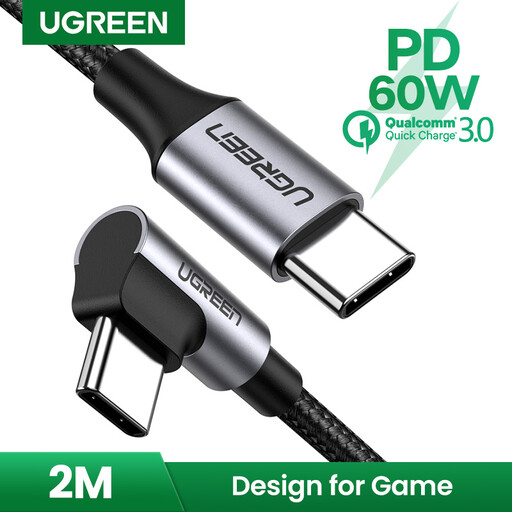
Why we like it: This model from UGREEN checks two essential boxes: a comfortable 2-metre length and a 90-degree angled connector. Its clever design reduces clutter and strain on your device's port, which is especially useful for gaming sessions or working in tight spaces.
Advantages:
Who is it for? For mobile gamers and streaming enthusiasts who never put their device down, even while charging, as well as for those who work on their laptops in spaces where every inch counts.
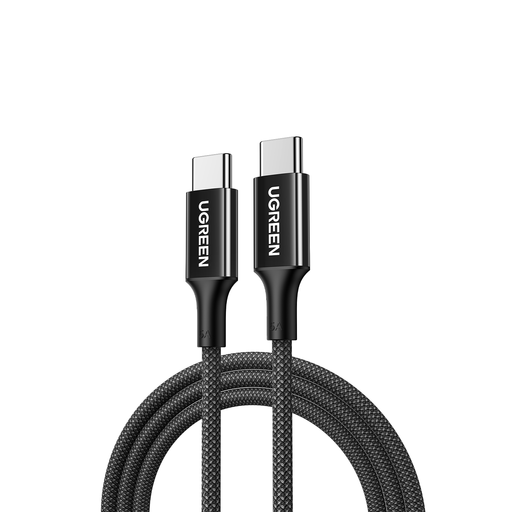
Why we like it: This cable is a powerhouse. Capable of delivering up to 100W thanks to its E-Marker chip and 5A compatibility, it's designed for the fast charging of the most demanding devices. Its braided jacket and 2-metre length make it a reliable and versatile everyday ally.
Advantages:
Who is it for? For owners of USB-C laptops and other Power Delivery-compatible devices who want to slash their charging times without sacrificing durability.
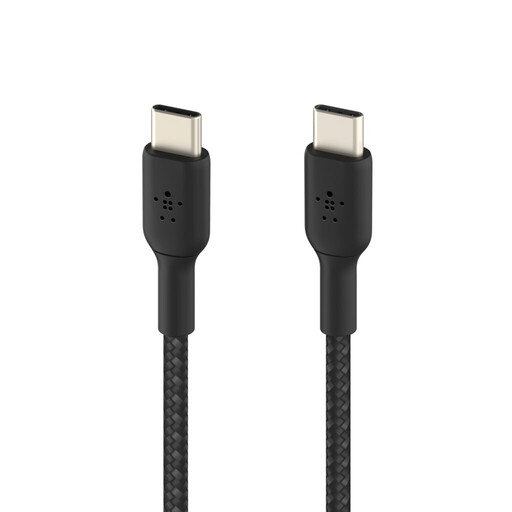
Why we like it: The Belkin BoostCharge is a trusted choice, synonymous with reliability. This 1-metre, 60W compatible cable is perfect for fast-charging most smartphones and tablets. The manufacturer claims it can withstand over 30,000 bends, a testament to its durability. Finally, its USB-IF certification is a seal of quality that guarantees flawless compatibility and safety.
Advantages:
Who is it for? For those looking for a compact (1m) cable for their smartphone or tablet who trust established brands and official certifications.
Our selection focuses on everyday charging. If you need supersonic data transfer speeds (for an external SSD, for example), you'll need to look for cables with different specifications.
? Explore our full range of USB Cables for SSDs and other peripherals
1. What's the difference between a 60W and a 100W USB-C cable? A 60W cable is more than sufficient for fast-charging the majority of smartphones and tablets. However, a 100W cable is necessary to power more demanding devices at full speed, such as laptops (MacBook Pro, Dell XPS, etc.). Using a 100W cable on a less power-hungry device is perfectly fine: the power will automatically and safely adjust.
2. Can a 100W cable damage my phone? Absolutely not. Thanks to the Power Delivery (PD) protocol, the charger, cable, and your device "negotiate" the maximum charging power the device can receive. A 100W cable will never deliver more power than your phone can safely accept.
3. Is data transfer speed related to the cable's power rating? Not directly. The power (in W) relates to charging, while the transfer speed (in Gbps or Mbps) depends on the cable's data standard (USB 2.0, USB 3.2, Thunderbolt, etc.). The cables in our selection are based on the USB 2.0 standard (480 Mbps), a speed sufficient for charging and syncing small amounts of data. To transfer large video files or work from an external drive, a USB 3.2 or Thunderbolt cable would be essential.