
Livraison le jour même ou le lendemain

Qualité garantie

Débloquez vos offres de bienvenue: Livraison GRATUITE | Jusqu'à -80 % | 30 jours d'essai gratuits à JoyPlus
Téléchargez l'application
By Joybuy, our product expert
Date?: July 14, 2026
A backpack bulging with a jungle of chargers: one for the laptop, one for the smartphone, another for the tablet… It's an all-too-familiar scenario for digital nomads and tech enthusiasts. Fortunately, a new technology is here to bring order to this chaos of cables and power bricks: the 100W GaN charger.
Powerful and versatile, it allows a single adapter to power your entire digital arsenal. In this guide, we'll give you everything you need to know to choose the perfect model for your needs, along with our selection of the best products available right now.
Before you jump on the first model you see, let's review the few criteria that truly make a difference.
Power, expressed in watts (W), determines the charging speed and the types of compatible devices. A laptop charger generally requires between 65W and 100W. The key is Power Delivery (PD) technology, which is used almost exclusively via USB-C. It allows the charger to "communicate" with the device to deliver the most precise amount of power. The result: a charge that is both fast and perfectly safe. In practical terms, a 100W Power Delivery power adapter can charge a laptop at full speed, then intelligently adapt to charge a smartphone without any risk of damage.
The appeal of a multi-port charger is obviously to declutter your desk or bag. You'll most often find a mix of:
A crucial point: check how the power is distributed when multiple ports are used simultaneously. A good charger will intelligently distribute power to optimise the charge for each device.
Gallium nitride (GaN) is a semiconductor material that has revolutionised chargers. Compared to traditional silicon, its advantages are clear. It allows for the creation of chargers that are:
In short, choosing a GaN charging station means opting for performance and compactness.
Here are a few models that cater to different profiles, from the demanding professional to the user primarily seeking convenience.
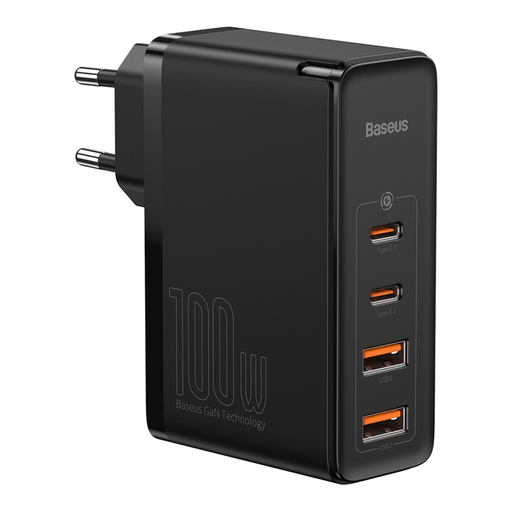
Why it stands out?: This model is a true command center for all your devices. With four ports and 100W under the hood, it's built to power multiple devices at once, even the most power-hungry ones.
Pros?:
Who is it for?? For the professional, whether at the office or on the go, who wants to stop juggling multiple chargers. A single, powerful solution to handle everything from a MacBook Pro to wireless earbuds.
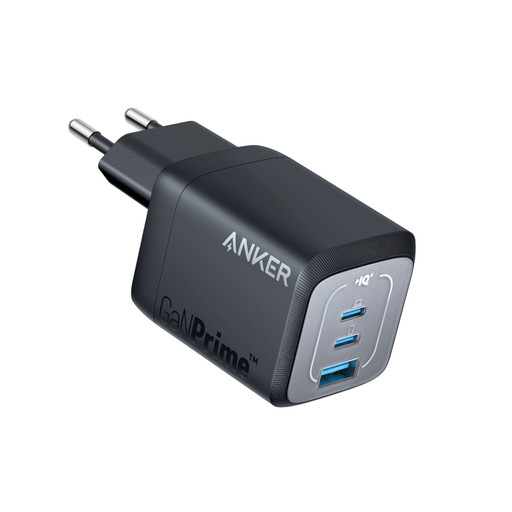
Why it stands out?: Anker strikes the perfect balance between power and portability here. This 67W brick is incredibly compact, and its foldable prongs make it the ideal travel companion.
Pros?:
Who is it for?? For frequent travellers and professionals on the move who need a high-performance fast USB C charger, but for whom compactness and light weight are non-negotiable.
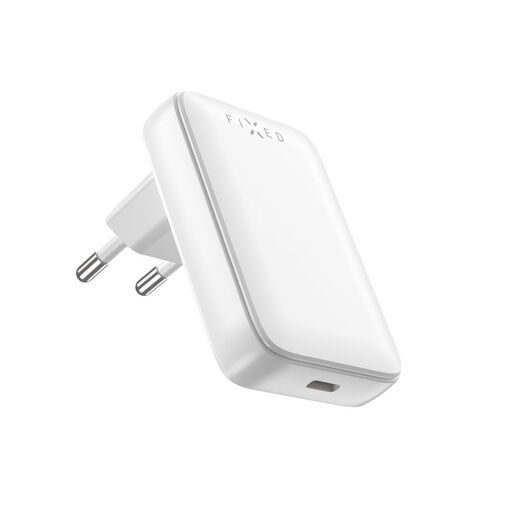
Why it stands out?: This charger isn't in the same league in terms of power, but it solves a very specific problem with its unique design: clutter behind furniture.
Pros?:
Who is it for?? For those looking for a discreet and clever solution at home or in the office to charge a phone or tablet without an unsightly power brick ruining the aesthetic.
GaN technology is now available in a multitude of power levels and configurations. If our selection doesn't exactly meet your needs, don't worry: dozens of other options exist.
To discover a wider range, take a look at our complete category of GaN chargers.
GaN (gallium nitride) is a semiconductor material that is more efficient than the silicon traditionally used in chargers. It allows for the creation of chargers that are smaller, lighter, and generate less heat, all while delivering high power. It's this technology that makes it possible, for example, to offer a 100W GaN charger that's barely larger than an old 30W charger.
Yes, absolutely. Thanks to the Power Delivery (PD) standard, the charger and your device communicate to negotiate the optimal charging power. A 100W charger will only deliver the maximum power your smartphone can accept (e.g., 25W or 45W), without any risk of overvoltage or damage.
Yes, and this is a point that should not be overlooked. To take full advantage of 100W, you absolutely need a USB-C cable designed to handle that much power. A standard cable will throttle the charging speed and could, in the worst-case scenario, overheat. Make sure your cable is marked "100W" or "5A".