
Livraison le jour même ou le lendemain

Qualité garantie

Débloquez vos offres de bienvenue: Livraison GRATUITE | Jusqu'à -80 % | 30 jours d'essai gratuits à JoyPlus
Téléchargez l'application
A 100 W fast charger can power a laptop, tablet and smartphone with a single block. But the "100 W" label doesn't guarantee genuinely fast charging or practical everyday use. Between the theoretical maximum power, how energy is shared between ports and the quality of the cable, several details can turn an appealing purchase into an ill-suited accessory.
Here are the pitfalls to avoid and the criteria to check before choosing a 100 W USB-C charger, a car model or a portable power solution.
A charger displaying 100 W may reserve that power for a single USB-C port and automatically reduce output when multiple devices are plugged in. A model with several ports might, for example, distribute energy between two USB-C ports and several USB-A ports.
So take the time to check the output table:
To benefit from a 100 W output, the USB-C cable must support the required current. An older cable or one limited to a lower wattage can slow down charging. A USB-C 100 W cable included in the box is therefore a real bonus, but also check its length and intended use.
Power is negotiated between the charger and the device. A smartphone designed to receive 20 or 30 W will not automatically draw 100 W from the charger. Similarly, some laptops require a specific voltage and PD profile.
A charger for a laptop should therefore be chosen based on the manufacturer's specifications, not just the number printed on the packaging.
To power a laptop, look for a USB-C port compatible with PD and a suitable profile, often up to 20 V and 5 A to reach 100 W. The technical data sheet should clearly distinguish USB-C outputs from USB-A outputs.
A PD-compatible fast charger can work with many devices, but the charging speed always depends on the charger, the cable and the connected device. A phrase like "up to 100 W" indicates a maximum limit, not a power level maintained constantly in every situation.
A 100 W GaN charger uses gallium nitride instead of traditional silicon components. This technology generally allows for a more compact size at equivalent power. A welcome advantage in a work bag or suitcase, but it doesn't replace the need to check the actual power distributed, heat dissipation, protections and the quality of the documentation.
Avoid covering the charger while it's in use and stop using it if it becomes abnormally hot, gives off an unusual smell or shows signs of damage.
A USB-C mains charger plugs into a household socket and must be compatible with the local mains voltage. For a car, choose a 100 W car charger that accepts a 12 to 24 V input and check the power actually available from the vehicle's socket.
An adapter designed for a cigarette lighter socket does not replace a jump starter. To restart a stranded vehicle, you need a suitable jump starter battery, along with cables and protections designed for that purpose.
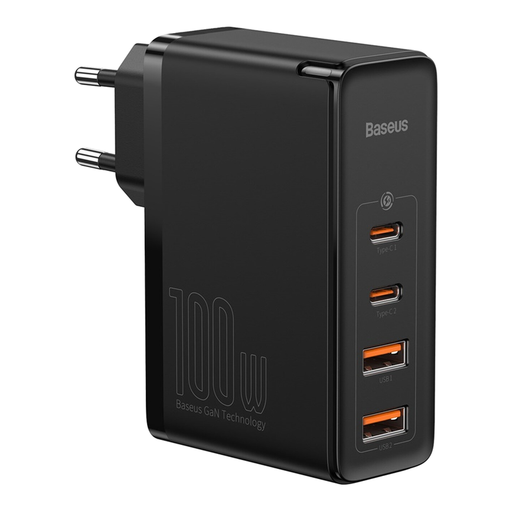
Why this choice suits this profile: This USB-C mains charger features two USB-C ports and two USB-A ports, with a stated maximum power of 100 W on USB-C. It's perfectly suited for daily use with a laptop, phone and tablet.
The product page details the different output combinations. You can therefore check the power distribution before connecting multiple devices.
Four ports, a 100-240 V input and USB-C profiles that can reach 100 W on one port, depending on the configuration.
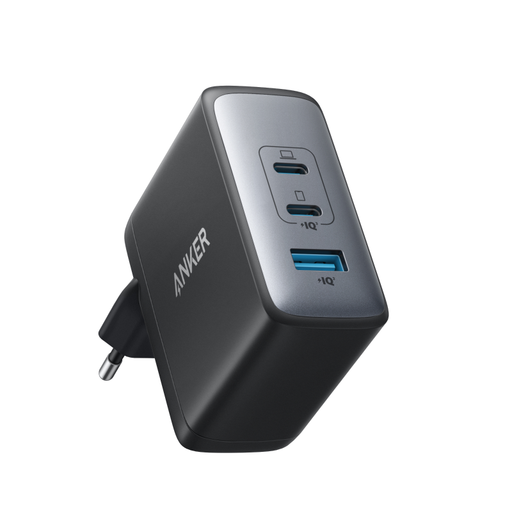
Why this choice suits this profile: With two USB-C ports and one USB-A port, this model is aimed at those who want to power multiple devices with a single compact block.
The product page specifies the maximum power and port combinations. The risk of confusing total power with power per output is therefore limited.
A stated 100 W output, GaN II technology and a form factor presented as more compact than a 96 W mains block.
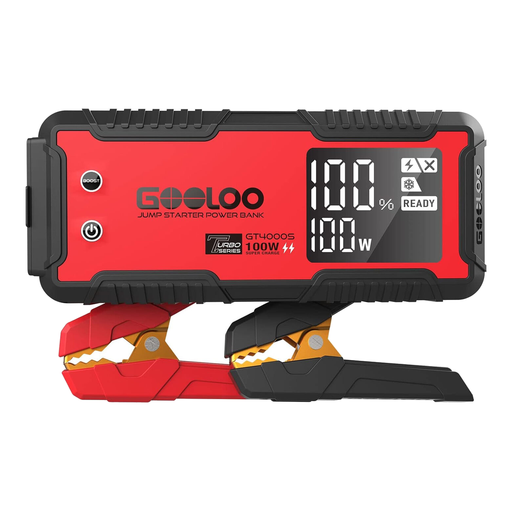
Why this choice suits this profile: This 12 V jump starter is aimed at motorists, motorhome owners and mobile professionals looking for a versatile on-board power solution.
This is not a simple car charger: the product page mentions a 12 V jump-start function, a supplied 100 W car charger and built-in protections. However, always follow your vehicle's manual instructions.
A stated peak current of 4,000 A, USB-C charging up to 100 W and a built-in light, according to the product page.
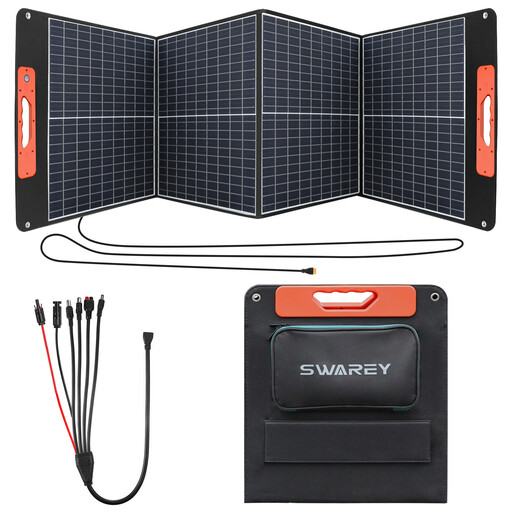
Why this choice suits this profile: This 100 W portable solar panel will easily accompany outdoor adventures, van trips and compatible power stations.
Solar power varies depending on sunlight, orientation and the station used. The angle indicator makes it easier to set up the panel, without suggesting constant power production.
A stated 60 W USB-C PD output, an 18 W USB QC3.0 port and a foldable design with built-in kickstands.
We've put together a comprehensive, real-time updated selection of products that meet these demanding selection criteria and European safety regulations.
Yes, provided the phone supports a compatible protocol. However, the phone itself will limit the power it receives. Check the maximum power accepted by the manufacturer and use a suitable cable.
No. The 100 W corresponds to the maximum output power under certain conditions. The actual consumption varies depending on the connected device, its battery level and the charger's efficiency.
Use a cable in good condition, protect the charger from moisture and excessive heat, do not cover the block while charging and unplug it at the first sign of visible damage. For a car model or jump starter battery, also store the device in a dry place and follow the manufacturer's instructions.