
Livraison le jour même ou le lendemain

Qualité garantie

Débloquez vos offres de bienvenue: Livraison GRATUITE | Jusqu'à -80 % | 30 jours d'essai gratuits à JoyPlus
Téléchargez l'application
Whether for work, study, or leisure, staying connected is no longer an option. A dead battery at the wrong moment can quickly become a nightmare. This is where a 10,000?mAh power bank stands out as the perfect compromise. But be warned: the market is a jungle of marketing promises that often lead to disappointing purchases.
As product experts at Joybuy, our mission is to help you see things more clearly. Let's skip the technical jargon and get straight to the point. This guide breaks down the most common pitfalls and gives you the keys to choosing a portable charger that won't let you down.
Choosing a backup battery shouldn't be taken lightly. Misinterpreted technical specs or misleading sales pitches can quickly lead to buyer's remorse. Here are the mistakes you absolutely must not make.
This is the most crucial point, and often the most misunderstood. A power bank rated at 10,000?mAh will never transfer a full 10,000?mAh to your phone. A portion of the energy (typically 30% to 40%) is lost during voltage conversion and as heat. In reality, you'll get between 6,000 and 7,000?mAh of usable charge. Be wary of brands that promise an unrealistic number of recharges.
The "fast charging" claim is everywhere. However, a 15W power bank will only charge your device at full speed if both are compatible. There are several standards (Power Delivery, Quick Charge, etc.). If the power bank doesn't support your smartphone's protocol, the charging speed will be capped at the standard, much slower rate. Checking the wattage (W) and protocol compatibility is therefore an essential step.
A lightweight portable charger should be light in practice, not just on paper. Some models sacrifice material quality for the sake of lower weight, making them fragile and not very durable. Others are unnecessarily bulky despite a modest capacity. A good design combines compactness, sturdiness, and a manageable weight to be unnoticeable in your daily carry.
To avoid these pitfalls, focus on a few objective technical criteria. These are the real deciding factors for evaluating the performance and reliability of your future smartphone power bank.
The output power, measured in watts (W), determines the charging speed.
The port type is just as crucial. A USB-C port is now essential. It is often used for both charging the power bank itself (input) and powering your devices (output), frequently with higher power. USB-A ports remain useful for compatibility with older cables or for charging accessories (earbuds, watches).
For a 10,000?mAh capacity, a weight between 200 and 250 grams and a thickness of less than 16 mm are indicators of a well-optimised design. A thin and lightweight portable charger will easily slip into a pocket or bag. Opt for matte finishes that resist fingerprints and offer a better grip.
Never overlook safety. A quality battery must have multiple protections: against overcharging, overheating, short circuits, and overvoltage. The presence of certifications like CE and RoHS on the product or its packaging confirms its compliance with European standards. Reputable brands like Belkin invest heavily in these safety systems to protect your valuable devices.
To help you make the right choice, we have selected models tailored to specific user profiles.
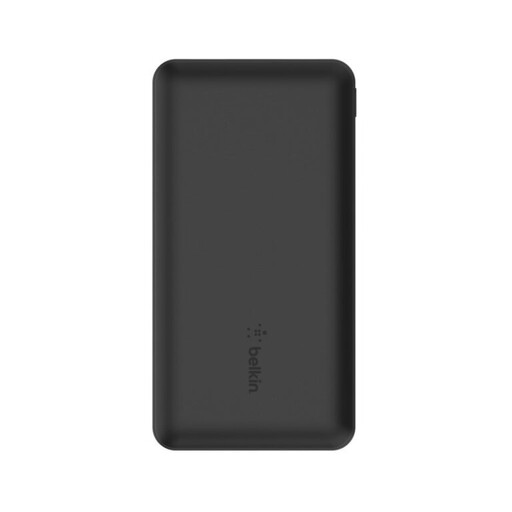
Why this model? Ideal for professionals, students, or occasional travellers who need a reliable all-day solution. Its 10,000 mAh capacity provides up to 40 hours of additional battery life, which is about two full recharges for a standard smartphone. It's the perfect balance of power and portability.
This Belkin model offers a clear 15W output via USB-C, avoiding the incompatible speed trap. Its compact (222g) and sturdy design sidesteps the "false portability" pitfall. Integrated safety systems protect against all electrical risks.
Allows you to charge three devices simultaneously (1x USB-C, 2x USB-A). The reliability and warranty from a renowned brand like Belkin are major assets.
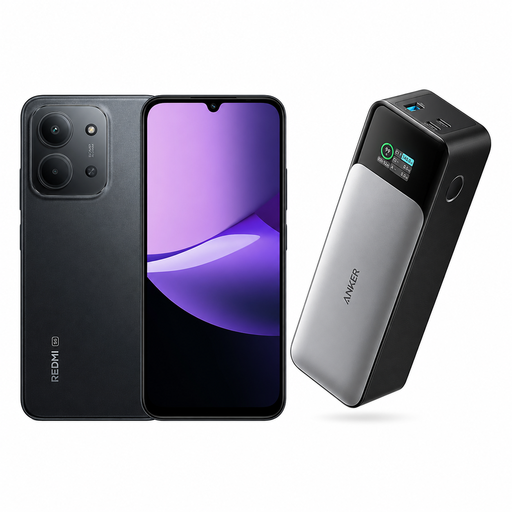
Why this model? For those who travel with a laptop, tablet, and smartphone. The 24,000 mAh capacity and colossal 140W of power can recharge a MacBook Pro or other USB-C laptop, in addition to other devices.
This Anker model demolishes the incompatible charging speed trap. Its 140W output is designed for the most power-hungry devices. Its high capacity is built for intensive use over several days, with no false promises.
Ability to charge a laptop on the go. Smart digital display shows input/output power and remaining charge time.
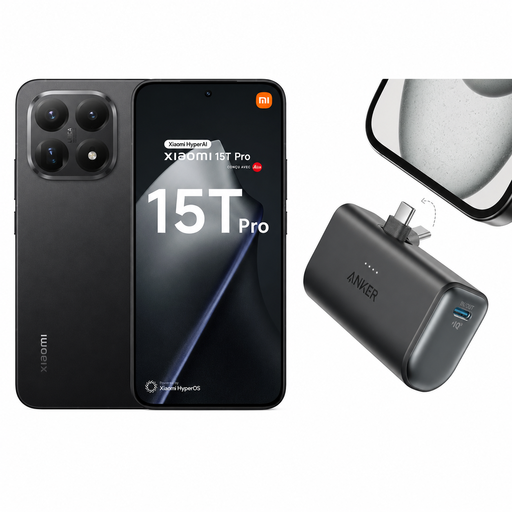
Why this model? For those who prioritise lightness and compactness above all else. Perfect for an evening out, a concert, or as an emergency backup to keep in a small bag. Its 5,000 mAh capacity is enough for nearly a full charge on most smartphones.
This Anker model is the very definition of portability. So small and light that it's never a burden, it avoids the trap of falsely "portable" batteries. Its built-in USB-C connector even saves you from carrying a cable.
Ultra-compact design with a built-in, foldable USB-C connector. 22.5W of power for fast charging despite its small size.
We have compiled a complete and up-to-date list of products that meet our demanding selection criteria and European safety standards.
It all depends on your phone's battery capacity. Factoring in the energy loss during transfer, a 10,000?mAh power bank offers a real-world capacity of about 6,500?mAh. For an iPhone 15 (approx. 3,350?mAh battery), you can expect almost two full charges. For a Samsung Galaxy S24 (4,000?mAh), you're looking at about one and a half charges.
The lifespan of a lithium-ion battery is measured in charge cycles. Most quality batteries are designed to retain about 80% of their original capacity after 300 to 500 full charge/discharge cycles. For an average user, this translates to a lifespan of 2 to 3 years before a noticeable drop in performance.
Yes, as long as you use a certified, brand-name product. Modern power banks, like those from Belkin or Anker, include advanced protection circuits. Once your smartphone is fully charged, the power bank automatically cuts off the power to prevent overcharging, thus preserving the battery health of both your phone and the power bank.