Which households benefit from a large capacity?

Families with frequently full laundry loads

When loads of clothes, towels and bed linen follow one another and genuinely fill the drum, a capacity of 10 to 12 kg may be worthwhile. UFC-Que Choisir links this choice to the frequency and actual volume of your washing.

Households that regularly wash duvets and blankets

A large capacity can be a good choice if bulky fabrics regularly go into the machine. Nevertheless, check the care label, the programme selected and the space available for installing the appliance.

Households that do frequent small washes

If your loads are mainly small or are often sorted by fabric and colour, a more modest model may make more sense. ADEME states that a 7 kg washing machine is sufficient most of the time when it helps avoid underfilled cycles.

What to consider before choosing 10 or 12 kg

Standard capacity

Choose this if: your usual loads are small to medium-sized and thick duvets are only an occasional requirement.

Bear in mind: very large textiles may require several washes or an occasional external solution.

Large capacity

Choose this if: large, properly filled loads and bulky bed linen are regular parts of your washing routine.

Bear in mind: the appliance will take up more space, and there is a risk of higher consumption when the drum is often only partly full.

Occasional external solution

Choose this if: your everyday laundry suits a standard capacity and thick duvets are rare.

Bear in mind: you will need to transport the item and check the textile’s care label.

Priority What to check Your needs
Useful capacity Compare the kg of dry laundry with the usual size of your loads. For a household of three to four people, 8 to 9 kg is generally sufficient, according to UFC-Que Choisir. I want to reduce the number of cycles without paying for a drum that will often be half empty.
Duvets and blankets Check the permitted load for the programme selected, as well as the manual and care label. The rated capacity does not apply to every programme. I want to wash my bulky textiles without discovering that the programme or fabric limits the load.
Water and energy Compare the kWh per 100 cycles and litres per cycle on the energy label, using the same Eco 40-60 basis. I often do small washes, so I am looking for a suitable capacity rather than assumed savings.
Size Measure the depth, porthole opening, doors, corridors and lift. Also check the noise class if the spin cycle is close to living areas. I need to be able to have a large front-loading machine delivered and use it without blocking the route or loading area.

Mistakes to avoid before buying

  • Choosing 12 kg for one occasional duvet

    Capacities of 12 to 15 kg are mainly worthwhile when bulky textiles are a regular part of your washing routine. A drum that is too large and rarely filled can lead to unnecessarily high water and electricity consumption.

    For a few weeks, note the size of your everyday loads and the actual frequency of washing duvets or blankets before moving from 8 or 9 kg to 10 or 12 kg.

  • Assuming that “11 kg” applies to every textile

    Capacity is expressed in kg of dry laundry and depends on the programme. Synthetic, wool and delicate programmes generally accept smaller loads than the reference programme.

    For each duvet or blanket, check the care label, the model’s manual and the maximum load for the programme selected.

  • Measuring only the installation space

    Large front-loading machines are usually close to 60 cm wide, but their depth and the clearance required in front of the porthole vary. Access through a door, corridor or lift may also limit installation.

    Measure the appliance, delivery route and space needed for loading before placing your order.

    A packaged appliance that cannot fit through the access points can make delivery or returns more complicated.

  • Treating a connected feature as a guaranteed saving

    Energy-saving features may depend on the programme, temperature, connectivity or specific test conditions. They do not replace a comparison of the energy label.

    First compare the kWh per 100 cycles and litres per cycle; read “up to” savings claims together with the conditions that apply to them.

Guide to the brands and models mentioned

LG

The F14R31WHSA is an 11 kg front-loading model listed at 600 × 850 × 565 mm, with a Duvet programme and A energy rating.

  • Listed depth of 565 mm for an 11 kg model.
  • The door requires 1,100 mm of clearance when open, according to LG; check the space in front of the porthole.
  • AI DD, automatic dosing, steam and Wi-Fi are features declared by LG.

Samsung

The WW11DG5B25AEEF is an 11 kg front-loading model listed at 600 × 850 × 600 mm, with connected tools for monitoring consumption.

  • Listed depth of 600 mm for this 11 kg model.
  • Samsung presents AI Energy Mode as a feature subject to temperature, Wi-Fi and Samsung account conditions.
  • Savings of up to 70% are based on internal tests of another model and do not automatically apply to every wash.

Haier

The HW120-BD14397PGUS is a 12 kg model listed at 595 × 679 × 850 mm, designed for households with genuinely regular, large-volume washing needs.

  • 12 kg capacity and a listed spin speed of 1,400 rpm from Haier.
  • Its listed depth of 679 mm must be compatible with the installation space and access points.
  • Direct Motion, intelligent dosing and Wi-Fi are features declared by the brand.

TCL

The FF1124WA2FR is an 11 kg model listed with an A-25% energy rating, a BLDC inverter motor and a quick programme.

  • The FF1124WA2FR is listed with a family-sized 11 kg capacity.
  • Benefits attributed to the BLDC motor for vibration, noise and efficiency are TCL’s claims.
  • Check the model’s availability and delivery conditions before finalising your purchase.

Bosch

The WGB256A2FR is a 10 kg model with a 1,600 rpm spin speed for households needing above-average capacity without opting for 11 or 12 kg.

  • 10 kg capacity and a listed spin speed of 1,600 rpm from Bosch.
  • A 10 kg capacity alone does not guarantee compatibility with every duvet or programme.

Joybuy products for large loads and bed linen

These Joybuy options cover washing machines from 8 to 11 kg, allowing you to compare a standard capacity suited to your household with models designed for regularly large loads.
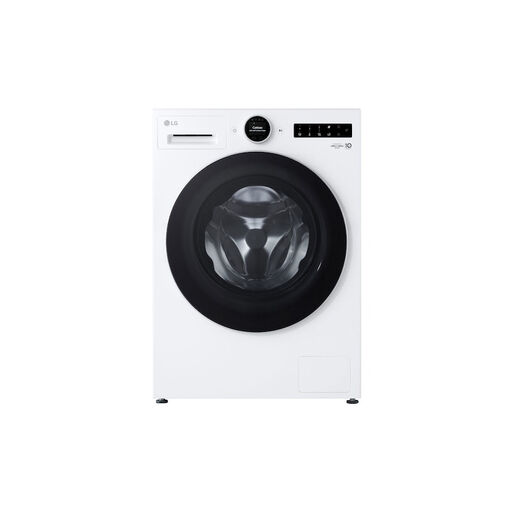
LG F4WX851Y 11 kg washing machine

LG F4WX851Y 11 kg, A energy rating

For frequently full laundry baskets and bulky bed linen, with a listed Duvet programme.

11 kg; 37 kWh/100 cycles and 50 L/cycle in Eco 40-60; listed spin noise level of 71 dB.

Check the manual for the load permitted by the Duvet programme, as well as the dimensions and clearance required in front of the porthole.

View on Joybuy

Haier X Series 11 HW100-BD14397PGU1 10 kg washing machine

Haier HW100-BD14397PGU1 10 kg, 1,400 rpm

A 10 kg option for large, regular family washes.

10 kg; 1,400 rpm; 41 kWh/100 cycles; 48 L/cycle; listed depth of 611 mm; spin noise level of 68 dB(A).

For a duvet, check the programme and its permitted load; also make sure there is enough clearance to open the porthole.

View on Joybuy
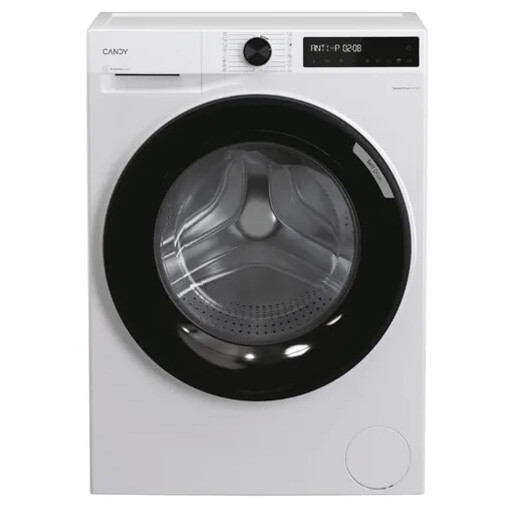
Candy BR 411BL9-S 11 kg washing machine

Candy BR 411BL9-S 11 kg, A energy rating

For frequently full family loads, with a listed 78 L drum.

11 kg; 37 kWh/100 cycles; 48 L/cycle in Eco 40-60; 59.5 × 85 × 68.1 cm; listed spin noise level of 72 dB.

Its depth of 68.1 cm means you should check the installation space, access route and clearance in front of the porthole.

View on Joybuy

Electrolux EWF1410N2 10 kg washing machine

Electrolux EWF1410N2 10 kg

A 10 kg model worth considering if your household laundry baskets are regularly large.

10 kg; 68.6 L drum; 51 kWh/100 cycles; 52 L/cycle; 847 × 597 × 658 mm; listed spin noise level of 76 dB, noise class B.

Check the manual for the permitted duvet load and allow sufficient clearance in front of the door.

View on Joybuy

Hisense WF5I8043BWF 8 kg washing machine

Hisense WF5I8043BWF 8 kg, 1,400 rpm

A standard capacity for homes with limited space and occasional bed-linen washing.

8 kg; 1,400 rpm; listed Bedding and Down programmes; depth of 470 mm; 33 kWh/100 cycles; 38 L/cycle.

This format is less suited to thick duvets and very large, frequent loads; check the permitted load for each programme.

View on Joybuy

Frequently asked questions

Do the advertised 11 or 12 kg capacities apply to every programme?

No. The rated capacity refers to the weight of dry textiles, and synthetic, wool and delicate programmes generally accept less laundry. The information on the energy label relates to the Eco 40-60 programme, so check the manual and the duvet’s care label before loading the machine.

Is a large capacity automatically more economical?

No. It can help avoid additional cycles when large loads are frequent and properly filled, but an XL drum that is rarely full may unnecessarily increase water and electricity consumption, as UFC-Que Choisir points out. Compare the kWh per 100 cycles and litres per cycle on the energy label.

What should I measure before ordering an 11 or 12 kg washing machine?

Measure the installation space, the available depth in front of the door and the route through doors, corridors and lifts. Large front-loading machines are usually around 60 cm wide, but their depth can vary considerably: the examples mentioned range from 565 mm for an 11 kg LG to 679 mm for a 12 kg Haier.

What statutory guarantee applies to a washing machine bought from a professional seller in France?

The statutory guarantee of conformity applies to new, second-hand and refurbished goods sold by a professional to a private individual, according to the French Ministry of the Economy. The seller is responsible in particular if the product does not match its description, the use normally expected of it or an agreed installation for which they are responsible.

Does the seller have to take back my old washing machine?

When buying a new appliance in-store or remotely, the retailer must offer to take back the used appliance under the “one-for-one” principle, according to the French Ministry for Ecological Transition. Check the practical arrangements, particularly access and disconnection of the old appliance before delivery.