Families with baskets that are often full
Everyday laundry piles up between washes. Your machine should handle these regular loads without basing your choice of drum size on the occasional exceptionally large wash.


For a large family, choose a capacity based on the amount of laundry you actually wash in each cycle. Que Choisir suggests that 10 to 12 kg can be a better fit when you do frequent loads and the baskets are often full. If you mainly wash smaller, sorted loads, a capacity suited to those cycles may be a wiser choice. For duvets and throws, check the permitted load for the relevant programme before opting for a larger drum.
Everyday laundry piles up between washes. Your machine should handle these regular loads without basing your choice of drum size on the occasional exceptionally large wash.
Bulky items feature often enough to influence your choice. Check the programme designed for them, its permitted load and the space needed to install the machine.
Sportswear, wool, delicates and colours may all need separate cycles. A high headline capacity doesn’t mean every programme can take the same amount of laundry.
For frequent family washing, start with your most common load rather than the bulkiest item. Que Choisir distinguishes between the rated capacity, given as the weight of dry laundry, and the loads permitted by individual programmes.
| What matters | What to check before you buy | Who this matters to |
|---|---|---|
| Everyday laundry volume | Capacity in kg of dry laundry and the usual load for cotton or Eco 40-60 cycles. | If your baskets of everyday laundry are often full, reducing the number of cycles without choosing an oversized drum becomes a priority; around 42% of consumers put this need first. |
| Bulky items | The load permitted by the relevant programme and the space needed to install the appliance. | If you regularly wash thick duvets and throws at home, these items must fit in accordance with the manual; this is the main consideration for around 25% of consumers. |
| Sorted or partial loads | Maximum loads for the programmes you use and the energy label’s consumption figures. | If sorting means running lots of lightly loaded cycles, a machine that suits smaller loads may matter more than a large drum; around 33% of consumers make this their priority. |
Two households of the same size won’t necessarily fill their washing machines in the same way. How you sort your laundry and how often you wash sheets or duvets will affect the loads you need to handle.
For two to three weeks, note which loads come up regularly and which ones genuinely overflow your basket. Then choose a capacity that suits your routine.
According to Que Choisir, the rated capacity refers to dry cotton laundry or an Eco 40-60 cycle. Other fabrics may have a lower permitted load, even in a high-capacity machine.
Check the manual for the maximum loads of the programmes you’ll use most, especially for wool, synthetics and duvets.
A capacity that suits your laundry won’t help if the appliance won’t fit into its space or its door can’t open properly.
Measure the installation space, delivery route and door clearance, then compare them with the dimensions and clearances specified in the model’s manual.
These 8 to 11 kg models offer a range of capacities for everyday family loads. Before choosing, compare each one with the programmes you use at home and the space available.
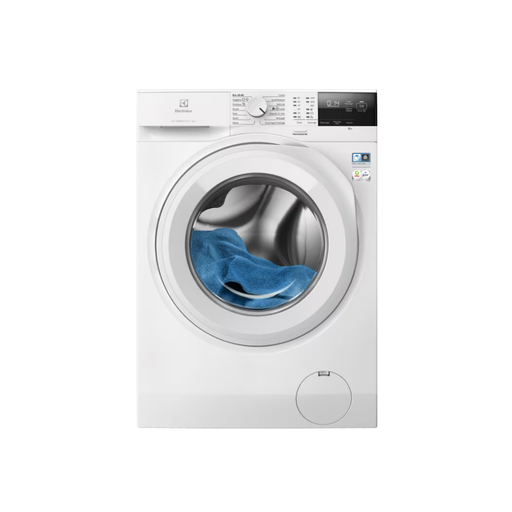 Image unavailable
Worth considering if your usual loads suit an 8 kg capacity rather than a larger drum.
The model name indicates a 1,400 rpm spin speed and SensiCare technology. Check the manual for the permitted load on the programmes you use, particularly for bulky items.
 Image unavailable
Consider this if your usual baskets justify a 9 kg capacity, while still allowing for separate cycles for sorted laundry.
The model name indicates a 1,600 rpm spin speed. Check the maximum loads for the relevant programmes and the depth needed to install it.
 Image unavailable
Worth considering if your everyday loads are regularly on the large side.
The model name indicates a 1,400 rpm spin speed. For sorted laundry or bulky items, check the list of programmes and their permitted loads before opting for this capacity.
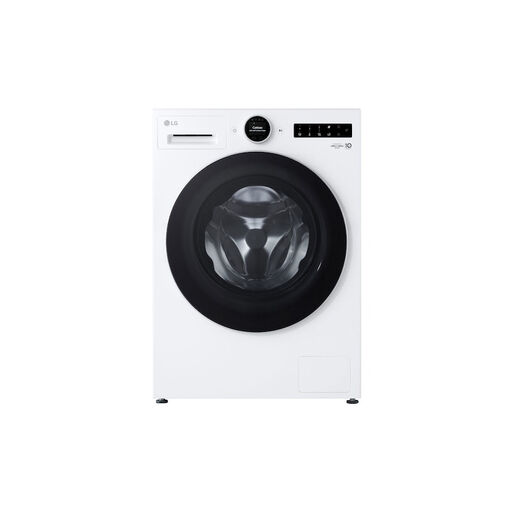 Image unavailable
Consider this if your baskets are often full and an 11 kg capacity would be useful, provided the appliance fits your space.
The model name indicates an A energy rating. Check its dimensions and the permitted load for the duvet programme before relying on this capacity for bulky laundry.
 Image unavailable
Worth considering for large everyday loads, but don’t assume every cycle can take 10 kg.
Check the load limits for programmes suited to your laundry, particularly if you want to wash bulky items, and make sure you have the space required for installation.
No. According to Que Choisir, it refers to the weight of dry laundry for cotton or Eco 40-60; other programmes may allow a smaller load. Check the model’s programme table for the fabrics you wash regularly.
Don’t base your choice on household size alone. This capacity is mainly worth considering if you regularly wash bulky items and the relevant programme can handle them. If you mostly wash small, sorted loads, compare the useful capacity of those programmes and the space the machine takes up instead.
Compare the energy consumption per 100 cycles and water consumption, taking the capacity of each appliance into account. The European Commission specifies that the relevant requirements relate to the Eco 40-60 programme, so these figures alone don’t describe all your usual cycles.
Look at the durability information available for the model and the practical options for getting it repaired. ADEME recommends considering how easy an appliance is to repair when choosing household electrical goods. You should also check the after-sales service available for the model you’re considering.