Households with regular full loads
Bedsheets, towels and clothes regularly fill the drum. The aim is to cut down on extra cycles without choosing a capacity you rarely use.


A 10–12 kg washing machine is worth considering if you regularly have large loads to wash. According to Que Choisir, this capacity range becomes more suitable when large washes are frequent. If most of your loads are everyday-sized and you only wash duvets occasionally, an 8–9 kg machine may be a better fit; either way, check the load limit for each programme and the space required for the exact model.
How often you run full loads matters more than simply having a duvet in the wash. Que Choisir also recommends distinguishing the stated capacity from the load limits for individual programmes.
Bedsheets, towels and clothes regularly fill the drum. The aim is to cut down on extra cycles without choosing a capacity you rarely use.
These bulky items are a regular part of the laundry. The stated capacity alone is not enough: check the care instructions on the fabric and the load limit for the appropriate programme.
You do laundry often, but many loads are small or separated by fabric type. Your choice should take these partial loads into account as well as the occasional very full basket.
Start by choosing a machine for the loads you wash most often, then decide how you’ll handle bulky items. The space available and programme limits may rule out a model that looks suitable on paper.
Consider it if: small or medium loads are the norm, even if you often run separate cycles.
The trade-off: washing accumulated bedsheets and towels may take more cycles.
Consider it if: you regularly have full baskets and bulky items, so you’ll make good use of the extra capacity.
The trade-off: a drum that’s rarely full may waste energy and water, and the appliance needs to fit through every access point.
Consider it if: only a few duvets or very thick items exceed the needs of your usual washes.
The trade-off: you’ll need to arrange separate washing for these items.
| What matters to you | What to check | What consumers say |
|---|---|---|
| Regular large loads | Compare the capacity in kg of dry laundry with the maximum load for the programmes you’ll use, especially for duvets. | When bedsheets, towels and other bulky items often fill my basket, I want to avoid running lots of cycles. Around 46% of consumers put this need first. |
| Frequent partial loads | Count how many cycles are genuinely full and check the energy label, as well as any guidance on load adjustment. | If I often sort my laundry into small loads, I’d rather not choose a machine based only on the occasional big wash. Around 27% of consumers prioritise this need. |
| Installation and programmes | Measure the depth, clearance for the door and access route; also check the manual for the load limit of each programme. | Before choosing a large drum, I want to make sure the appliance will fit in my home and that I can wash my fabrics on a suitable programme. Around 27% of consumers prioritise this compatibility. |
According to Que Choisir, a higher capacity is most worthwhile when you regularly wash large loads. An appliance that’s rarely full may use more water and electricity than necessary.
Keep track of your laundry loads for several weeks. If only a few items are larger than your usual loads, consider washing them away from home occasionally before choosing a bigger appliance.
Que Choisir points out that synthetic, delicate and wool programmes have lower load limits than the stated capacity for cotton or Eco 40-60.
Check the manual for the exact model and the care instructions for your duvets or throws before deciding you can wash them at home.
A width of around 60 cm doesn’t tell you how much clearance the door needs or whether the packaged appliance will fit through. Bosch, LG and Samsung models vary in their stated dimensions.
Measure the available depth, door opening, connections and the entire delivery route, including doors, corridors and lifts.
Capacity, spin speed or an energy rating alone won’t tell you everything about washing and rinsing performance, programme duration or how the machine performs with partial loads.
Compare energy labels and, for washing machines covered by the scheme in France, look at the details of the durability index. Consider measured performance separately when an independent test covers the models you’re interested in.
These examples show the dimensions and features to compare on specific models; they don’t represent every machine from each brand. The product information below is provided by the manufacturers.
The Bosch WGB256A2FR is a 10 kg front-loading washing machine to consider if a width of around 60 cm suits your space.
The LG F14R31WHSA has a stated capacity of 11 kg and a Duvet programme. If you often wash bulky items, make sure you check this specific model.
The Samsung WW11BGA046AE has a stated capacity of 11 kg and front-loading dimensions of 600 × 850 × 600 mm.
The Miele WCK360 WCS PWash&10kg lets you look at a 10 kg capacity alongside the model’s stated energy use and programme duration.
These 10 or 11 kg models are options to consider if you regularly wash large loads and are looking for a large-capacity washing machine. For each one, make sure its programmes, your bulky items and the space available are a good match for the model you choose.
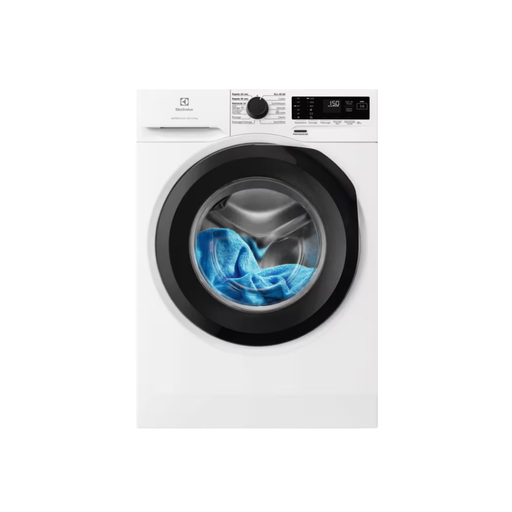 Image unavailable
Worth considering if you regularly wash large loads and would also like to wash bulky items at home.
If you’re washing a duvet, check the manual for the load limit on the Duvet programme and follow the fabric’s care instructions. Also measure the space needed for installation.
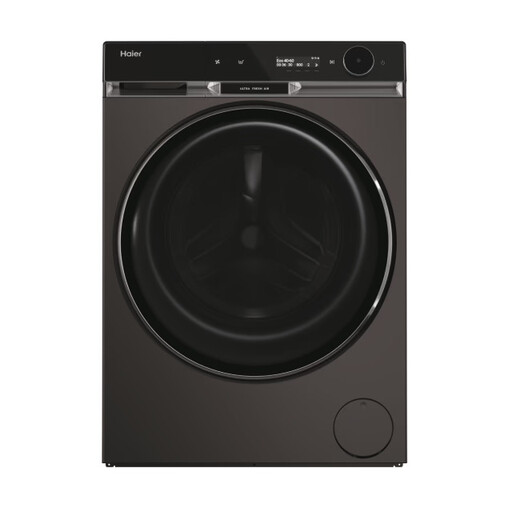 Image unavailable
Its capacity may suit a household that regularly has full baskets to wash, rather than one that mostly runs small loads.
If you’re considering it for duvets, check the manual for the right programme and its maximum load. Also check the clearance needed around the appliance.
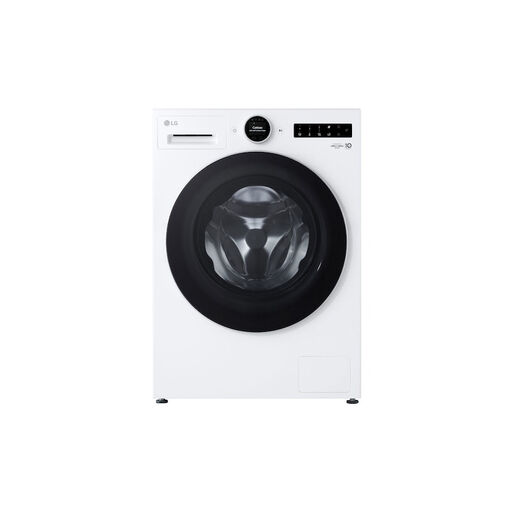 Image unavailable
Worth considering if you regularly wash large loads and washing duvets at home is important to you.
Check the load limit for the Duvet programme before using it for a duvet. Before ordering, check the model’s dimensions and the clearance needed with the door open.
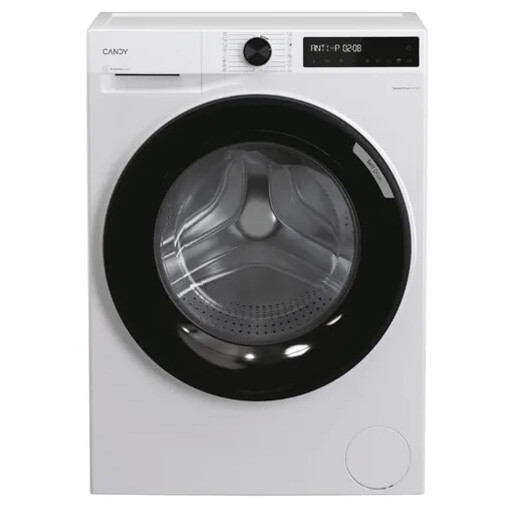 Image unavailable
This capacity is worth considering if you often fill the drum with large loads.
For duvets, check the manual to find a suitable programme and follow its maximum load limit. Also check the depth, door clearance and delivery access.
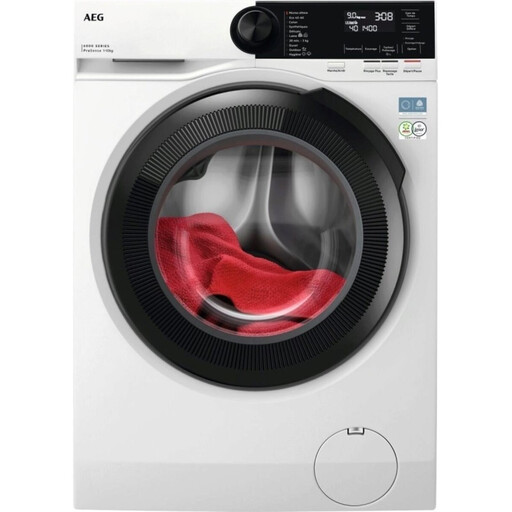 Image unavailable
Its capacity suits households that regularly wash large loads.
Before choosing this model for bulky fabrics, check the programmes and their load limits. Compare its dimensions with your available space and delivery route.
No. According to Que Choisir, the stated capacity applies to the reference cotton or Eco 40-60 programme; synthetic, delicate and wool programmes take less laundry. Check the manual for the exact model before putting in a duvet or delicate fabric.
Choose a 10–12 kg capacity if you regularly have a succession of large, full loads. Que Choisir says 8–9 kg is generally enough for a household of 3 to 4 people with ordinary-sized loads; an occasional duvet alone isn’t a reason to get a larger drum.
Measure the space where it will go, the clearance needed when the door is open and the route the packaged appliance will take. For example, LG lists a depth of 1 100 mm with the door open for the F14R31WHSA, while Samsung gives a depth of 600 mm for the WW11BGA046AE. These measurements don’t describe the same overall space and can’t replace the measurements for the model you choose.
Yes, for washing machines covered by the labelling rules in France. According to the ministry responsible for ecology, the durability index has been gradually replacing the repairability index since 8 April 2025. Check the score and its breakdown for the exact model, rather than judging its lifespan by a single feature.
No. The maximum spin speed doesn’t guarantee the same result for every fabric or mean you won’t need to dry your laundry afterwards. Choose a programme and spin speed that suit your laundry’s care instructions.