Who is each capacity suitable for?
How often you wash large loads matters more than the size of the biggest item you wash now and then.
Households of 3 to 4 people with regular household laundry
If you often wash sheets, towels and throws but don’t fill every drum, compare 8–9 kg models with 10 kg models first. UFC-Que Choisir says that 8–9 kg is generally enough for a household of this size.
Families who regularly wash large loads
If your laundry baskets are often full and household laundry makes up a regular part of your washing, a 10–12 kg machine can help you wash more items together. However, check the load limits of the programmes you use.
Households that rarely wash a thick duvet
If your usual loads don’t fill a large drum, don’t choose its capacity based on that one duvet. Check its care label and consider an occasional alternative if it’s too large for the machine that best suits your everyday needs.
What should you compare before choosing?
Start with your usual loads, then compare machines using the same reference programme and check their installation requirements.
8–9 kg for everyday use
Consider this if: you have a household of 3 to 4 people and your larger loads don’t fill most cycles, in line with UFC-Que Choisir’s guidance.
Limitations: larger items may need separate cycles or exceed the load limit for the programme you choose.
10–12 kg for larger loads
Consider this if: full laundry baskets, sheets and throws come round often enough for you to make use of the extra capacity.
Limitations: a larger drum doesn’t guarantee lower water use or fewer cycles if your usual loads are small.
An occasional solution for bulky items
Consider this if: a thick duvet or very large throw is the only reason you’re thinking of moving up to a higher capacity.
Limitations: you’ll need to plan separately for washing this item, following its care label. It won’t change the number of everyday loads you do.
| Criterion | What to check | Think about your needs |
|---|
| Capacity you’ll use |
Track your larger loads over several weeks. UFC-Que Choisir explains that the rated capacity is the weight of dry laundry for cotton or Eco 40-60; check the manual for other programmes. |
Are my baskets often full enough to use 10–12 kg, or are bulky items only an occasional occurrence? |
| Water and electricity |
Compare the kWh/100 cycles and litres/cycle on the energy label, using the same programme as a basis. Figures for Eco 40-60 don’t cover every programme. |
I often wash loads smaller than the stated capacity, so I don’t want to assume a larger drum will reduce my consumption. |
| Washing and spin performance |
Check the spin-drying efficiency class and spin noise on the energy label. To compare washing, rinsing and spin performance between models, look for tests carried out using the same method, such as those by UFC-Que Choisir. |
I sometimes dry laundry indoors, and noise can disturb my household. These factors matter just as much as the maximum load. |
| Installation and maintenance |
Measure the space, access routes and clearance for the door. Check the durability index for the exact model and look for information about spare parts. |
I need to be able to install the washing machine, open its door and plan for maintenance rather than choosing based on drum capacity alone. |
Which branded models offer useful points of comparison?
These models give you capacities to compare. Their stated specifications aren’t a substitute for independent testing or checking the exact model you’re considering.
Bosch
The WGB256A0FR is an example of a 10 kg model for households that alternate between large and small loads.
- Bosch lists a 10 kg capacity and an A energy class for this model.
- The claim that Active Water Plus adapts water use for smaller loads comes from the manufacturer; it isn’t an independent comparative result. Check the model’s specifications and availability before considering a purchase.
LG
The F14R31WHSA is an example of an 11 kg model to consider if you regularly wash very large loads.
- LG lists an 11 kg capacity, an A energy class and dimensions of 600 × 850 × 565 mm.
- These specifications alone don’t demonstrate rinsing performance. Also check that you have enough room to open the door.
Electrolux
The EW6FI4112RA is an example of the stated figures to consider for a 10 kg model.
- Electrolux lists an A energy class, 51 kWh/100 cycles and 52 L/cycle for this model.
- Compare these figures under the same programme conditions. The claim that SensiCare adapts the cycle to the load is made by the manufacturer.
Miele
The WWD380 WCS offers a 9 kg point of comparison for households that don’t need a large drum for every cycle.
- Miele lists a 9 kg capacity and a spin speed of 1,400 rpm for this model.
- Capacity and spin speed aren’t enough to assess rinsing, the space the model takes up or its durability.
Which washing machines should you consider on Joybuy?
This selection includes 9 kg washing machines for moderately large loads and 10–11 kg models for larger, more regular loads. For each one, check the manual for the load limits for your bulky items.
 Image unavailable
Haier X Series 11 HW100-BD14397PGU1, 10 kg
Its stated 10 kg capacity is worth considering if you regularly wash large loads. The product name indicates 1400 rpm and an A energy class. Check the space it needs, the load limits for your programmes and comparable washing and rinsing test results.
View on Joybuy
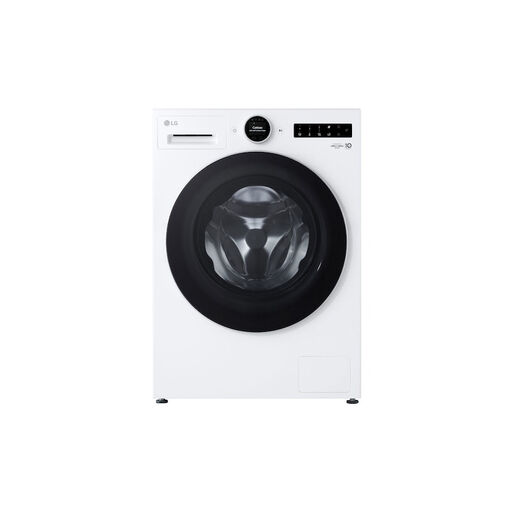 Image unavailable
LG F4WX851Y, 11 kg, white
This 11 kg model is designed for households that regularly wash very large loads. The product name indicates an A energy class. Before relying on its capacity for a duvet, check the relevant programme’s load limit, the dimensions and the item’s care label.
View on Joybuy
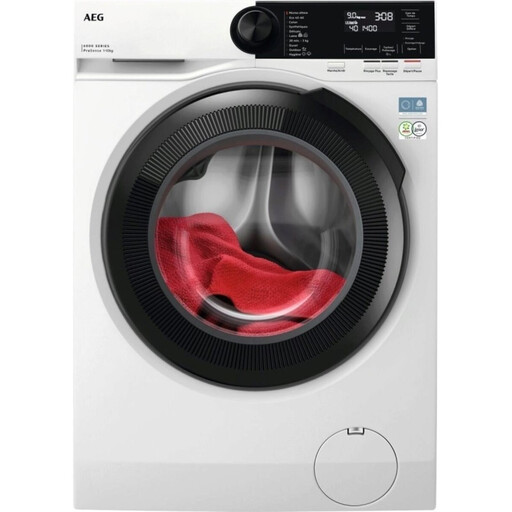 Image unavailable
AEG LFR62E114S, 10 kg, white
The 10 kg capacity makes this model worth considering if your laundry baskets are often full. The product name indicates 1400 Rpm and an A energy class. Also check the Eco 40-60 water and electricity figures, delivery access and the space needed to open the door.
View on Joybuy
 Image unavailable
Electrolux EWF1410N2, 10 kg
This 10 kg model can be compared with other high-capacity machines if you regularly wash bulky loads. Its name mentions Steam Anti-Allergy and TimeSave, but doesn’t establish what they do. Check the manual for specialist programme load limits and compare test results for the features that matter to you.
View on Joybuy
 Image unavailable
Electrolux EW7FI259160V, 9 kg
With a stated capacity of 9 kg, this model is worth considering if you regularly wash household laundry but don’t need an XL load every cycle. The product name indicates 1600rpm. Check the manual for duvet and throw load limits, as well as the depth and door clearance required before installation.
View on Joybuy
Frequently asked questions
Which figures should I compare between two high-capacity washing machines?
Compare the kWh/100 cycles, litres/cycle, Eco 40-60 duration, spin-drying efficiency class and spin noise on the energy label, using the same basis for both machines. ADEME recommends checking the label for water, energy, spin performance and noise. For washing and rinsing, also look for tests that use the same method on the models you’re considering.
Will a 10–12 kg washing machine always use less energy and water?
No. A larger capacity can help you combine frequent large loads, but it doesn’t automatically mean lower water or electricity use. Compare the energy-label figures and think about how often you’ll actually fill the drum.
Does the stated 9 or 10 kg capacity apply to every programme?
No. UFC-Que Choisir explains that the stated capacity is the weight of dry laundry for cotton or Eco 40-60. For a duvet, throw or specialist programme, check the load limit in the manual and the item’s care label.
How can I assess the durability of a specific model?
Check its durability index and the information available on maintenance and spare parts, rather than judging its lifespan by its brand or capacity. ADEME says that a durability index has applied to washing machines in France since April 2025.


