What should you check before choosing?
Start by considering how often you have genuinely large loads, then check programme limits and the space available for the machine.
Standard capacity
Consider this: if your usual loads are fairly small, even if you occasionally have a bulky item to wash.
The trade-off: a large duvet may need to be washed away from home.
Large capacity
Consider this: if full baskets and bulky items are a regular part of your laundry; Que Choisir considers the 10–12 kg range more suitable in this case.
The trade-off: if most of your loads are small, you may rarely use the extra capacity, and you’ll need to check the machine’s dimensions.
Occasional use of a launderette or dry cleaner
Consider this: for a very large duvet that you wash infrequently, provided its care label allows the method you choose.
The trade-off: you’ll need to transport the item and have access to the service when you need it.
| Factor |
What to check |
What I need |
| Capacity |
Keep track of how often your baskets are full and compare this with the machine’s capacity in kg of dry laundry. Que Choisir explains that the capacity shown on the label applies to the cotton or Eco 40-60 programme; check the manual for the limits of other programmes. |
Do I often fill the machine with laundry, or is it mainly the occasional duvet that makes me consider a larger drum? |
| Partial loads |
If you often wash small loads, check whether the model has load-sensing or load-adjustment features. To compare machines, look at the energy use per 100 cycles and water use per Eco 40-60 cycle on a like-for-like basis. |
I often wash a few items separately: would I use the extra capacity regularly enough? |
| Space required |
Measure the width, height and depth, the clearance needed to open the door, and the access route to the installation space. Que Choisir notes that top-loading models are 40 to 46 cm wide, but have a capacity of 5 to 8 kg. |
The machine must fit in my home and be deliverable without compromising on the capacity I actually need. |
| Spin and cycle time |
Compare the spin-drying efficiency class, then check the duration of the programme you’ll use and each model’s stated noise level. The maximum spin speed in rpm alone doesn’t tell you everything about spin-drying performance. |
If I wash frequently, I want to consider the laundry I’ll need to hang out, the wash time and noise near living areas. |
| Durability |
Check the durability index for the washing machine and its details, separately from the energy label. According to the French ministry responsible for the environment, the durability index has been gradually replacing the repairability index for washing machines since 8 April 2025. |
I want to compare durability information without assuming that an energy class answers the same question. |
Which branded models can you use as a guide?
These manufacturer-published specifications help you compare capacities and dimensions; they aren’t a ranking of washing performance.
Bosch
The WGH254A0FR front-loader is an example of a 10 kg model to consider when looking at larger-capacity machines.
- Bosch Électroménager France lists a maximum capacity of 10 kg and a spin speed of 1 400 rpm for the WGH254A0FR.
- Neither figure tells you the machine’s dimensions or noise level, or the load limit for the programme suited to your item.
LG
The F14R31WHSA is an example of an 11 kg model whose dimensions should be checked against the space available.
- LG France lists an 11 kg capacity and dimensions of 600 × 850 × 565 mm for this model.
- Its capacity doesn’t confirm that it’s suitable for a particular duvet: check the care label and programme limits.
Samsung
The WW11BGA046AE offers another point of comparison for the space required by a front-loader rated at 11 kg.
- Samsung France lists an 11 kg capacity and dimensions of 600 mm wide, 850 mm high and 600 mm deep.
- Measure the clearance available in your home and check the manual for the load limits of each programme.
Miele
The WCK360 WCS is an example of a front-loader rated at 10 kg.
- Miele France lists an A energy class, a 10 kg capacity and a spin speed of 1 400 rpm for this model.
- To see whether it suits your laundry, also check its dimensions and the limits of the programmes you plan to use.
Which washing machines should you consider on Joybuy?
This selection includes 10–11 kg models to consider if you regularly wash large loads, as well as an 8 kg model for smaller, everyday washes. For all of them, check the manual before washing a duvet: the stated capacity isn’t a substitute for checking the programme guidance.
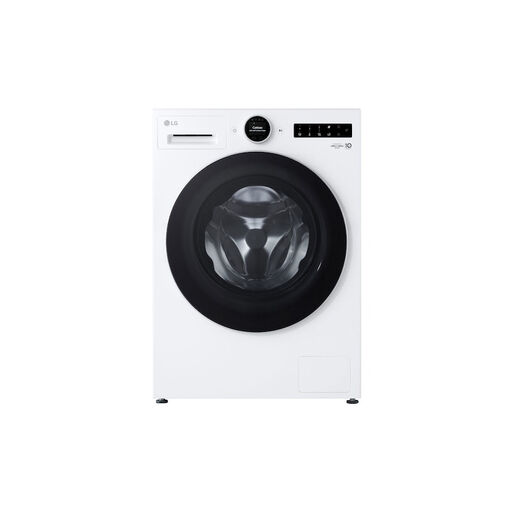 Image unavailable
LG F4WX851Y, 11 kg front-loader, A-rated
Worth considering if your laundry baskets are regularly full. The stated capacity is 11 kg; check the manual for installation dimensions and the load limit for the programme intended for your duvet.
View on Joybuy
 Image unavailable
Haier X Series 11 HW100-BD14397PGU1, 10 kg
Its stated 10 kg capacity is worth considering if you regularly wash large loads. The model name indicates 1 400 rpm, AutoDose and Wi-Fi; check the load limits of the programmes for your fabrics.
View on Joybuy
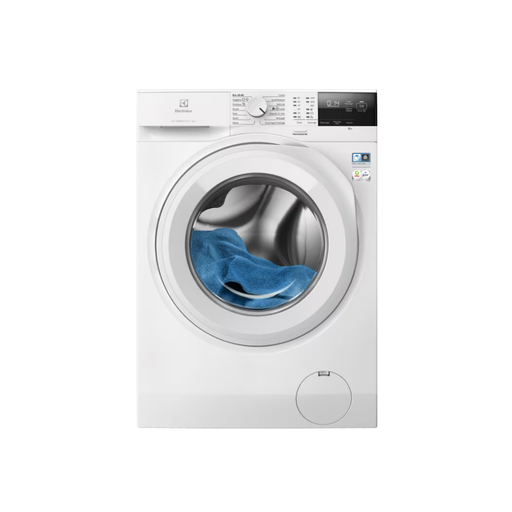 Image unavailable
Electrolux EW6FI4805AW, 8 kg front-loader, SensiCare
This 8 kg capacity is better suited to smaller everyday loads than regular large washes. The model name indicates SensiCare and 1 400 rpm; check the manual to see whether the programme you plan to use is suitable for your bulky laundry.
View on Joybuy
 Image unavailable
Electrolux EWF1410N2, 10 kg front-loader
Consider this if your laundry baskets are often full and a stated capacity of 10 kg suits your loads. Before planning small washes or a duvet load, check the manual for the features and limits of the programme you’ll use.
View on Joybuy
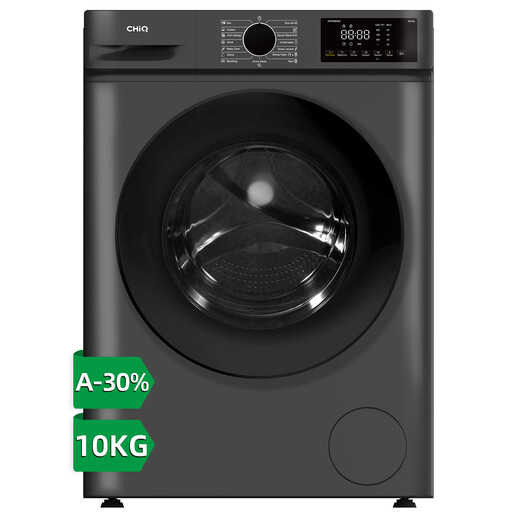 Image unavailable
CHiQ JW105883G, 10 kg front-loader, dark grey
Its stated 10 kg capacity makes it worth considering for regularly large loads. The model name indicates 1 400 rpm and 16 programmes; check the installation dimensions and the load limit for the programme you’re interested in.
View on Joybuy
Frequently asked questions
What capacity should I choose to reduce the number of cycles without buying a machine that’s too large?
Choose based on the loads you regularly fill the machine with, not the largest item you wash once in a while. Que Choisir says that 8–9 kg is generally enough for a household of 3–4 people, while 10–12 kg becomes more suitable when you do large loads back to back.
Does the stated capacity apply to every programme?
No. According to Que Choisir, the stated capacity refers to the weight of dry laundry on the cotton or Eco 40-60 programme. For another programme or a bulky item, check the load limit in the manual and the item’s care label.
Do I need to buy an XL washing machine for a large duvet?
No, especially if you only wash it occasionally. Que Choisir notes that larger duvets may need a higher-capacity machine, which you can find at a launderette or dry cleaner; first check the duvet’s care instructions.
Which figures should I compare between two washing machines with different capacities?
Compare their capacities and, on the same Eco 40-60 basis, the energy use per 100 cycles and water use per cycle, then look at the spin-drying efficiency class. These are among the figures on the label presented by Gifam. Also compare them with the size of your usual loads, the machines’ dimensions and the programmes you’ll use.
Which durability index should I check for a washing machine in France?
Check the durability index shown for the model, which is separate from its energy class. According to the French ministry responsible for the environment, the durability index has been gradually replacing the repairability index for washing machines since 8 April 2025.


