A 10 to 12 kg washing machine is worth considering if you regularly have a run of large family loads, as UFC-Que Choisir points out. An occasional duvet wash alone doesn’t justify this capacity. For a duvet, also check its care label, how much space it takes up in the drum and the load limit for the programme you choose. If it won’t fit in your machine without being compressed, look for a suitable alternative that follows its care instructions.
Who is this option for?
Families with frequent large loads
If full laundry baskets and back-to-back washes are part of your usual routine, choose a capacity based on these regular loads rather than the size of your household alone. UFC-Que Choisir points out that larger capacities make most sense when you regularly have several loads to wash.
Households that wash duvets at home
A duvet needs to fit into the drum without being forced in. Its care label and the load limit for the programme matter just as much as the machine’s stated capacity; Whirlpool specifically stresses the importance of leaving space in the drum.
Buyers short on space
Before installing a machine with a large drum, measure both the space and the route to it. Then compare the energy use on the energy label with how often you actually do the washing, rather than assuming you’ll always make the most of a larger capacity.
What should you look for?
Start with the size of your usual loads, then consider duvets separately: their dimensions and the available programme may affect your choice.
| Criteria |
What to check |
Who is it for? |
| Large loads |
Compare the capacity in kg of dry laundry with the size and frequency of your usual loads. |
When several family loads often follow one another, I mainly want to reduce the number of cycles without choosing a drum that’s too large for the rest of the week; around 36% of consumers prioritise these regular large loads. |
| Washing duvets at home |
Check the duvet’s care label, the space available in the drum and the maximum load for the suitable programme. |
To wash my duvet at home, I need to be able to put it in without compressing it and follow its care instructions. Around 29% of consumers prioritise making sure the machine is suitable for their duvet. |
| Space and energy use |
Measure the access route and installation space; compare the energy use shown on the energy label. |
If space is limited, a larger capacity is only worthwhile if the machine can be installed and suits my everyday loads; around 21% of consumers put this balance first. |
| Care and durability |
Check the textile’s washing and drying instructions, then look at the machine’s durability rating. |
I want to avoid using a cycle that’s unsuitable for bulky textiles and take the machine’s expected lifespan into account; this is the main priority for around 14% of consumers. |
Mistakes to avoid
-
Choosing 12 kg for a duvet you rarely wash
According to UFC-Que Choisir, larger capacities are mainly suited to large loads that come around regularly. An occasional duvet wash doesn’t necessarily reflect the size of your usual loads.
Think about how often you have full laundry baskets before deciding on a capacity. For an unusually large textile, keep a suitable alternative in mind.
-
Going by the duvet’s weight without considering its size
Even if its weight seems to be within the stated capacity, a duvet that has to be forced in won’t have enough room in the drum. Whirlpool recommends that it takes up no more than three-quarters of the drum.
First check that the care label allows machine washing, then make sure the duvet fits without being compressed.
-
Assuming a Duvet programme can handle every duvet
UFC-Que Choisir points out that some programmes have a lower maximum load than the machine’s stated capacity. A cycle’s name doesn’t replace the limits given in the manual.
For the exact model, check the permitted load, spin settings and any options that aren’t compatible with the programme you choose.
-
Comparing only the stated capacities
The right capacity isn’t enough if you can’t get the machine to its installation space or its features don’t suit your laundry routine.
Also check the dimensions, energy label, durability rating and the warranty terms that apply to the machine.
Brands to consider
These model examples can help you compare specific features; they don’t represent every machine made by each brand.
Bosch
The WGH254A0FR front-loader is worth considering if 10 kg suits your loads and its dimensions work for your installation space.
- Bosch lists a 10 kg capacity and dimensions of 845 × 598 × 590 mm for this model.
- The 10-year motor warranty mentioned for this model is separate from a warranty covering the whole machine, so check the terms.
Whirlpool
The FFDD11489BVFR is an option to consider if you regularly wash large loads and are looking for an 11 kg capacity.
- Whirlpool lists an 11 kg capacity and a spin speed of 1 400 rpm for this model.
- FreshCare+ isn’t compatible with the Duvet programme on this model; check the permitted load for your duvet separately.
Samsung
The WW11DG5B25THEF combines a stated capacity of 11 kg with a listed depth of 600 mm.
- Samsung’s product details also list a width of 600 mm and a height of 850 mm for this model.
- The savings Samsung claims for AI Energy depend on factors including compatible programmes, a Wi-Fi connection and a Samsung account; they don’t apply to every use.
LG
The 11 kg F14X71WHST is worth considering if large loads are part of your regular washing routine.
- LG presents capacities of 11 to 13 kg as an option for large families or households with a lot of laundry.
- This brand guidance doesn’t confirm that the machine is suitable for your duvet: check the dimensions and the load limits for each programme on the model you choose.
Washing machines to consider on Joybuy
These 8 to 11 kg front-loading washing machines let you compare two needs: regular large loads and, for a machine-washable duvet, whether the cycle you’re considering can accommodate its size. Before buying, check each model against its manual and the space where you plan to install it.
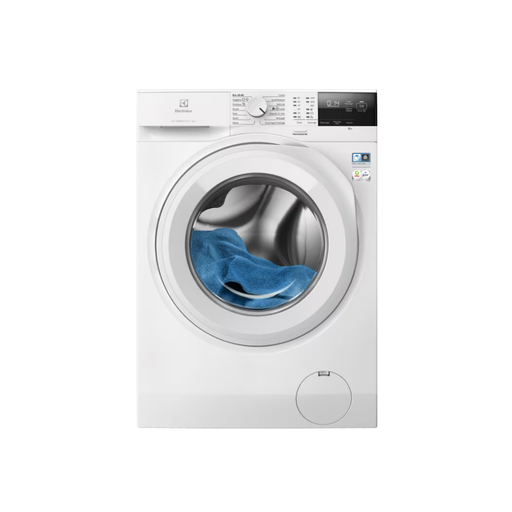 Image unavailable
Electrolux EW6FI4805AW 8 kg SensiCare
Worth considering if an 8 kg capacity suits your usual family loads. The product name gives a spin speed of 1 400 rpm; for a duvet, check the load limit for your chosen cycle in the manual and follow its care label.
View on Joybuy
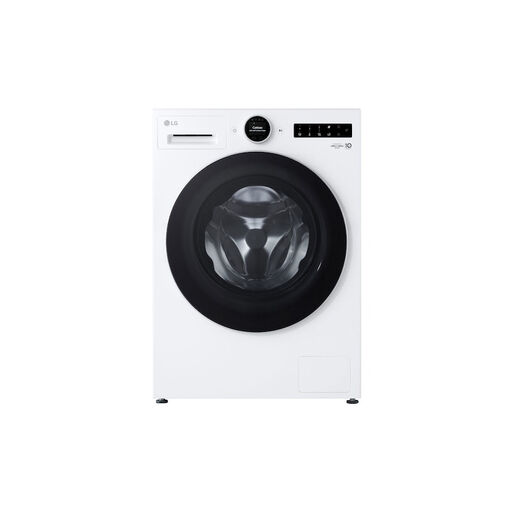 Image unavailable
LG F4WX851Y 11 kg
An 11 kg capacity to consider if you regularly wash large loads. Check the dimensions required for installation and, before washing a duvet, the load limit for the suitable programme and the textile’s care instructions.
View on Joybuy
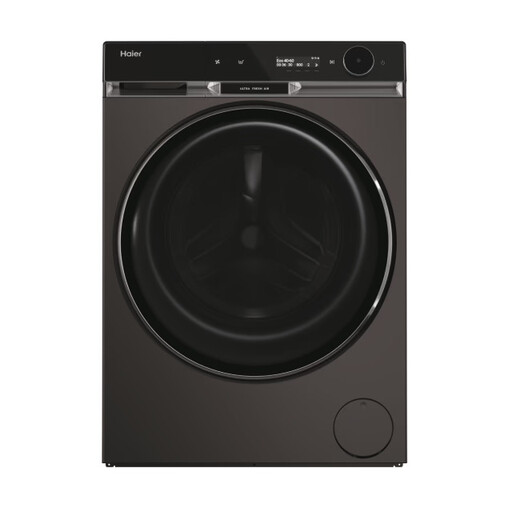 Image unavailable
Haier X Series 11 HW100-BD14397PGU1 10 kg
Its stated 10 kg capacity is worth considering for regular large family loads; the product name gives a spin speed of 1 400 rpm. If you plan to wash a duvet, check the suitable programme and its maximum load in the manual, as well as the space available for installing the machine.
View on Joybuy
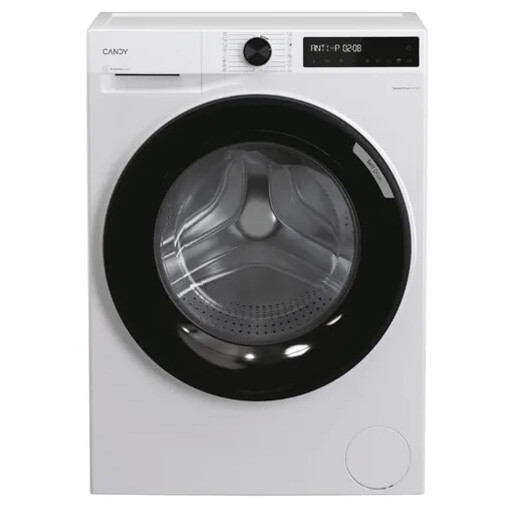 Image unavailable
Candy BR 411BL9-S 11 kg
Worth comparing if your laundry baskets are often full, with a stated capacity of 11 kg. Before choosing this model for a duvet, check the compatible cycle and its load limit; also measure the route and installation space.
View on Joybuy
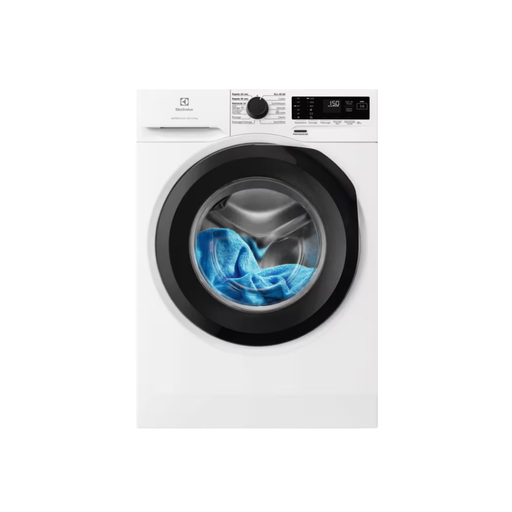 Image unavailable
Electrolux EWF1410N2 10 kg
A 10 kg capacity to consider if you regularly wash large loads. For bulky textiles, check the programme and permitted load in the manual; also check the dimensions and clearance needed for installation.
View on Joybuy
Frequently asked questions
What capacity should I choose for sheets and a duvet?
Start by considering how often you wash large loads: UFC-Que Choisir lists 10 to 12 kg capacities as options to consider when you regularly have several cycles to run. For duvets, Samsung’s brand guidance suggests 8 kg for a single duvet and 10 to 12 kg for a king-size duvet; the care label, its volume and the machine’s manual are still key.
Does the stated capacity apply to every programme?
No. UFC-Que Choisir explains that the maximum loads for programmes such as synthetics, delicates and wool can be well below the machine’s stated capacity. Check the manual for the programme you’ll use for the duvet.
How can I check whether my duvet will fit in the washing machine?
Start with its care label. If it’s suitable for machine washing, check that the duvet fits without forcing it in, that the programme can handle its load and that there’s still room for it in the drum; Whirlpool recommends that it takes up no more than three-quarters of the drum’s volume.
What should I compare on the energy label?
Compare the energy use shown in kWh per 100 cycles and the water use per cycle on the same reference basis, then relate these figures to your washing habits. ADEME points out that the energy figure displayed is for 100 reference cycles, not every load and every programme.


