Couples who eat oats regularly
If you make porridge several times a week or also use oats in muesli and cooking, a pack of 800 g to 1 kg may suit your routine. Make sure you can reseal and store it according to the instructions on the pack.


A pack of 800 g to 1 kg may suit a one- or two-person household that makes porridge regularly or also uses oats in muesli and cooking. If you only eat it occasionally, 500 g means less to store once opened. Either way, check whether you’re buying plain oats or a prepared mix, and read the ingredients, allergen information and storage instructions on the pack.
If you make porridge several times a week or also use oats in muesli and cooking, a pack of 800 g to 1 kg may suit your routine. Make sure you can reseal and store it according to the instructions on the pack.
For the occasional breakfast or if you want to try a particular texture, 500 g means you’ll have less to store once opened. Auchan, for example, describes its 500 g Jordans organic oats as jumbo flakes.
The pack size doesn’t replace reading the label. Carrefour says its 800 g Quaker oats are made from wholegrain oats, while also warning that they may contain wheat and barley.
If there are one or two of you at home, start by considering how often you use oats, then check the packaging and ingredients of the product you’re planning to buy.
| What to consider | What to check | Who it suits |
|---|---|---|
| How much you’ll need to store | Compare 500 g, 800 g and 1 kg packs with how often you use oats, then read the storage instructions for after opening. | If I only make porridge on some mornings, I want to avoid leaving a 1 kg pack open for a long time; around 42% of consumers prioritise a size that suits their routine. |
| How often you shop | Check the net weight and whether you’ll use the oats for anything else, and don’t assume a mix is the same as plain oats. | If I also use oats in muesli or cooking, I’d rather buy a pack that means fewer trips to the shops; this is the priority for around 33% of consumers. |
| Ingredients and texture | Read the ingredients and allergen information, and check the description of the oats or prepared mix. | If I’m looking for jumbo oats or need to avoid an allergen, the weight matters less than the label; around 25% of consumers prioritise ingredients, texture or allergens. |
After the children leave home, household routines can change. A pack that stays open for a long time may not be as useful as one you get through regularly.
Before choosing 1 kg, think about how often you make porridge and what else you use oats for. Then follow the pack’s instructions for resealing and storage.
Carrefour describes its 800 g Quaker oats as made from wholegrain oats, but also says they may contain wheat and barley. The ingredients list and the warning about possible traces answer two different questions.
If you need to avoid an ingredient, check the allergen information on the exact pack you’re buying. The DGCCRF says allergens present in the ingredients must be highlighted on the label.
The weight of a prepared mix may include ingredients other than oats. On its own, it doesn’t tell you how much oat it contains or what the recipe is.
Check the product name and ingredients, and compare like with like if you’re looking for plain oats.
A 1 kg pack of plain oats.
Another 1 kg pack of oats.
At 800 g, this pack sits between the 500 g and 1 kg options.
The 500 g organic pack is for households looking for a smaller pack with jumbo oats.
These options include three 500 g packs of oats for moderate use, as well as a prepared mix in individual portions. If you’re considering a larger family-size pack of plain oats, bear in mind the difference in ingredients and format.
 Image unavailable
This size may suit you if you make porridge occasionally rather than keeping a large pack open. The description also suggests using the oats in muesli and baking. It mentions gluten from oats, so check the label on the product you receive if this matters to you.
 Image unavailable
This pack is a good option if you’d like to buy a smaller amount of oats at a time, while still using them for porridge and other recipes. The description mentions gluten from oats and possible traces of other gluten-containing cereals, milk, nuts, sesame and soya. Check the label on the pack you receive.
 Image unavailable
This 500 g pack suits households that use oats in smaller quantities, for example in porridge or yoghurt. The description says the oats are wholegrain and recommends resealing the bag carefully after opening. Check the label for gluten information and possible traces of other allergens.
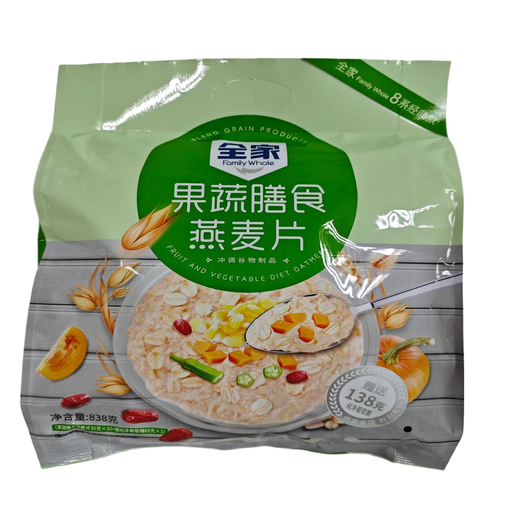 Image unavailable
This prepared mix in individual portions is for a different purpose from a pack of plain oats. The stated 838 g includes 700 g of mix and 138 g of glucose in a separate compartment, so it is not 838 g of oats. The description mentions several cereals, as well as soya and sesame. Check the ingredients and allergen information on the packaging.
Think about how many bowls you actually make and whether you use oats for anything else. As a guide for one specific product, Auchan says the 800 g Quaker pack contains 20 portions of 40 g; your usual portion may be different.
Follow the instructions on the pack you buy. Auchan says to store the 800 g Quaker oats in a dry place. For the 500 g Jordans organic oats, it recommends resealing the bag carefully and storing it in a cool, dry place.
No. This description of the ingredients doesn’t rule out a warning about possible traces. Carrefour says the 800 g Quaker pack contains “100% wholegrain oats”, but also warns that it may contain wheat and barley. Check the label on the exact pack if you need to avoid these cereals.
No. The DGCCRF describes Nutri-Score as a voluntary labelling scheme. To tell plain oats apart from a prepared mix, read the product name and ingredients, as well as any allergen information that applies to you.